Essay
Trials of thought in prose, personal or public.
183 works · Refine in the browser →
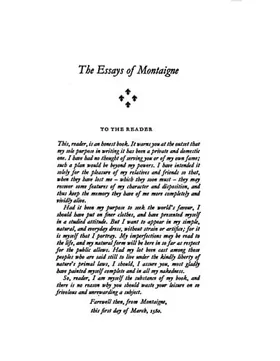
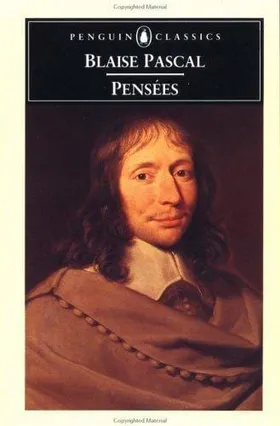
Montaigne coined the word: an essai is an attempt, and his Essays are attempts to find out what he thinks by writing it down, on subjects from cannibals to the education of children to his own body. Nobody had written like that before, and everybody has since. Bacon took the form and made it aphoristic and public. Pascal’s Pensées are the essay in fragments, notes toward a book he did not live to write.
The shelf is large because the programs assign so many short arguments that are not quite treatises: Rousseau’s two Discourses, Descartes’s Discourse on Method, Hume’s Enquiry, the Communist Manifesto, the Federalist, Mill’s On Liberty. Each of these is an essay in the old sense, a sustained attempt at one question, and they are the most assigned works on the site after Homer and Plato.
The English essayists, Johnson, Hazlitt, Lamb, Carlyle, Ruskin, Arnold, and the Americans, Emerson and Thoreau, are here because the Harvard Classics and Adler’s list assign them. Woolf’s A Room of One’s Own is the form’s twentieth-century summit, and Orwell its plainest voice. Start with Montaigne and read one essay a day; it is how he wrote them.