Walden
Assigned by 1 of the 9 reading lists
An account of the two years, two months and two days Thoreau spent from 1845 in a cabin he built beside Walden Pond, outside Concord, Massachusetts, compressed into the cycle of a single year. The long opening chapter, Economy, itemises the cost of the house and of his food and argues that most people work far more than they need to. The chapters that follow describe reading, sounds, solitude, visitors, the bean-field, the village, the ponds, winter animals and the thaw of spring, mixing close observation of nature with an argument for living deliberately.
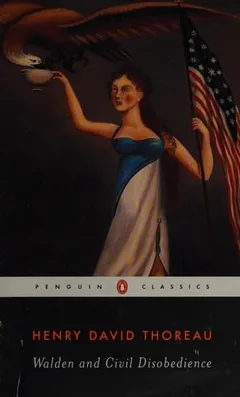
We recommendWalden and Civil DisobediencePenguin Classics, 1983Both texts in one cheap volume with Michael Meyer's introduction.
As an Amazon Associate, The Great Books earns from qualifying purchases. Bookshop.org links also support this site. How this works.
- Written
- 1854
- Form
- Essay
- Language
- English
- Length
- Medium · 300 pp120 to 300 pages
- Difficulty
- Demanding3 of 5 for a first-year reader
Penguin Classics edition
Buy on Amazon: Walden, opens in a new tabBookshop.org: Walden, opens in a new tab
Why it's on the list
Itemising the cost of his house and food in the opening chapter, down to the cents, turns a spiritual experiment into an accounting, and lets Thoreau argue on the economist's own ground that most people work far more than they need to for things that do not make them free. Compressing two years beside the pond into the cycle of a single year gives the book the shape of a natural process rather than a diary, so that the thaw of spring at its close reads as a resurrection the reader has been prepared for since the first frost. Mixing close observation of nature, the ponds sounded and measured, the ants at war, the ice cut and shipped, with an argument for living deliberately made the book the founding text of American nature writing and of a strain of dissent from the getting and spending of the country around it. Setting the experiment a mile and a half from Concord, within walking distance of his mother's house, keeps it honest about being a demonstration rather than an escape.
Key themes
- The good life
- Thoreau went to the woods, he says, to live deliberately, to front only the essential facts of life, and the book is an extended test of what those facts turn out to be.
- Money and class
- Itemising the cost of his house and food in the opening chapter, Economy, lets Thoreau argue on the economist's ground that most people work far more than they need to.
- Nature and the cosmos
- The pond sounded and measured, the ants at war and the ice cut and shipped, the book's close observation of nature is its evidence as much as its ornament.
- The self and identity
- Solitude, Thoreau insists, is not loneliness, and the chapters on being alone and on visitors together work out what company a self actually needs.
- Society and the state
- The village, glimpsed on his walks in for gossip and supplies, is the standing alternative the whole experiment measures itself against.
Which edition to read
Our pick
Walden and Civil Disobedience
Penguin Classics, 1983
Both texts in one cheap volume with Michael Meyer's introduction.
Amazon: the Penguin Classics edition, opens in a new tabBookshop.org: the Penguin Classics edition, opens in a new tab
Overview
About three hundred pages, published in 1854, an account of the two years, two months and two days Thoreau spent from 1845 in a cabin he built beside Walden Pond, outside Concord, Massachusetts, compressed into the cycle of a single year. The long opening chapter, Economy, itemises the cost of the house and of his food and argues that most people work far more than they need to.
The chapters that follow describe reading, sounds, solitude, visitors, the bean-field, the village, the ponds, winter animals and the thaw of spring, mixing close observation of nature with an argument for living deliberately.
What happens
Economy. Thoreau explains why he went to the pond, itemises what his house cost to build and what he spent on food, and argues that his neighbours lead lives of quiet desperation, working to pay for houses and clothes that own them.
Where I lived, and what I lived for. He describes the cabin and the morning bathing in the pond, and states his purpose: to live deliberately, to reduce life to its lowest terms and find whether it is mean or sublime.
Reading, sounds, solitude, visitors. Thoreau praises the classics read in their own languages, then turns to the sounds of the railroad, the birds and the night, defends solitude against the charge of loneliness, and receives visitors including a French-Canadian woodchopper he admires.
The bean-field and the village. He hoes his two and a half acres of beans, making the earth say beans instead of grass, and walks into Concord for gossip, where on one visit he is jailed for the tax he refused to pay.
The ponds, the animals, the winter. Thoreau sounds Walden and finds it has a bottom, watches a battle of ants, tracks the winter animals, and sees the ice cut and shipped to India while he sits by the stove reading the Bhagavad Gita.
Spring and conclusion. The ice breaks up, the sand flows in leaf-shapes down the railroad cut, and Thoreau leaves the pond, concluding that if one advances confidently in the direction of one’s dreams, one will meet with a success unexpected in common hours.
How to read it
Read Economy as an argument conducted in the enemy’s language, the ledger, and notice how its cents and dollars are meant to shame the reader’s own accounts.
Pay close attention to the compression of two years into one, and to how the seasonal shape prepares the thaw of spring to read as a renewal the whole book has been waiting for.
Notice how the close observation of nature, the sounding of the pond and the war of the ants, does the work of evidence, so that the argument for living deliberately rests on things seen rather than only asserted.
Consider the pond’s distance from Concord, a mile and a half, and Thoreau’s regular walks into town, and ask what kind of experiment this is if it was never an escape.
Read this book alongside Robinson Crusoe to compare two accountings of solitary life, one forced and one chosen, and what each man discovers he cannot do without.
Questions it raises
- Is Thoreau’s experiment a model anyone else could follow, or a demonstration whose meaning lies in its being performed once, by him, and written down?
- How seriously should we take the accounting in Economy? Does the ledger prove his point, or does it leave out the labour of others, his mother’s laundry and his friends’ land, on which the experiment quietly depended?
- What does the book mean by living deliberately, and is deliberateness compatible with the spontaneity it also prizes?
- Why does Thoreau, who left the pond after two years, present the leaving so briefly, and what does his admission that he had several more lives to live say about the experiment’s limits?
- How does Walden’s close attention to a small pond sit with its large claims about how everyone should live? Is the local the source of the universal, or a retreat from it?
- What has the book meant to the environmental movement, to dissenters from consumer society, and to those who simply want to live more simply, and which of these readings would Thoreau recognise?
Highlights
The long opening chapter, Economy, itemises the cost of the house and of his food and argues that most people work far more than they need to, spending their lives on what he calls the necessaries and then on luxuries that only hinder them.
Paraphrase of the book's opening argument, the experiment justified in the language of accounts.
Thoreau went to the woods because he wished to live deliberately, to front only the essential facts of life, and see if he could not learn what it had to teach, and not, when he came to die, discover that he had not lived.
Close paraphrase of the book's most quoted statement of purpose.
The chapters describe reading, sounds, solitude, visitors, the bean-field, the village, the ponds, winter animals and the thaw of spring, the two years compressed into the cycle of a single year that ends in the ice breaking up.
Paraphrase of the book's shape, a natural cycle rather than a diary.