Analytical Psychology
by Carl Jung
Assigned by 1 of the 9 reading lists
Five lectures Jung gave in English to about two hundred doctors at the Tavistock Clinic in London in 1935, followed by the questions and his answers. He sets out the structure of the psyche, the functions of thinking, feeling, sensation and intuition and the attitudes of introversion and extraversion, the personal and collective unconscious and the archetypes, and then describes his methods, the word association test, dream analysis and active imagination, illustrating each with cases. The final lecture treats transference. The informal tone makes it the easiest way into his system.
We recommendAnalytical Psychology, Its Theory and PracticeRoutledge, 2014The Tavistock Lectures with the audience discussion, the most accessible introduction to Jung in his own words.
As an Amazon Associate, The Great Books earns from qualifying purchases. Bookshop.org links also support this site. How this works.
- Written
- 1935 lectures, published 1968
- Form
- Psychology
- Language
- English
- Length
- Short · 220 ppunder 120 pages
- Difficulty
- Demanding3 of 5 for a first-year reader
Why it's on the list
Jung delivered these five lectures in English, without notes, to roughly two hundred practicing doctors at London's Tavistock Clinic, and the resulting informal, question- answering format remains the most accessible entry point into a theoretical system his own dense published books make harder to approach directly. Working through the psyche's basic structure, the four functions of thinking, feeling, sensation and intuition paired with introverted and extraverted attitudes, Jung builds toward his most distinctive and most contested claim, that beneath each person's personal unconscious lies a deeper collective unconscious populated by archetypes, inherited psychic patterns shared across humanity rather than accumulated through individual experience. His walk through clinical method, the word association test, dream analysis, active imagination, grounds this sometimes abstract architecture in concrete diagnostic practice. The audience's own questions, preserved in the text, let listeners push back on Jung's claims in real time, a transparency few theoretical presentations offer.
Key themes
- The self and identity
- Jung's account of the four psychic functions, thinking, feeling, sensation and intuition, paired with introverted and extraverted attitudes, builds a systematic typology of individual personality structure that grounds his subsequent, more speculative claims about the unconscious.
- Madness and the irrational
- Jung illustrates his clinical methods, the word association test, dream analysis and active imagination, with real case material, grounding his theoretical framework for understanding psychological disturbance in concrete diagnostic practice rather than leaving it purely abstract.
- Knowledge and truth
- Jung's claim that a collective unconscious populated by archetypes lies beneath each individual's personal unconscious proposes a form of shared, inherited psychological knowledge that exists prior to and independent of any single person's own accumulated personal experience.
- Art and beauty
- Jung's concept of archetypes, inherited psychic patterns shared across humanity, has proven especially influential for literary and artistic criticism, offering a framework for understanding why certain symbols and narrative patterns recur across otherwise unrelated cultures and artistic traditions.
Which edition to read
Our pick
Analytical Psychology, Its Theory and Practice
Routledge, 2014
The Tavistock Lectures with the audience discussion, the most accessible introduction to Jung in his own words.
Amazon: the Routledge edition, opens in a new tabBookshop.org: the Routledge edition, opens in a new tab
Overview
About two hundred and twenty pages, five lectures Carl Jung delivered in English, without notes, to roughly two hundred practicing doctors at London’s Tavistock Clinic in 1935, followed by the audience’s questions and Jung’s direct answers, published together in 1968. The informal, conversational format makes this the single most accessible entry point into Jung’s theoretical system, considerably easier to approach than his own denser published books.
Jung sets out the structure of the psyche, the four functions of thinking, feeling, sensation and intuition, and the attitudes of introversion and extraversion, the personal and collective unconscious and the archetypes, before describing his clinical methods, the word association test, dream analysis and active imagination, illustrating each with real cases. The final lecture treats transference, and the preserved audience discussion gives readers direct access to contemporary critical engagement with Jung’s ideas.
What happens
The structure of the psyche. Jung opens by setting out the basic structure of the psyche, introducing the four psychological functions, thinking, feeling, sensation and intuition, alongside the complementary attitudes of introversion and extraversion, building a systematic typology of individual psychological difference.
The personal and collective unconscious. Jung distinguishes the personal unconscious, built from an individual’s own repressed or forgotten experience, from a considerably deeper collective unconscious populated by archetypes, inherited psychic patterns he argues are shared across all humanity rather than accumulated through personal history alone.
The word association test. Jung describes the word association test as a practical clinical technique for accessing unconscious material, illustrating the method with real case examples that demonstrate how patients’ response patterns can reveal underlying psychological complexes.
Dream analysis and active imagination. Jung continues through dream analysis and active imagination as further clinical methods, each illustrated with concrete case material, grounding his sometimes abstract theoretical architecture in practical diagnostic and therapeutic technique.
Transference. The lectures’ final session treats transference, the psychological dynamic occurring within the therapeutic relationship itself between patient and analyst, extending Jung’s clinical discussion into the specific complications and opportunities this relationship presents.
Audience questions and answers. Throughout the published text, the audience’s own questions and Jung’s direct responses are preserved, giving readers a transparent, genuine sense of where his contemporary medical audience found his system persuasive and where they remained openly skeptical of his more speculative claims.
How to read it
Read these lectures as the most accessible entry point into Jung’s broader theoretical system; the informal spoken format and preserved audience interaction make abstract concepts considerably more approachable here than in Jung’s own denser, more systematically written published books.
Pay close attention to how Jung’s account of the four psychic functions and the introversion-extraversion distinction provides a genuinely useful typological framework independent of his more contested claims about the collective unconscious; this typology has proven influential well beyond strictly Jungian psychological contexts.
Notice how directly Jung grounds his theoretical claims about the collective unconscious and archetypes in actual clinical case material rather than leaving them as pure abstract speculation; the word association test, dream analysis and active imagination each receive concrete illustrative demonstration.
Consider the preserved audience questions as genuinely valuable critical context rather than incidental supplementary material; these exchanges reveal exactly where Jung’s contemporary medical peers pushed back on his claims, giving readers a transparent sense of the theoretical system’s genuine points of contention.
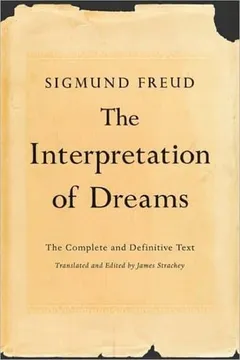
Read these lectures alongside Freud’s Interpretation of Dreams to compare how differently two major, historically connected figures in psychoanalytic theory approached the unconscious mind, Freud’s emphasis on personal repressed material against Jung’s additional claim of a deeper, collectively shared unconscious structure.
Questions it raises
- Does Jung’s concept of a collective unconscious populated by shared archetypes hold up as a genuine scientific or clinical claim, or does this concept function more persuasively as a metaphorical framework for understanding recurring patterns across human culture and experience?
- How does the lectures’ informal, question-and-answer format shape your understanding of Jung’s theoretical system compared to encountering the same ideas in his more systematically written published books? Does the conversational format clarify or potentially oversimplify genuinely complex theoretical claims?
- What does the preserved audience skepticism throughout the lectures suggest about how persuasive Jung’s contemporary medical peers found his more speculative claims, particularly regarding the collective unconscious and archetypes, compared to his more empirically grounded typological framework?
- How does Jung’s typology of psychological functions and attitudes, thinking, feeling, sensation, intuition, introversion, extraversion, compare to more contemporary personality theories? Does this framework hold up as a useful way of understanding individual psychological difference independent of Jung’s broader theoretical system?
- Given that these lectures were delivered specifically to practicing doctors rather than a general audience, how does this intended audience shape the content and presentation? Does the lectures’ clinical framing change how a general reader today should approach and evaluate Jung’s claims?
- What does the considerable influence of Jung’s archetype concept on literary and artistic criticism, well beyond clinical psychology, suggest about the concept’s actual explanatory power? Does its usefulness for understanding recurring cultural and artistic patterns validate its psychological claims, or do these represent genuinely separate applications?
Highlights
Jung describes the psyche's basic structure, including the four functions of thinking, feeling, sensation and intuition, and the complementary attitudes of introversion and extraversion, building a systematic typology of individual psychological difference before turning to his more contested claims about the unconscious.
Paraphrase of Jung's foundational typological framework, establishing the theoretical groundwork for his subsequent lectures.
Jung distinguishes the personal unconscious, built from an individual's own repressed or forgotten experience, from a deeper collective unconscious populated by archetypes, inherited psychic patterns he argues are shared across all humanity rather than accumulated through any single person's personal history.
Paraphrase of Jung's most distinctive and most contested theoretical claim, central to his broader analytical psychology.
Jung illustrates his clinical methods with real case material, describing the word association test, dream analysis and active imagination as practical diagnostic techniques for accessing unconscious material, grounding his theoretical framework in concrete clinical practice.
Paraphrase of Jung's practical clinical demonstration, connecting his theoretical architecture to actual diagnostic technique.
The published lectures preserve the audience's own questions and Jung's direct answers, giving readers a genuine, transparent sense of where his contemporary medical audience found his system persuasive and where they remained openly skeptical of his more speculative claims.
Paraphrase of the lectures' distinctive question-and-answer format, offering readers direct access to contemporary critical engagement with Jung's ideas.