Mourning and Melancholia
by Sigmund Freud · Trauer und Melancholie
Assigned by 1 of the 9 reading lists
A short but genuinely consequential paper, written in 1915 and published in 1917, that compares ordinary grief following a real loss with pathological depression. In mourning the external world has become poor and empty; in melancholia it is the mourner's own ego itself that has become so. Freud proposes that the melancholic has unconsciously identified with the lost object and turned the reproaches originally meant for it back against his own self, so that, in Freud's own memorable phrase, the shadow of the object falls upon the ego. The paper introduced the concept of identification that would go on to reshape much of Freud's later theoretical work.
We recommendThe Freud Reader, translated by James StracheyW. W. Norton, 1995Peter Gay's anthology includes this and most of the other short papers programs assign, in the Standard Edition translation.
As an Amazon Associate, The Great Books earns from qualifying purchases. Bookshop.org links also support this site. How this works.
- Written
- 1917
- Form
- Psychology
- Language
- German
- Length
- Short · 20 ppunder 120 pages
- Difficulty
- Demanding3 of 5 for a first-year reader
Why it's on the list
Freud sets ordinary grief beside pathological depression and finds them structurally identical in almost every respect but one: both begin with the same loss, both involve the same withdrawal of interest from ordinary life, but the mourner experiences the world as poor and empty while the melancholic experiences the self as poor and empty, a distinction that carries enormous explanatory weight. Freud's answer introduces one of his most durable ideas, that the melancholic has unconsciously identified with the very thing they lost, and has turned the anger meant for that object back against their own ego instead, so self-directed hatred is actually displaced hatred for someone once loved and now, at some level, resented for leaving. The shadow of the object falls upon the ego, in Freud's own phrase, meaning depression's self-attack is not really about the self at all but grief unable to complete its work, trapped inside identification with what it has lost, a concept that would reorganize much of his subsequent theory.
Key themes
- Death and mortality
- Freud grounds the entire essay in loss, comparing normal mourning, which eventually completes its work and allows the world to feel populated again, with melancholia, in which loss becomes lodged inside the ego itself and the normal grieving process cannot run its course.
- Love and desire
- Freud argues that melancholia depends on an ambivalent love relationship, genuine attachment mixed with genuine resentment toward the lost object, and that this buried ambivalence is what allows anger meant for the lost person to be redirected against the mourner's own self instead.
- Guilt and redemption
- The melancholic's characteristic self-reproach and self-condemnation, on Freud's account, are not really about the melancholic's own actual faults but are displaced accusations originally intended for the lost object, redirected inward once that object becomes unconsciously identified with the ego itself.
- Madness and the irrational
- Freud's comparison of ordinary mourning and pathological melancholia treats depression not as a wholly separate, alien condition but as grief that has gone wrong in a specific, identifiable way, unable to complete the normal work of gradually withdrawing attachment from the lost object.
Which translation to read
Our pick
The Freud Reader, translated by James Strachey
W. W. Norton, 1995
Peter Gay's anthology includes this and most of the other short papers programs assign, in the Standard Edition translation.
Amazon: the James Strachey translation, opens in a new tabBookshop.org: the James Strachey translation, opens in a new tab
Overview
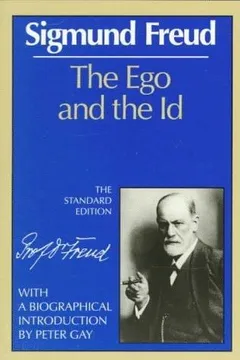
About twenty pages, a short but genuinely consequential paper Sigmund Freud wrote in 1915 and published in 1917, comparing ordinary grief following a genuine loss with pathological melancholia, a comparison Freud uses to illuminate the specific mechanism underlying depression by contrasting it directly with the more familiar, better understood process of normal mourning. The paper’s compact length belies its considerable theoretical significance: the concept of identification it introduces here, a person unconsciously taking a lost object’s characteristics into their own ego, would go on to reorganize substantial portions of Freud’s subsequent theoretical development, feeding directly into his later work on narcissism, group psychology and eventually the structural model of the mind presented in The Ego and the Id.
Freud’s method throughout is genuinely diagnostic and comparative rather than purely descriptive: both mourning and melancholia begin from the same precipitating event, a significant loss, and both involve a comparable withdrawal of interest and attachment from ordinary life, but Freud identifies a single, precisely located difference between the two conditions that becomes the key to his entire subsequent theoretical explanation.
The argument
The central distinction. Freud’s opening and most consequential observation locates the essential difference between mourning and melancholia with real precision: in normal mourning, the external world comes to feel poor and empty following the loss, while in melancholia, it is the mourner’s own ego itself that comes to feel poor, worthless and empty, a shift in where emptiness is actually located that becomes the essay’s central diagnostic clue.
Identification with the lost object. Freud’s central theoretical proposal explains this shift through the mechanism of identification: the melancholic, he argues, has unconsciously identified so completely with the lost object that the ego itself effectively comes to stand in for what has been lost, meaning that emotional material originally directed at the external lost object now operates internally, directed at the ego that has absorbed the object’s place.
Displaced reproach. Following directly from this identification, Freud argues that the melancholic’s characteristic self-accusation and self-hatred are not genuinely about the melancholic’s own actual faults at all, but represent reproaches and hostility originally intended for the lost object, redirected inward against the ego once that object becomes unconsciously identified with it, a reversal that explains why melancholic self-criticism often seems, to an outside observer, disproportionate to any actual fault the person has genuinely committed.
The shadow of the object. Freud captures this dynamic in his famous formulation that the shadow of the object fell upon the ego, meaning the ego becomes subject to judgment by an internal critical agency as though it were, in fact, the lost and now internally identified-with object, a compact image that summarizes how completely melancholic self-judgment actually originates outside the self it appears to be directed at.
Ambivalence as precondition. Freud argues that melancholia specifically requires a genuinely ambivalent relationship to the lost object, real love mixed with real, if largely unacknowledged, resentment or hostility, distinguishing melancholia from more straightforward grief over an object toward which the mourner felt no significant unresolved hostility. It is specifically this buried ambivalence, Freud argues, unable to be directed outward at an object that is now gone, that gets redirected against the ego through the mechanism of identification.
How to read it
Read the paper’s central diagnostic distinction, world made empty versus ego made empty, as the essay’s genuine analytical key, and track how carefully Freud builds his entire subsequent explanation of melancholia’s mechanism from this single, precisely located observed difference between the two conditions.
Pay close attention to how the concept of identification functions here as considerably more than a simple explanatory device for melancholia specifically; recognize this concept’s genuine theoretical significance as a building block Freud would return to and develop further across his subsequent work on group psychology and the structural model of the mind.
Notice how Freud’s account requires genuine ambivalence toward the lost object as melancholia’s specific precondition, and consider what this requirement suggests about which losses are actually likely to produce pathological melancholia rather than ordinary, if painful, grief that eventually completes its natural course.
Consider the essay’s famous formulation, the shadow of the object falling upon the ego, as worth sitting with directly rather than simply summarizing, since this compact image captures with unusual precision how completely melancholic self-criticism can originate from a source entirely outside the apparent target of that criticism.
Read this paper alongside Freud’s later work on narcissism and his eventual structural model in The Ego and the Id to trace how directly the identification mechanism introduced here develops into increasingly central and increasingly formalized theoretical machinery across Freud’s subsequent career.
Questions it raises
- Does Freud’s account of melancholia as requiring genuine ambivalence toward the lost object adequately explain all cases of pathological depression, or does this specific precondition limit the theory’s explanatory reach to only certain kinds of loss-triggered depression rather than depression more generally?
- How persuasive is the claim that melancholic self-accusation actually represents displaced reproach originally meant for the lost object, rather than genuine, if perhaps exaggerated, self-assessment? What kind of evidence would actually distinguish between these two possible explanations for a given patient’s self-criticism?
- What does the concept of identification, introduced here specifically to explain melancholia, gain or lose as it becomes progressively more central to Freud’s broader theoretical system across his subsequent work? Does its expanding application strengthen or dilute its original explanatory precision?
- How does Freud’s comparison between normal mourning and pathological melancholia hold up against contemporary understanding of grief and depression? Does treating these as structurally related but distinguishable processes still capture something genuine about the difference between healthy grieving and clinical depression?
- What are the clinical and personal implications of understanding depression’s characteristic self-hatred as actually displaced anger toward someone else, now redirected inward? Does this reframing offer genuine therapeutic value, and how might it change how a person experiencing melancholic self-criticism might approach understanding their own experience?
- Given this short paper’s considerable subsequent theoretical influence, feeding directly into Freud’s later work on narcissism, group psychology and the structural model of the mind, what does its brevity relative to its influence suggest about the relationship between a text’s length and its actual theoretical significance within a body of developing work?
Highlights
Freud observes that in mourning it is the world which has become poor and empty, while in melancholia it is the ego itself that has become so, a distinction he treats as the single most important clue to what actually distinguishes normal grief from pathological depression.
Paraphrase of Freud's opening diagnostic observation, the essay's central organizing distinction between the two conditions it compares.
He proposes that the melancholic has unconsciously identified with the lost object, so completely that the ego itself comes to stand in for what has been lost, and that the reproaches and hostility originally directed at the lost object are consequently turned against the ego instead, producing the melancholic's characteristic self-accusation and self-hatred.
Paraphrase of Freud's central theoretical proposal, the essay's most influential and most lasting contribution to psychoanalytic theory.
Freud writes that the shadow of the object fell upon the ego, so that the latter could henceforth be judged by a special agency as though it were the abandoned object, a formulation that captures how completely melancholic self-criticism actually originates outside the self it appears to be directed at.
Paraphrase of Freud's famous image, describing how the lost object's presence continues to shape the melancholic's own self-judgment from within.
He argues that melancholia depends on genuine ambivalence toward the lost object, a mixture of real love and real, if unacknowledged, resentment, and that it is specifically this buried hostility, unable to be directed at the object once it is gone, that gets redirected against the ego through the mechanism of identification.
Paraphrase of Freud's account of the specific emotional precondition, genuine ambivalence, that his theory requires for melancholia to develop rather than ordinary, uncomplicated grief.