Science and mathematics

The books that changed what we think the world is made of.

84 works · Refine in the browser →

The programs assign science in the original, which almost nobody else does: not textbooks about Newton but the Principia itself, worked through proposition by proposition at St. John’s and Thomas Aquinas College. The premise is that a scientific book is an argument like any other and can be read as one.

The Greek shelf is Euclid, whose Elements is the model of proof; Aristotle’s Physics and treatises on animals, which held for eighteen centuries; Archimedes, Apollonius and Ptolemy, whose Almagest fitted the heavens to circles. Lucretius’s poem is the atomism the Middle Ages lost. Then the revolution: Copernicus moved the earth, Kepler found the ellipses, Galileo rolled the balls and saw the moons, Harvey traced the blood, Bacon and Descartes wrote the methods, and Newton finished it.

The nineteenth century is Darwin, on five lists, and Faraday, Lavoisier and the founders of chemistry and electromagnetism. The twentieth is Einstein, Poincaré on what science can claim, and the biologists after Darwin. Most of these are on the Great Books of the Western World shelf, which includes three volumes of science, and at St. John’s, where the laboratory sequence reads them all. Start with the Origin, which has no mathematics and one idea.
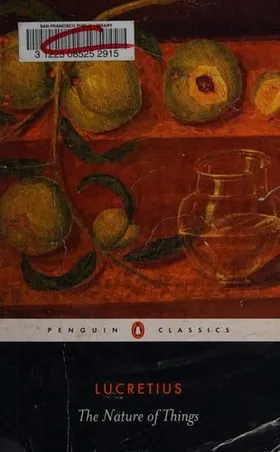
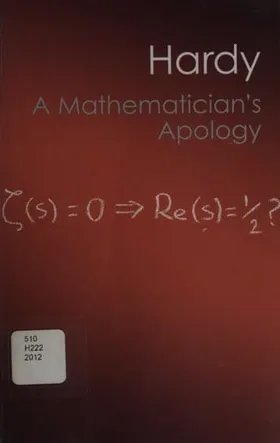
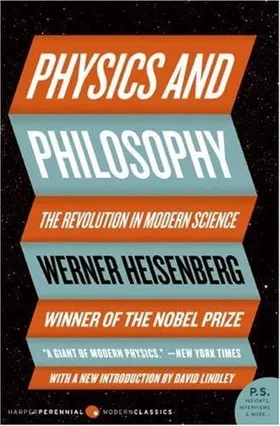
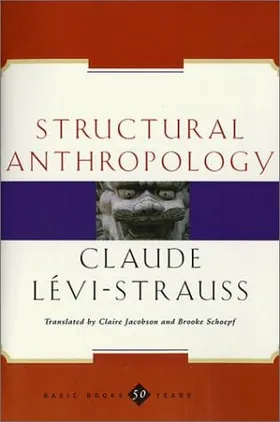
On the Nature of ThingsLucretius · c. 55 BCEPhysicsAristotle · c. 350 BCENovum OrganumFrancis Bacon · 1620Mathematical Principles of Natural PhilosophyIsaac Newton · 1687On the Origin of SpeciesCharles Darwin · 1859TimaeusPlato · c. 360 BCEElementsEuclid · c. 300 BCEOn the Motion of the Heart and Blood in AnimalsWilliam Harvey · 1628Principles of Human KnowledgeGeorge Berkeley · 1710Medical WritingsHippocrates · c. 430-350 BCEAlmagestPtolemy · c. 150 CEOn the Natural FacultiesGalen · c. 170 CEOn the Revolutions of the Heavenly SpheresNicolaus Copernicus · 1543Epitome of Copernican AstronomyJohannes Kepler · 1618-1621GeometryRené Descartes · 1637Dialogues Concerning Two New SciencesGalileo Galilei · 1638OpticksIsaac Newton · 1704Elements of ChemistryAntoine Lavoisier · 1789Experimental Researches in ElectricityMichael Faraday · 1839-1855The Descent of ManCharles Darwin · 1871On Generation and CorruptionAristotle · c. 350 BCEParts of AnimalsAristotle · c. 345 BCEWorksArchimedes · c. 250-212 BCEOn Conic SectionsApollonius of Perga · c. 200 BCEIntroduction to ArithmeticNicomachus of Gerasa · c. 100On the Loadstone and Magnetic BodiesWilliam Gilbert · 1600Concerning the Harmonies of the WorldJohannes Kepler · 1619Treatise on LightChristiaan Huygens · 1690The Chemical History of a CandleMichael Faraday · 1861The Principles of PsychologyWilliam James · 1890Science and HypothesisHenri Poincaré · 1902An Introduction to MathematicsAlfred North Whitehead · 1911Relativity: The Special and the General TheoryAlbert Einstein · 1917Science and the Modern WorldAlfred North Whitehead · 1925Scientific AutobiographyMax Planck · 1948MeteorologyAristotle · c. 350 BCEMinor Biological Works (Parva Naturalia)Aristotle · c. 350 BCEOn the HeavensAristotle · c. 350 BCEHistory of AnimalsAristotle · c. 345 BCEOn the Generation of AnimalsAristotle · c. 340 BCEOn Floating BodiesArchimedes · c. 250 BCEOn MusicBoethius · c. 500Doubts About GalenAl-Razi · c. 900-925The CureAvicenna (Ibn Sina) · c. 1020-1027NotebooksLeonardo da Vinci · c. 1478-1519Journeys in Diverse PlacesAmbroise Paré · 1585The Starry MessengerGalileo Galilei · 1610Principles of PhilosophyRené Descartes · 1644On the Circulation of the BloodWilliam Harvey · 1649On the Generation of AnimalsWilliam Harvey · 1651Scientific TreatisesBlaise Pascal · 1647-1665The Three Original Publications on Vaccination Against SmallpoxEdward Jenner · 1798-1800The Analytical Theory of HeatJoseph Fourier · 1822Principles of GeologyCharles Lyell · 1830-1833Scientific PapersCharles Lyell · 1830The Positive PhilosophyAuguste Comte · 1830-1842The Voyage of the BeagleCharles Darwin · 1839A System of LogicJohn Stuart Mill · 1843The Contagiousness of Puerperal FeverOliver Wendell Holmes · 1843The Forces of MatterMichael Faraday · 1860On the Conservation of ForceHermann von Helmholtz · 1862An Introduction to the Study of Experimental MedicineClaude Bernard · 1865On the Antiseptic Principle of the Practice of SurgeryJoseph Lister · 1867Geographical EvolutionArchibald Geikie · 1879Scientific PapersLouis Pasteur · 1878-1880The Wave Theory of LightLord Kelvin · 1884The Golden BoughJames George Frazer · 1890The Extent of the UniverseSimon Newcomb · 1906Creative EvolutionHenri Bergson · 1907Science and MethodHenri Poincaré · 1908Origin and Development of the Quantum TheoryMax Planck · 1920The Meaning of RelativityAlbert Einstein · 1922Where Is Science Going?Max Planck · 1932On the Method of Theoretical PhysicsAlbert Einstein · 1933The Expanding UniverseArthur Eddington · 1933Atomic Theory and the Description of NatureNiels Bohr · 1929-1934Genetics and the Origin of SpeciesTheodosius Dobzhansky · 1937Logic: The Theory of InquiryJohn Dewey · 1938The Evolution of PhysicsAlbert Einstein · 1938A Mathematician's ApologyG. H. Hardy · 1940What Is Life?Erwin Schrödinger · 1944Physics and PhilosophyWerner Heisenberg · 1958Structural AnthropologyClaude Lévi-Strauss · 1958The Nature of LifeC. H. Waddington · 1961