An Essay on Man
Assigned by 2 of the 9 reading lists
A philosophical poem in four verse epistles in heroic couplets, addressed to Pope's friend Henry St John, Viscount Bolingbroke. It sets out to vindicate the ways of God to man by showing that the universe is an ordered whole, a great chain of being, in which apparent evil serves a good we cannot see. The epistles treat man in relation to the universe, to himself as a creature of reason and self-love, to society, and to happiness, and contain the lines whatever is, is right and the proper study of mankind is man.
We recommendAn Essay on ManPrinceton University Press, 2016Tom Jones's edition, with an introduction on the poem's philosophy and full notes.
As an Amazon Associate, The Great Books earns from qualifying purchases. Bookshop.org links also support this site. How this works.
- Written
- 1733-1734
- Form
- Lyric poetry
- Language
- English
- Length
- Short · 70 ppunder 120 pages
- Difficulty
- Demanding3 of 5 for a first-year reader
Princeton University Press edition
Buy this edition: An Essay on Man, opens in a new tabBookshop.org: An Essay on Man, opens in a new tab
Why it's on the list
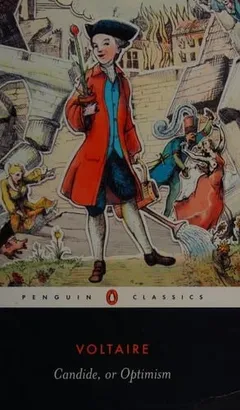
More phrases from this poem entered the language than from anything except Shakespeare and the King James Bible: hope springs eternal, a little learning is a dangerous thing, the proper study of mankind is man, whatever is, is right, to err is human. That is partly why it matters and partly a warning, because the lines travel so well that people quote them without the argument they belong to. The argument is a defence of the goodness of the world addressed to anyone who has looked at it and doubted: evil is apparent only, produced by our seeing one part of a whole we cannot survey. Voltaire was persuaded, then Lisbon was destroyed by an earthquake in 1755 and he wrote Candide against it. The quarrel between those two books is the eighteenth century arguing with itself.
Key themes
- Nature and the cosmos
- The universe is a full and graded order, the great chain of being, running from God through the angels to man, the animals and inert matter, with no gap anywhere. Remove any link and the whole fails, which is why man cannot be other than he is.
- Evil and suffering
- Theodicy without theology. Pope argues that partial evil is universal good, that we judge the plan from inside a fragment of it, and that what looks like disorder is order seen too close, which Johnson found a sonorous evasion.
- Reason and passion
- Self-love and reason are not enemies. Self-love supplies the motive power and reason the direction, and the ruling passion in each person, whatever it is, can be turned by circumstance and habit into the corresponding virtue.
- The good life
- Happiness is not in externals and is distributed equally. Greatness, fame, and riches are shown to be poor bargains, and virtue is the only good that cannot be taken, a conclusion Pope reaches in the last epistle and does not much argue for.
Which edition to read
Our pick
An Essay on Man
Princeton University Press, 2016
Tom Jones's edition, with an introduction on the poem's philosophy and full notes.
Amazon: the Princeton University Press edition, opens in a new tabBookshop.org: the Princeton University Press edition, opens in a new tab
Overview
Seventy pages, about thirteen hundred lines, in four verse epistles published anonymously between 1733 and 1734. Pope was forty-five, the most successful poet in English, and rich from the Homer translations.
The anonymity was deliberate and it worked. Critics who had spent years attacking Pope praised the poem warmly before the authorship became known, which he enjoyed very much.
The addressee is Henry St John, Viscount Bolingbroke, the Tory statesman and deist, who had been in exile and was now Pope’s neighbour and friend. Bolingbroke supplied much of the philosophy, and how much is still argued: Pope’s enemies said he was versifying ideas he did not understand, and Samuel Johnson, who admired the verse extravagantly, thought the reasoning was borrowed and thin.
It is written in heroic couplets, and nobody has ever handled that form better. The closed couplet, two lines with the sense complete and a turn at the end, is a machine for making sentences memorable, and Pope built the best examples anyone has built. The consequence is that the poem is quoted more than it is read.
The intention is stated openly in the opening lines: to vindicate the ways of God to man, which is Milton’s phrase with justify changed to vindicate, and the difference matters. Milton wrote a theodicy with a Fall in it. Pope’s has no Fall, no Christ, and almost no Christianity at all.
The argument
Epistle I: man in relation to the universe. The frame is a hunting metaphor, an invitation to Bolingbroke to survey the scene of man, and then the argument begins.
We see only a part. We do not know what other worlds exist, what the system as a whole requires, or why we occupy the place we do, and to complain about our condition is to pronounce on a design from inside one fragment of it. Pride is therefore the root error, and the poem attacks it steadily.
The chain of being does the philosophical work. Creation is a full and continuous ladder from God down through spiritual natures, man, animals, plants and matter, with no missing rung, and every rank is necessary to the whole. To ask why man is not an angel is to ask for a gap in the chain. To ask for stronger senses is to be answered that a finer nose would be an affliction and a microscopic eye would make ordinary life impossible.
Pope then takes on the standing objections. Natural disaster: shall the laws of nature be suspended for one good man, shall no storm blow because a Borgia is aboard? Human wickedness: the same passion that produces a Caesar produces the energy of ordinary life. The epistle ends with the famous six lines, all discord harmony not understood, whatever is is right.
Epistle II: man in relation to himself. The most quoted opening in the poem, and the one that pivots the whole enterprise: stop scanning God and study man.
Man is a mixed being on an isthmus between two states, too knowing for scepticism and too weak for certainty, the glory and the jest and riddle of the world. Pope is good on this because it is true to his own experience.
The psychology follows. Two principles move us: self-love, which is the motive force, and reason, which compares and restrains. Self-love is not condemned; without it nothing would happen. Reason without it would be a card without a wind.
Then the ruling passion, Pope’s best psychological idea. In each person one passion dominates and organises the rest, and it cannot be eradicated, only directed. Nature works by the same trick on everyone: our virtues and vices grow from the same root and are so close that it is hard to tell where one ends. The doctrine lets Pope claim that a providential order uses even our faults, and it gives him the satirist’s insight that people are consistent in their folly.
Epistle III: man in relation to society. Everything is connected and nothing exists for itself alone. Pope sketches a naturalistic origin of society: instinct binds animals, family binds people, and from family comes tribe and state. Early men learned from the animals, took their arts from them, and lived in a golden age without slaughter until superstition and tyranny arrived together.
The political conclusion is deliberately unhelpful to partisans: for forms of government let fools contest, whatever is best administered is best. Johnson disliked the line and it is hard to defend as political philosophy, but it fits the poem’s argument that particular arrangements matter less than the order that contains them.
Self-love and social love turn out to be the same thing correctly understood, which is the eighteenth century’s favourite proposition and the one it could never quite prove.
Epistle IV: happiness. Happiness is our being’s end and aim, it is available to all, and it does not lie in the things people chase. Pope goes through them: greatness, which is precarious; fame, which arrives after death; riches, which do not satisfy; honours, which depend on others. Virtue alone is secure.
The good are not always rewarded and the wicked not always punished, and Pope refuses to explain this except by returning to the partial view. The poem ends by praising Bolingbroke and restating its thesis: all our knowledge is ourselves to know.
How to read it
Read it aloud. The couplets are engineered for the voice and half their effect is lost silently.
Read each epistle in one sitting and do not stop to admire. The famous lines are so good that they break the argument up, and the argument does move.
Keep the chain of being in mind as the load-bearing idea. Arthur Lovejoy’s book of that name traces it from Plato to the eighteenth century, and Pope’s poem is its most compact statement.
Read Epistle I for the cosmology and Epistle II for the psychology, and note that they do not entirely fit together. A providential order that uses our ruling passions sits uneasily beside an exhortation to know ourselves and mend.
Then read Candide. Voltaire admired this poem and translated part of it; after the Lisbon earthquake killed tens of thousands on All Saints’ Day in 1755 he wrote a poem on the disaster and then the novel, and Pangloss’s optimism is a direct attack on the position Pope states here. Reading the two together is the best way to feel what was at stake.
And ask the hard question about whatever is, is right. As metaphysics it may be defensible. As advice to someone in pain it is close to unbearable, and Pope, who was four feet six, tubercular, in constant pain from a spinal deformity and barred from Oxford and from public life for being Catholic, knew that better than most of his readers.
Questions it raises
- Whatever is, is right. Is this a claim about the whole that says nothing about any part, and if so what use is it?
- The chain of being requires that nothing could be otherwise. Does that leave room for anything to be improved?
- Pope says self-love and social love are the same. Is that argued or asserted?
- Is the ruling passion a real observation about character, or a device for excusing what people do?
- For forms of government let fools contest. Can a poem this interested in order really be indifferent to political arrangements?
- What does the poem have to say to someone who has just lost a child? Should a theodicy have to answer that question?
Highlights
Know then thyself, presume not God to scan; / The proper study of Mankind is Man.
All Nature is but Art, unknown to thee; / All Chance, Direction, which thou canst not see; / All Discord, Harmony not understood; / All partial Evil, universal Good: / And spite of Pride, in erring Reason's spite, / One truth is clear, Whatever IS, is RIGHT.
Hope springs eternal in the human breast: / Man never Is, but always To be blest.
Vast chain of Being! which from God began, / Natures ethereal, human, angel, man, / Beast, bird, fish, insect, what no eye can see.
Placed on this isthmus of a middle state, / A being darkly wise, and rudely great: / Created half to rise, and half to fall; / Great lord of all things, yet a prey to all.