On Narcissism
by Sigmund Freud · Zur Einführung des Narzißmus
Assigned by 1 of the 9 reading lists
A 1914 paper, written partly in response to theoretical disputes with Jung and Adler, that introduces narcissism, the investment of libido in one's own self, as a normal universal stage of development and a component present within all later object love rather than an inherently pathological deviation. Freud uses this reframing to explain schizophrenia, hypochondria, the peculiar overestimation of the beloved in romantic love, and the intense self-regard parents show for their own children. The paper also proposes an ego ideal, an internalized standard watched over by a censoring psychical agency functioning as a kind of conscience, which prepared the theoretical ground for the later concept of the superego.
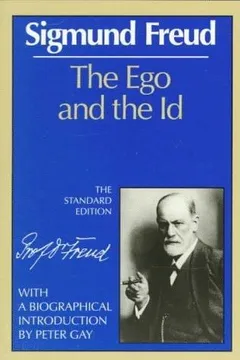
We recommendThe Freud Reader, translated by James StracheyW. W. Norton, 1995Peter Gay's anthology includes this paper in the Standard Edition translation.
As an Amazon Associate, The Great Books earns from qualifying purchases. Bookshop.org links also support this site. How this works.
- Written
- 1914
- Form
- Psychology
- Language
- German
- Length
- Short · 30 ppunder 120 pages
- Difficulty
- Difficult4 of 5 for a first-year reader
James Strachey translation
Buy on Amazon: On Narcissism, opens in a new tabBookshop.org: On Narcissism, opens in a new tab
Why it's on the list
Freud wrote this 1914 paper partly to answer Jung and Adler, whose rival theories of the libido pressed him to explain something his framework had not yet addressed, why a person's own self can become an object of love the way another person normally is. His answer treats narcissism not as pathology to be excised but as a normal developmental stage every person passes through, libido invested in the self before being redirected outward, a component that never disappears but continues operating within all later, apparently other-directed love. This reframing lets Freud explain otherwise separate phenomena within one framework, schizophrenia's withdrawal from the external world, hypochondria's anxious self-focus, the mysterious appeal of people who seem to need no one, and the intensity with which parents overvalue their own children as displaced narcissism aimed at recovering their own lost perfection. The paper's introduction of the ego ideal gave Freud the piece that would develop, a decade later, into the superego.
Key themes
- The self and identity
- Freud treats narcissism, libido invested in one's own self rather than directed outward toward others, as a normal developmental stage every person passes through rather than an inherently pathological condition, letting him explain both healthy self-regard and its disturbances within one framework.
- Love and desire
- Freud argues that narcissistic libido never actually disappears once a person begins loving others but continues operating within all subsequent object love, and distinguishes narcissistic love, loving someone as a version of oneself, from anaclitic love, loving someone who resembles a person who once cared for you.
- Madness and the irrational
- Freud uses narcissism to explain schizophrenia and hypochondria as conditions in which libido withdraws from external objects back into the self, giving psychoanalysis a way to extend its theoretical reach beyond the neuroses it had originally been developed to treat.
- Reason and passion
- The paper introduces the ego ideal, an internalized standard of perfection a person measures themselves against, watched over by a specific psychical agency Freud describes as a kind of internal conscience, a concept that would develop directly into the superego a decade later.
Which translation to read
Our pick
The Freud Reader, translated by James Strachey
W. W. Norton, 1995
Peter Gay's anthology includes this paper in the Standard Edition translation.
Amazon: the James Strachey translation, opens in a new tabBookshop.org: the James Strachey translation, opens in a new tab
Overview
About thirty pages, a paper Sigmund Freud published in 1914, addressing a concept, narcissism, that had already gained some circulation among psychiatrists as a descriptive clinical term before Freud undertook here to give it a systematic theoretical foundation within psychoanalytic theory. The paper carries additional biographical weight as a response, at least in part, to theoretical disputes with two former close colleagues, Carl Jung and Alfred Adler, whose own rival accounts of libido and human motivation had pressed Freud to explain more precisely something his existing theoretical framework had not yet fully addressed, how a person’s own self could become a genuine object of libidinal investment in the same way another person ordinarily is.
Freud’s central theoretical move reframes narcissism entirely, treating it not as an inherently pathological deviation to be corrected but as a normal, universal developmental stage every person passes through, libido initially invested in the infant’s own emerging sense of self before being gradually redirected outward toward other people and objects in the wider world, with the crucial further claim that this original narcissistic investment never actually disappears but continues operating, in varying proportions, within all subsequent apparently other-directed love throughout a person’s life.
The argument
Narcissism as normal development. Freud’s foundational claim establishes narcissism, understood specifically as libido invested in one’s own ego rather than in external objects, as a normal and universal stage of psychological development rather than as an inherently pathological perversion, positioning it as the libidinal complement to the basic biological instinct of self-preservation itself.
Two types of love. Freud develops a durable distinction between two types of object choice, anaclitic love, in which a person loves someone who resembles a figure who once nourished, protected or otherwise cared for them, typically a parent, and narcissistic love, in which a person loves what they themselves currently are, what they once were, what they would like to become, or someone who was once experienced as part of their own self, arguing that most actual human love combines elements of both types in varying proportions rather than falling cleanly into one category alone.
Explaining schizophrenia and hypochondria. Freud extends narcissism theory to explain clinical phenomena his existing framework, developed primarily around the neuroses, had struggled to fully address, treating schizophrenia’s characteristic withdrawal of interest and engagement from the external world as a withdrawal of libido back into the self, and treating hypochondria’s anxious, excessive self-focus as a related narcissistic disturbance, extending psychoanalytic theory’s explanatory reach into conditions considerably more severe than the neuroses it had originally been developed to treat.
Parental overvaluation. In one of the paper’s more immediately accessible and widely cited applications, Freud explains the common pattern of parents overvaluing their own children as a form of displaced narcissism, arguing that parents project onto their children the perfection and the specific unrealized ambitions they themselves were once forced to relinquish, treating the child as a vehicle for symbolically recovering the parent’s own lost narcissistic completeness from earlier in their own development.
The ego ideal. The paper’s most theoretically consequential contribution introduces the concept of the ego ideal, an internalized standard of perfection against which a person measures their own actual self, watched over by a specific psychical agency Freud describes functioning as a kind of internal conscience or censor, a concept whose full theoretical development, into the superego of Freud’s later structural model, would only arrive a decade later in The Ego and the Id.
How to read it
Read Freud’s reframing of narcissism as normal development, rather than as inherent pathology, as the paper’s genuine foundational move, and consider how this reframing changes the meaning and stakes of everything that follows, since treating narcissism as universal rather than deviant shifts the theoretical question from why some people become narcissistic toward how narcissistic investment gets distributed and redirected across the course of ordinary development.
Pay close attention to the distinction between anaclitic and narcissistic love, and consider testing this taxonomy against actual examples of love relationships you are familiar with, since Freud’s claim that most real love combines both types in varying proportions invites exactly this kind of direct, personal application.
Notice how the paper extends psychoanalytic theory beyond the neuroses it had originally been developed primarily to treat, applying narcissism theory to schizophrenia and hypochondria specifically, and consider what this extension suggests about Freud’s broader ambition for psychoanalysis as a comprehensive theory of mind rather than merely a therapeutic technique for a specific, narrower range of conditions.
Consider the parental overvaluation section as a genuinely accessible entry point into the paper’s more abstract theoretical machinery, since this specific, widely recognizable pattern of behavior offers concrete illustration of how narcissistic libido, on Freud’s account, can be displaced and redirected in ways that remain emotionally powerful while diverging considerably from straightforward self-love.
Read the paper’s introduction of the ego ideal as its most genuinely forward-looking theoretical contribution, and consider reading Freud’s later Ego and the Id directly afterward to see exactly how this concept develops, over the following decade, into the considerably more fully formalized superego.
Questions it raises
- Does Freud’s reframing of narcissism as a normal, universal developmental stage adequately distinguish healthy self-regard from genuinely pathological narcissistic disturbance, or does treating narcissism as fundamentally normal risk obscuring meaningful differences between ordinary self-love and clinically significant narcissistic pathology?
- How persuasive is the distinction between anaclitic and narcissistic love as a general account of human romantic attachment? Does this taxonomy capture something genuine about the actual variety of human love relationships, or does it impose a somewhat artificial binary onto what may be a more continuous or more varied range of actual loving motivations?
- What does Freud’s explanation of parental overvaluation as displaced narcissism suggest about the relationship between a parent’s own unrealized ambitions and their actual treatment of their children? Does this account adequately capture the genuine complexity of parental love, or does it risk reducing that love too entirely to self-interested projection?
- How does extending narcissism theory to explain schizophrenia and hypochondria demonstrate or test the limits of psychoanalytic theory’s explanatory reach beyond the neuroses it was originally developed to address? Does this extension succeed on its own terms, evaluated against what is now known about these conditions?
- What does the introduction of the ego ideal here, only fully developed into the superego a decade later, suggest about how Freud’s theoretical system actually developed over time, incrementally building toward more comprehensive formulations rather than arriving at his mature theory in any single decisive moment?
- Given that this paper was written partly in response to theoretical disputes with Jung and Adler, how might these specific intellectual and personal circumstances have shaped which questions Freud chose to address here and how he chose to address them, compared to how the paper might read if approached purely as abstract theoretical argument disconnected from this immediate professional context?
Highlights
Freud proposes that narcissism, the investment of libido in one's own ego, is not itself a perversion but the libidinal complement to the instinct of self-preservation, a normal and universal stage every person passes through in the course of ordinary development rather than an inherently pathological deviation.
Paraphrase of Freud's central reframing claim, treating narcissism as normal developmental fact rather than pathology, the foundation for the rest of the paper's argument.
He distinguishes anaclitic love, in which a person loves someone who resembles a figure who once nourished, protected or cared for them, from narcissistic love, in which a person loves what they themselves are, what they once were, what they would like to be, or someone who was once part of themselves, arguing that most actual love combines elements of both types.
Paraphrase of Freud's distinction between two types of loving, a taxonomy that has remained influential well beyond its original psychoanalytic context.
Freud explains parental overvaluation of children as a form of displaced narcissism, arguing that parents project onto their children the perfection and the unrealized ambitions they were once forced to relinquish in themselves, treating the child as a vehicle for recovering their own lost narcissistic completeness.
Paraphrase of Freud's application of narcissism theory to explain a specific, widely recognized but previously unexplained pattern of parental behavior.
He introduces the concept of the ego ideal, an internalized standard of perfection against which a person measures their actual self, watched over by a specific psychical agency functioning as a kind of internal conscience, a concept he presents as preparing the theoretical ground for further development still to come.
Paraphrase of the paper's introduction of the ego ideal concept, which Freud would develop directly into the superego a decade later.