A Vindication of the Rights of Woman
With Strictures on Political and Moral Subjects
Assigned by 2 of the 9 reading lists
Wollstonecraft argues that women appear frivolous and weak not by nature but because they are educated to be, and that a society which denies them reason and independence corrupts both sexes. She attacks Rousseau's Émile and the conduct books that teach girls to please, calls for national coeducational day schools, and argues that women can only be good wives, mothers and citizens if they are first rational beings. Written in six weeks in 1791-1792, it is the founding text of liberal feminism.
We recommendA Vindication of the Rights of Woman and A Vindication of the Rights of MenOxford University Press (Oxford World's Classics), 2009Janet Todd's edition has both Vindications in one volume with an introduction and notes.
As an Amazon Associate, The Great Books earns from qualifying purchases. Bookshop.org links also support this site. How this works.
- Written
- 1792
- Form
- Political theory
- Language
- English
- Length
- Medium · 280 pp120 to 300 pages
- Difficulty
- Demanding3 of 5 for a first-year reader
Oxford University Press (Oxford World's Classics) edition
Find this edition: A Vindication of the Rights of Woman, opens in a new tabBookshop.org: A Vindication of the Rights of Woman, opens in a new tab
Why it's on the list
Wollstonecraft wrote this in six weeks, at thirty-two, while the French were debating a national education scheme that would send boys to school and keep girls at home, and she made an argument that had not been made in that form before: that the differences everyone pointed to as proof of women's natural inferiority were the predictable results of how women are raised. Deny someone education, confine them to the drawing room, teach them from childhood that their business is to be attractive, and you will produce exactly the frivolous, cunning, emotionally unstable creature the conduct books then describe as woman's nature. The book is not primarily about rights in the legal sense. It is about reason, and its central claim is that virtue has no sex, because virtue is grounded in reason and reason is the same faculty in everyone.
Key themes
- Education
- The practical proposal is national day schools, free and coeducational to the age of nine, with boys and girls learning together in the same plain dress and playing in the same grounds, and specialised education afterwards by ability rather than sex.
- Women and men
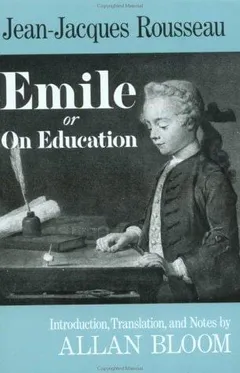
- Rousseau's Sophie, educated in Emile to be pleasing, dependent and never to reason, is the book's chief target. Wollstonecraft quotes him at length and turns his own principles about natural freedom against his account of women.
- Virtue and character
- Virtue must be one thing or it is nothing. A morality that asks men to be brave and just and women to be meek and charming has made women into a different order of creature and then blamed them for it.
- Liberty and rights
- The analogy she returns to is despotism. A woman with no property, no trade and no vote must obtain everything by influence, and a person who can only get what they want by pleasing a superior will become manipulative, as any subject of a tyrant does.
Which edition to read
Our pick
A Vindication of the Rights of Woman and A Vindication of the Rights of Men
Oxford University Press (Oxford World's Classics), 2009
Janet Todd's edition has both Vindications in one volume with an introduction and notes.
Amazon: the Oxford University Press (Oxford World's Classics) edition, opens in a new tabBookshop.org: the Oxford University Press (Oxford World's Classics) edition, opens in a new tab
Overview
Thirteen chapters, about two hundred and eighty pages, published in January 1792 by Joseph Johnson, who published everyone radical in London and employed Wollstonecraft as a reviewer and translator.
She wrote it in six weeks and it shows. The organisation is loose, the same points recur, and she says so herself in the advertisement, promising a second volume that was never written. The prose alternates between real eloquence and the hectoring pamphlet style of the period. None of this has damaged it.
The immediate occasion is named in the dedication, which is addressed to Talleyrand. He had produced a report to the French National Assembly in 1791 recommending that girls receive only a domestic education and leave school at eight. Wollstonecraft dedicates the book to him and asks him to reconsider, on the ground that the new French constitution was about to commit the same injustice the revolution had denounced.
The longer argument is with Rousseau. Book V of Emile describes the education of Sophie, the girl designed for Emile: taught to please, to submit, to endure injustice from her husband, never to reason abstractly, and to be constrained from infancy so that constraint becomes natural. Wollstonecraft had read him with admiration and regarded this as a betrayal of everything else he had written.
Her first book, A Vindication of the Rights of Men, published anonymously two years earlier, had been the first printed reply to Burke’s Reflections. This one is the sequel in title and in logic: having defended the rights of men against Burke, she extends the same reasoning where its author would not.
The argument
The ground: reason and virtue. Wollstonecraft starts from a proposition she treats as uncontroversial and then applies ruthlessly. What distinguishes humans is reason; virtue consists in acting according to reason; and the capacity for virtue is therefore the same wherever reason is.
It follows that there cannot be one morality for men and another for women. If meekness, docility and charm are virtues, they are virtues in everyone; if they are not, they should not be taught to anyone. A system that trains half the species in qualities it does not regard as virtuous has not discovered a difference in nature, it has manufactured one.
She is careful about what she concedes. Men are physically stronger and she grants it cheerfully and says it settles nothing, since we do not assign rights by bodily strength among men either.
The indictment of the education girls receive. The core of the book and the part that carries.
Girls are taught from infancy that their business is to be attractive. They are given accomplishments rather than knowledge, novels rather than argument, and manners rather than principles. They are kept from exercise, dressed in clothes they must not spoil, and praised for delicacy. Their reading is conduct books which explicitly instruct them in submission, cunning and the management of men, and Wollstonecraft goes through Rousseau, Dr Gregory, Fordyce and Lord Chesterfield, quoting and demolishing in turn.
The result is a mind formed for one purpose, and when the purpose expires with the beauty, nothing is left. A woman of thirty with no resources, no occupation, no trained judgement and a husband who has stopped paying attention is the book’s recurring figure, and Wollstonecraft treats her with more pity than contempt.
Sensibility comes in for particular attack. The cultivated tenderness of feeling that the age admired in women is, she argues, a disease produced by idleness and novels, which substitutes emotional intensity for moral judgement and leaves its possessor at the mercy of whoever excites her.
The political analogy. Her sharpest move is to compare the position of women to that of any people under arbitrary power.
Women have no property, no trade, no representation, and no independent means. Everything they get must be obtained from men by influence. And anyone who can only get what they want by pleasing a superior learns flattery, indirection and manipulation, because these are the tools available. What is then called female cunning is the ordinary behaviour of the unfree.
She extends this to the aristocracy and the military, both of which she regards as corrupted in the same way, by unearned position and idleness, which is why the book keeps comparing fashionable women to soldiers and courtiers.
Marriage. She wants it to be friendship. A marriage founded on passion cannot survive the passion, and a wife educated only to be desirable has nothing to offer when she stops being desired. What she proposes instead is a partnership of rational equals, with mutual respect and shared responsibility for the children, and she is severe about the idea that a wife’s duty is to keep her husband in love with her by arts.
She also argues, repeatedly, that a woman cannot be a good mother unless she is a rational being. An ignorant woman will spoil or neglect her children, and the education of the next generation is placed in the hands of people denied any education themselves.
The proposals. Chapter 12 gets specific. National day schools, publicly funded and managed, not boarding schools, which she thinks brutalise. Boys and girls together to the age of nine, in the same plain dress, with the same lessons and the same playground, learning botany, mechanics, astronomy, reading, writing and arithmetic, partly through conversation and the Socratic method rather than rote.
After nine, a division by ability and intended occupation rather than by sex, with the academically able of both sexes continuing together in the study of languages, science and history.
She also wants women admitted to occupations: medicine, business, farm management, and she raises the possibility of political representation, though she says she will not pursue it here and expects to be laughed at for mentioning it.
The ending. The final chapters gather examples of the follies produced by the present system, some of them unkind, and then close by arguing that the reform of society depends on this one: that as long as half the species is kept in ignorance and dependence, the other half will be corrupted by governing them.
How to read it
Read the dedication to Talleyrand, then chapters 2, 3, 4, 9 and 12. That is the argument: the education of girls, the character it produces, the analogy with political dependence, and the practical proposal.
Expect the repetition and the disorder. Six weeks is six weeks. Read for the argument rather than the structure.
Read Rousseau’s Emile Book V first if you can, even quickly. Half of this book is a reply to it, and the quotations she pulls out are more startling with the context.
Notice what she is not arguing. She does not claim women and men are identical, does not demand the vote as a primary aim, and takes marriage and motherhood as the ordinary destiny of most women. Her claim is that these roles are done badly by irrational people and cannot be improved without education. Judging the book by later feminist positions makes it look timid and misses what it did.
Watch her difficulty with other women. She is often harsh about the women of her own day, their vanity, their silliness, their sexual behaviour, and some readers find this the hardest thing in the book. The logic is that she regards these as injuries rather than faults, but the tone is frequently contemptuous and it is worth sitting with the tension.
Read the life with the work, but afterwards. Godwin’s memoir of her, published honestly in 1798 with the love affairs, the illegitimate daughter and the suicide attempts, destroyed her reputation for a century, and the book was unread until the twentieth. Her second daughter wrote Frankenstein.
And read Mill’s Subjection of Women, seventy-seven years later, to see the argument made again by someone the establishment had to take seriously.
Questions it raises
- How much of what any society calls natural difference is an effect of how people are brought up? How would you tell?
- Wollstonecraft grounds equality in reason. What happens to the argument if reason is not the essence of a person?
- She wants women to have power over themselves, not over men. Is that a sufficient demand?
- If flattery and manipulation are the behaviour of the powerless, what follows for how we judge them?
- Her case for educating women is partly that they will be better mothers. Does that concede too much?
- She is severe on the women of her time. Can you attack a condition without disparaging the people in it?
Highlights
I do not wish them to have power over men; but over themselves.
Taught from their infancy that beauty is woman's sceptre, the mind shapes itself to the body, and roaming round its gilt cage, only seeks to adorn its prison.
It is time to effect a revolution in female manners, time to restore to them their lost dignity, and make them, as a part of the human species, labour by reforming themselves to reform the world.
Strengthen the female mind by enlarging it, and there will be an end to blind obedience; but as blind obedience is ever sought for by power, tyrants and sensualists are in the right when they endeavour to keep women in the dark, because the former only want slaves, and the latter a plaything.
I love man as my fellow; but his sceptre, real or usurped, extends not to me, unless the reason of an individual demands my homage; and even then the submission is to reason, and not to man.