Ecclesiastes
by Anonymous · קֹהֶלֶת
Assigned by 1 of the 9 reading lists
A short book of Hebrew wisdom literature in the voice of Qoheleth, the Assembler or Preacher, presented as a king in Jerusalem who has tested pleasure, wealth, work and wisdom and found them all vanity, or breath. He observes that the same fate comes to the wise and the foolish, that there is a time for everything, that the race is not to the swift, and that the dead know nothing. His counsel is to fear God, keep his commandments and enjoy food, work and companionship while one can.
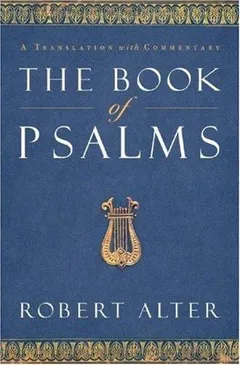
We recommendThe Wisdom Books, Job, Proverbs, and Ecclesiastes, translated by Robert AlterW. W. Norton, 2010Alter renders the famous refrain as "mere breath" and explains why; the notes are brief and useful.
As an Amazon Associate, The Great Books earns from qualifying purchases. Bookshop.org links also support this site. How this works.
- Written
- c. 3rd century BCE
- Form
- Scripture
- Language
- Hebrew
- Length
- Short · 25 ppunder 120 pages
- Difficulty
- Moderate2 of 5 for a first-year reader
Why it's on the list
A book of scripture that opens by declaring everything meaningless got included in the canon anyway, and stayed there, which tells you something about how seriously ancient readers took honest despair. Qoheleth, the Assembler or Preacher, presents himself as a king who has tried everything, pleasure, building projects, wealth, wisdom itself, and reports back that none of it outlasts death or explains why the wise and the fool, the righteous and the wicked, all end up in the same grave regardless of how they lived. Robert Alter's translation renders the book's famous refrain not as the vanity of the King James but as mere breath, hevel, a puff of air that vanishes as soon as it is spoken, and that image, breath rather than sin, is the key to the whole book: Qoheleth is not accusing existence of being wicked, he is reporting that it is fleeting and largely beyond anyone's control, which is a harder thing for a scripture to say and a stranger comfort to offer than either despair or easy faith.
Key themes
- Death and mortality
- The same fate, death, comes to the wise and the fool alike, and Qoheleth returns to this observation repeatedly as the fact that undercuts every human claim to have secured lasting advantage through wisdom, wealth or achievement.
- The good life
- Having tested pleasure, wealth, great works and wisdom and found none of them a lasting good, Qoheleth's positive counsel is modest and repeated: eat your bread, drink your wine, find enjoyment in your toil, since this portion is what a person actually has to work with.
- Fate and freedom
- For everything there is a season, a time for every purpose under heaven, and the famous catalogue of opposites, a time to be born and a time to die, a time to plant and a time to uproot, presents human life as governed by a rhythm no individual controls or can hurry.
- Knowledge and truth
- Qoheleth reports that increasing wisdom brings increasing sorrow, and that the wise die exactly as the fool dies and are in the long run remembered no better, an unusually direct challenge, from inside the wisdom tradition itself, to that tradition's own confidence in wisdom's rewards.
Which translation to read
Our pick
The Wisdom Books, Job, Proverbs, and Ecclesiastes, translated by Robert Alter
W. W. Norton, 2010
Alter renders the famous refrain as "mere breath" and explains why; the notes are brief and useful.
Amazon: the Robert Alter translation, opens in a new tabBookshop.org: the Robert Alter translation, opens in a new tab
Overview
About twenty-five pages, twelve chapters, a work of Hebrew wisdom literature generally dated by modern scholarship to somewhere around the third century BCE, considerably later than its traditional attribution to Solomon would suggest, based largely on the presence of Persian loanwords and linguistic features that point to a period well after the united monarchy. The book presents itself in the voice of Qoheleth, a word usually translated Assembler, Preacher or Teacher, someone who gathers and addresses an assembly, presented in the opening chapters as a king in Jerusalem, son of David, who has had the resources and the freedom to test every available path to a meaningful, satisfying life.
Ecclesiastes sits, alongside Job and Proverbs, within the biblical wisdom tradition, but it occupies an unusually skeptical position within that tradition. Where Proverbs generally teaches a fairly confident connection between wisdom, righteousness and reward, Ecclesiastes reports, from what its narrator presents as hard-won personal experience, that this connection does not reliably hold, that the wise and the foolish, the righteous and the wicked, share the same ultimate fate, and that much of what people pursue as meaningful turns out, on close examination, to be fleeting and largely beyond anyone’s control.
What happens
The refrain, and the failed experiments, chapters 1 to 2. The book opens with its most famous line, rendered in the King James tradition as vanity of vanities, all is vanity, and rendered by Robert Alter, in a translation choice many readers find genuinely clarifying, as merest breath, all is mere breath, a translation that recovers the Hebrew word hevel’s more literal sense of vapor, breath, something that appears and vanishes almost instantly, rather than the more moralizing connotation vanity has picked up in English. This distinction matters to how the whole book should be read: Qoheleth is not primarily accusing the world of being morally worthless or sinful, but reporting that it is transient, ungraspable, gone as soon as it is examined closely.
Qoheleth then describes, in the voice of a king with unlimited resources, a series of experiments in pursuing lasting meaning and satisfaction: he tests pleasure and laughter, undertakes great building projects, gardens, vineyards, pools, accumulates wealth, servants and possessions beyond any predecessor, and pursues wisdom itself with real seriousness. Each experiment is reported honestly, including its genuine pleasures, and each is finally judged insufficient, since death comes for the wise exactly as it comes for the fool, and whatever a person builds or accumulates will pass, after death, into the hands of someone else who did not labor for it, and who may, Qoheleth notes with particular bitterness, turn out to be a fool.
The rhythm of time, chapter 3. The book’s most widely known passage outside its own immediate context: a catalogue of paired opposites, a time to be born and a time to die, a time to plant and a time to uproot, a time to weep and a time to laugh, a time to keep silence and a time to speak, presenting human life as governed by a rhythm and a season for everything, largely outside any individual’s control to hasten or delay. This is followed by Qoheleth’s observation that God has made everything fitting in its own time, but has also put a sense of eternity into the human mind without giving it the capacity to grasp the whole of what God has done from beginning to end, a statement of genuine epistemic limitation running alongside the book’s more famous statements about mortality.
Further observations on injustice, toil and companionship, chapters 4 to 10. The middle chapters accumulate further honest, often bleak observations: Qoheleth notes the oppression of the powerless with no one to comfort them, and, in one of the book’s starkest lines, judges the dead better off than the living, and the never-born better off than either. He observes the isolation of a person who labors endlessly with no companion to share the fruits of the labor, and follows this with a more positive passage on the genuine value of companionship, two are better than one, since if one falls the other can help him up. He returns repeatedly to the theme that wisdom, while genuinely better than folly the way light is better than darkness, still does not secure a different fate than folly does in the end, since the wise person dies exactly as the fool dies and is, in due course, forgotten exactly as thoroughly.
Counsel, chapters 9 to 12. Against this accumulated honesty about mortality, injustice and the limits of wisdom, Qoheleth offers a positive counsel that recurs throughout the book in slightly varied form: eat your bread with enjoyment, drink your wine with a merry heart, find genuine pleasure in your work and in the ordinary portion of life actually available to you, since this modest enjoyment, rather than any larger achievement or legacy, is what a person can actually secure and is, Qoheleth insists, itself a gift from God’s hand rather than a lesser consolation prize. The book closes with an extended, deliberately oblique poetic meditation on old age and approaching death, images of a house falling into disrepair, of failing eyesight and hearing, before the golden bowl finally breaks and the dust returns to the earth as it was, and the breath returns to God who gave it.
The closing epilogue. The book’s final two verses, widely regarded by scholars as an editorial addition appended by a later hand to bring the book’s unsettling honesty into clearer alignment with more conventional piety, summarize the whole with a more straightforward religious instruction: fear God and keep his commandments, for this is the whole duty of humanity, since God will bring every deed, including every hidden one, into judgment.
How to read it
Read Robert Alter’s translation, or at least consult it alongside a more traditional version, specifically for how it renders hevel as breath rather than vanity throughout. This single translation choice changes the book’s whole tone, from a moralizing condemnation of worldly pursuits to a more clear-eyed, almost scientific report on their genuine but fleeting and ungraspable nature.
Read the book’s honesty as itself the point rather than as a problem the book needs to solve or apologize for. Ecclesiastes does not pretend that death is not final, that wisdom always pays off, or that injustice is always eventually corrected; its inclusion in the biblical canon despite this honesty is worth sitting with rather than explaining away.
Notice how the counsel to eat, drink and find enjoyment in toil recurs at intervals throughout the book, functioning almost as a refrain answering the more despairing observations that surround it each time. This modest, repeated counsel, rather than any grand resolution, is the book’s actual positive teaching.
Consider the closing two verses as a distinct editorial voice, and ask what work that addition is doing. Does it genuinely complete and clarify Qoheleth’s teaching, or does it soften an honesty the rest of the book was earning the hard way?
Read this book alongside Job, the other great work of honest complaint within the biblical wisdom tradition, and notice how differently the two books approach the problem of undeserved suffering and the apparent gap between righteousness and reward, Job through extended argument and divine confrontation, Ecclesiastes through weary, observational report.
Questions it raises
- Does translating hevel as breath rather than vanity genuinely change the book’s meaning, or is it a difference of tone without a difference of substance?
- Is Qoheleth’s repeated counsel to eat, drink and find enjoyment in toil a genuine answer to the problem of mortality and meaninglessness, or a modest consolation offered in the absence of any larger answer?
- What does it mean that a text this willing to report the same fate for the wise and the foolish was preserved as scripture rather than excluded as incompatible with more confident religious teaching?
- Does the closing epilogue, urging fear of God and obedience to commandments, complete Qoheleth’s argument or undercut the honesty of everything that came before it?
- How should the observation that the dead are better off than the living, and the unborn better off than either, be read: as genuine despair, as rhetorical exaggeration, or as an honest report Qoheleth himself is troubled by?
- Is there a meaningful difference between Ecclesiastes’s skepticism about lasting meaning and modern secular reflections on mortality and purpose, or does the book’s persistent reference to God as the giver of whatever portion we have mark a genuine difference?
Highlights
Merest breath, said Qohelet, merest breath. All is mere breath.
A generation goes and a generation comes, but the earth endures forever. And the sun rises and the sun sets, and to its place it pants, and rises there again.
A time to be born, and a time to die, a time to plant, and a time to uproot the planted. A time to weep, and a time to laugh, a time of wailing and a time of dancing.
There is nothing better for a person than to eat and drink, and to see good in his toil. This, too, I saw, is from the hand of God.
Fear God and keep his commandments, for this is the whole of man. For every deed will God bring to judgment, for every hidden act, be it good or evil.