A Vindication of the Rights of Men
In a Letter to the Right Honourable Edmund Burke
Assigned by 1 of the 9 reading lists
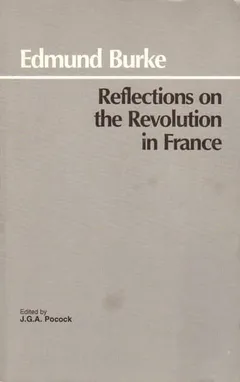
The first published reply to Burke's Reflections on the Revolution in France, written in a month and issued anonymously in November 1790. Wollstonecraft accuses Burke of sentimental theatricality, of defending property and hereditary privilege in the name of tradition, and of feeling for the queen of France while ignoring the poor. Against him she sets natural rights grounded in reason and God, and argues that inherited wealth and rank corrupt manners and morals. A second edition carried her name and made her reputation, two years before the Rights of Woman applied the same argument to her own sex.
We recommendA Vindication of the Rights of Woman and A Vindication of the Rights of MenOxford University Press (Oxford World's Classics), 2009Both Vindications in one volume; the Rights of Men is rarely printed alone.
As an Amazon Associate, The Great Books earns from qualifying purchases. Bookshop.org links also support this site. How this works.
- Written
- 1790
- Form
- Political theory
- Language
- English
- Length
- Short · 90 ppunder 120 pages
- Difficulty
- Demanding3 of 5 for a first-year reader
Oxford University Press (Oxford World's Classics) edition
Find this edition: A Vindication of the Rights of Men, opens in a new tabBookshop.org: A Vindication of the Rights of Men, opens in a new tab
Why it's on the list
Answering Burke within weeks, before Paine and before anyone else, made a thirty-one-year-old woman the first voice in the great British argument over the French Revolution, and the second edition with her name on it made her a public figure. Accusing Burke of sentimental theatricality, of weeping for the queen of France while the poor went unregarded, turned his own rhetoric of feeling against him and asked whose sufferings a defender of tradition had eyes for. Arguing that inherited wealth and rank corrupt manners and morals, so that the rich are unfitted for virtue by their very privileges, carried the attack past the Revolution to the whole structure of a society built on property, and anticipated the argument about women that the second Vindication would make. Grounding natural rights in reason and God, and treating reason as the faculty that makes rights visible, set out the rationalist radicalism that Godwin and the Dissenters shared, and that the next Vindication would extend to a sex Burke had not thought to mention.
Key themes
- Liberty and rights
- Answering Burke within weeks made a thirty-one-year-old woman the first voice in the great British argument over the French Revolution.
- Reason and passion
- Accusing Burke of sentimental theatricality, of weeping for the queen while the poor went unregarded, turned his rhetoric of feeling against him.
- Money and class
- Inherited wealth and rank corrupt manners and morals, so that the rich are unfitted for virtue by their very privileges.
- Justice
- Natural rights grounded in reason and God are set against Burke's prescription, and reason is the faculty that makes rights visible.
- History and progress
- Burke's reverence for tradition is answered with the claim that a custom's age is no argument for it, and that the Revolution is reason's attempt to begin again.
- Society and the state
- The attack carries past the Revolution to the whole structure of a society built on property, and anticipates the argument about women that the second Vindication would make.
Which edition to read
Our pick
A Vindication of the Rights of Woman and A Vindication of the Rights of Men
Oxford University Press (Oxford World's Classics), 2009
Both Vindications in one volume; the Rights of Men is rarely printed alone.
Amazon: the Oxford University Press (Oxford World's Classics) edition, opens in a new tabBookshop.org: the Oxford University Press (Oxford World's Classics) edition, opens in a new tab
Overview
A ninety-page pamphlet, the first published reply to Burke’s Reflections on the Revolution in France, written in a month and issued anonymously in November 1790. Wollstonecraft accuses Burke of sentimental theatricality, of defending property and hereditary privilege in the name of tradition, and of feeling for the queen of France while ignoring the poor.
Against him she sets natural rights grounded in reason and God, and argues that inherited wealth and rank corrupt manners and morals. A second edition carried her name and made her reputation.
What happens
The address to Burke. Wollstonecraft opens by addressing Burke directly and confessing that she will not observe the ceremonies of debate, since his book has made her indignant, and sets out the rights of men as the birthright of every rational creature.
Burke’s sensibility. She dissects his famous lament for Marie Antoinette and the age of chivalry, accusing him of a theatrical sensibility that weeps for pageantry and is unmoved by the real sufferings of the poor, and of having attacked the Dissenting preacher Richard Price for his age and his religion.
Prescription and reason. Against Burke’s argument that the constitution’s age is its authority, she argues that the age of a custom is no argument for it, that the English constitution was built on conquest and usurpation, and that reason alone can judge whether an institution is just.
Property and its corruptions. Wollstonecraft argues that the security of property is the foundation of Burke’s politics, and that inherited wealth and rank corrupt those who hold them, unfitting the rich for virtue and the poor for anything but servility, so that the whole society is deformed by the institution he defends.
The Revolution. She defends the National Assembly’s reforms, the abolition of feudal privilege and the confiscation of church lands, as reason’s attempt to build a state on justice rather than prescription.
The close. Wollstonecraft ends with a vision of a society in which property is divided, the poor have land, and virtue is possible for all, and warns Burke that his reverence for the past is a reverence for the wrongs the past has sanctified.
How to read it
Read the pamphlet’s date, November 1790, as part of its meaning, the first answer to Burke and the voice of a young woman entering an argument among the most famous men in Britain.
Pay close attention to the attack on Burke’s sensibility, and to how his own rhetoric of feeling is turned against him by asking whose sufferings it has eyes for.
Notice the argument that inherited wealth corrupts manners and morals, and follow it past the Revolution to the structure of society, and then forward to the Rights of Woman.
Consider the grounding of rights in reason and God, and ask what the rationalist radicalism of Wollstonecraft and her circle owed to the Dissenting religion Burke had mocked.
Read this pamphlet alongside Burke’s Reflections to hear the argument as it happened, and then alongside the Rights of Woman to see the same case made for a sex Burke had not thought to mention.
Questions it raises
- Is the attack on Burke’s sensibility fair, or does Wollstonecraft’s own indignation belong to the same order of feeling she condemns?
- Does grounding rights in reason and God make them more secure than Burke’s prescription, or does it only move the question of authority?
- Is the argument that property corrupts its holders a critique of the aristocracy or of all ownership, and does the pamphlet decide?
- How much of the Rights of Woman is already present here, and what changed when Wollstonecraft turned the argument on her own sex?
- Why has the first Vindication been so overshadowed by the second, and what does it say about the Revolution debate that a woman’s answer to Burke was forgotten while Paine’s was not?
- What did the anonymous first edition and the signed second do to the pamphlet’s reception, and what does that tell us about who was allowed to argue in 1790?
Highlights
Wollstonecraft accuses Burke of sentimental theatricality, of feeling for the queen of France and the pageantry of the old order while the sufferings of the poor, the pressed sailor and the game-law victim, leave him unmoved.
Paraphrase of the pamphlet's central charge against Burke's rhetoric.
Against Burke's defence of property and hereditary privilege in the name of tradition she sets natural rights grounded in reason and God, arguing that the age of a custom is no argument for it.
Paraphrase of the pamphlet's positive doctrine.
Inherited wealth and rank corrupt manners and morals, and the rich, unfitted for virtue by their privileges, are the true objects of pity rather than the revolutionaries Burke condemns.
Paraphrase of the argument that carries the pamphlet beyond the Revolution to the structure of society.