Essay on Algeria
by Alexis de Tocqueville · Travail sur l'Algérie
Assigned by 1 of the 9 reading lists
A memorandum Tocqueville wrote after his first visit to Algeria, unpublished in his lifetime, on how France should hold and govern its new conquest. He takes French domination as settled and asks how it can be made to last, examining the country's tribes and towns, the Arab and Kabyle populations, the conduct of the war against Abd al-Qadir, and the administration of the settler colony. He argues for European settlement and for giving the colonists civil liberties, criticises the brutality and lawlessness of French military rule as damaging to France itself, and at the same time accepts measures against the Arab population that he would have condemned at home.
We recommendWritings on Empire and Slavery, translated by Jennifer PittsJohns Hopkins University Press, 2001The standard English text of the Algeria writings, with an introduction that explains their place in Tocqueville's politics.
As an Amazon Associate, The Great Books earns from qualifying purchases. Bookshop.org links also support this site. How this works.
- Written
- 1841
- Form
- Essay
- Language
- French
- Length
- Short · 60 ppunder 120 pages
- Difficulty
- Demanding3 of 5 for a first-year reader
Jennifer Pitts translation
Buy on Amazon: Essay on Algeria, opens in a new tabBookshop.org: Essay on Algeria, opens in a new tab
Why it's on the list
Taking French domination of Algeria as settled and asking only how it can be made to last shows the author of Democracy in America reasoning as a statesman of empire, and the essay has become the central exhibit in the argument over whether liberalism and colonial conquest were ever really at odds. Accepting measures against the Arab population, the burning of crops and the seizure of herds, that he would have condemned at home lays bare a double standard that Tocqueville does not hide and does not resolve, making the memorandum unusually honest about what the liberal state permits itself abroad. Criticising the brutality and lawlessness of French military rule as damaging to France itself, rather than to Algerians, reveals the limit of his concern and the shape of his argument: the colony matters as a school for French citizens and a test of French greatness. Arguing for European settlement with civil liberties for the colonists, alongside subjection for the conquered, sets out in outline the settler regime that would last until 1962.
Key themes
- Power and authority
- Taking French domination as settled and asking how it can be made to last shows the author of Democracy in America reasoning as a statesman of empire.
- Justice
- Accepting measures against the Arab population that he would have condemned at home lays bare a double standard that Tocqueville neither hides nor resolves.
- War
- The conduct of the war against Abd al-Qadir, including the razzias that burned crops and seized herds, is examined as a question of what will work rather than what is permitted.
- Liberty and rights
- Arguing for civil liberties for the European colonists alongside subjection for the conquered sets out in outline the settler regime that lasted until 1962.
- Society and the state
- Criticising military lawlessness as damaging to France itself reveals the argument's shape: the colony matters as a test of French greatness and a school for French citizens.
Which translation to read
Our pick
Writings on Empire and Slavery, translated by Jennifer Pitts
Johns Hopkins University Press, 2001
The standard English text of the Algeria writings, with an introduction that explains their place in Tocqueville's politics.
Amazon: the Jennifer Pitts translation, opens in a new tabBookshop.org: the Jennifer Pitts translation, opens in a new tab
Overview
A sixty-page memorandum Tocqueville wrote in 1841 after his first visit to Algeria, unpublished in his lifetime, on how France should hold and govern its new conquest. He takes French domination as settled and asks how it can be made to last, examining the country’s tribes and towns, the Arab and Kabyle populations, the conduct of the war against Abd al-Qadir, and the administration of the settler colony.
He argues for European settlement and for giving the colonists civil liberties, criticises the brutality and lawlessness of French military rule as damaging to France itself, and at the same time accepts measures against the Arab population that he would have condemned at home.
What happens
Why France must stay. Tocqueville opens by dismissing the question of whether France should abandon Algeria: to do so would announce its decline to the world. The only question is how domination can be made to last.
The country and its peoples. He surveys the towns and the tribes, distinguishing the Kabyles of the mountains, whom he thinks can be reached through trade, from the Arabs of the plains, organised under religious and tribal leaders, whom he thinks must be subdued.
The war against Abd al-Qadir. Tocqueville examines the resistance led by the emir and concludes that France cannot win by holding fixed points; it must strike at the tribes’ means of living, and he accepts the razzias that burn harvests and seize herds as necessities of the kind of war it is.
The limits of domination. He argues that France cannot govern the Arabs directly as it governs Frenchmen, and must rule through their own leaders while preventing any single power from uniting them.
The settler colony. Tocqueville argues that only European settlement can make the conquest permanent, and that settlers will not come or stay unless they enjoy the civil liberties and secure property they would have in France.
Against military rule. He criticises the brutality and lawlessness of the army’s administration, its contempt for civilians and its arbitrary power, as corrupting to the officers and dangerous to France, which cannot keep men who have learned to rule that way from bringing it home.
How to read it
Read the opening refusal to consider abandoning Algeria as the key to everything that follows, the conquest assumed and only its permanence at issue.
Pay close attention to the passages on the razzias, where Tocqueville accepts the destruction of harvests and the seizure of herds as necessities, and weigh them against the principles of Democracy in America.
Notice that the criticism of military lawlessness is made on France’s behalf, not Algeria’s, the army’s habits feared as a contagion that might return home, and ask what that reveals about the limits of the argument.
Consider the memorandum as a document of the liberal mind at work on empire, unusually honest about what it permits itself, and read it as an exhibit rather than only an argument.
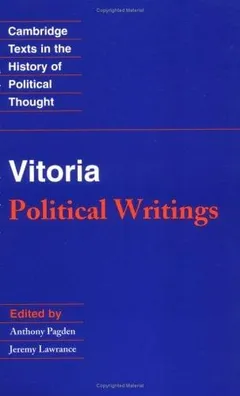
Read this essay alongside Vitoria’s lectures on the American Indians to compare two attempts, three centuries apart, to reason about the rights of a conquered people from within the conqueror’s own tradition.
Questions it raises
- Is the double standard Tocqueville applies, liberty for the settlers and subjection for the Arabs, a betrayal of his liberalism or a consequence of it?
- Why does he criticise the army’s brutality as damaging to France rather than to Algerians, and what does that choice of ground tell us about who his argument is for?
- How does the distinction between Kabyles and Arabs, one to be traded with and the other subdued, shape the policy he recommends, and how much of it rests on knowledge rather than convenience?
- What does Tocqueville’s acceptance of the razzias as necessities of the war reveal about how easily a theory of what is permitted gives way to a theory of what will work?
- Should the essay change how we read Democracy in America, or can the two be held apart as the statesman’s and the theorist’s work?
- What did the settler colony Tocqueville outlined become over the following century, and does the memorandum foresee any of the violence of its end?
Highlights
Tocqueville takes French domination as settled and asks how it can be made to last, examining the country's tribes and towns, the Arab and Kabyle populations, and the conduct of the war against Abd al-Qadir.
Paraphrase of the essay's starting point, the conquest assumed and its permanence the only problem.
He argues for European settlement and for giving the colonists civil liberties, and criticises the brutality and lawlessness of French military rule as damaging to France itself.
Paraphrase of the essay's positive programme, liberty for the settlers and restraint on the army in France's own interest.
At the same time he accepts measures against the Arab population, the destruction of harvests and the seizure of property, that he would have condemned at home, judging them necessary to the war.
Paraphrase of the essay's most troubling passages, in which the liberal accepts what he calls the unfortunate necessities of conquest.