Profession of Faith of a Savoyard Vicar
by Jean-Jacques Rousseau · Profession de foi du vicaire savoyard
Assigned by 1 of the 9 reading lists
The long speech embedded in Book IV of Emile in which a Savoyard priest, speaking to a young man who has lost his faith, sets out a natural religion. From the evidence of his own consciousness he argues for a will that moves the universe, for an intelligent God, for the freedom and immortality of the soul, and for conscience as an infallible inner voice. He then rejects revelation and dogma as unnecessary. The passage led directly to the condemnation of Emile in 1762.
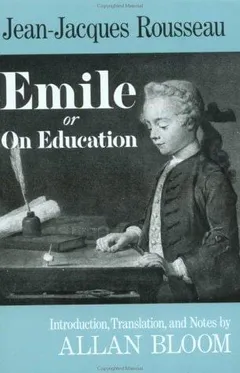
We recommendEmile, or On Education, translated by Allan BloomBasic Books, 1979The Profession is best read in Book IV of Emile, where Rousseau placed it; Bloom's is the standard translation.
As an Amazon Associate, The Great Books earns from qualifying purchases. Bookshop.org links also support this site. How this works.
- Written
- 1762
- Form
- Theology
- Language
- French
- Length
- Short · 70 ppunder 120 pages
- Difficulty
- Moderate2 of 5 for a first-year reader
Why it's on the list
The Vicar's argument from the evidence of his own consciousness for a will that moves the universe, an intelligent God, and the soul's freedom and immortality stakes out natural religion's central Enlightenment project, deriving religious conviction from reason and inner experience alone rather than from revealed scripture or institutional authority. His treatment of conscience as an infallible inner voice gives moral knowledge a foundation genuinely independent of external religious instruction, locating ethical certainty within immediate individual experience rather than requiring doctrinal mediation through church or text. His explicit rejection of revelation and dogma as unnecessary, once natural religion's core commitments have been secured through reason alone, draws a sharp and deliberately provocative line between what reason can establish unaided and what organized religion had traditionally claimed only revelation could supply. That this specific passage led directly to Emile's condemnation in 1762 demonstrates how dangerous contemporaries found this particular combination, genuine religious conviction paired with explicit rejection of institutional religious authority, a position threatening enough to provoke official suppression despite its own sincere theistic commitments.
Key themes
- God and faith
- The Vicar's argument from the evidence of his own consciousness for a will that moves the universe, an intelligent God, and the soul's freedom and immortality stakes out natural religion's central Enlightenment project, deriving conviction from reason alone.
- Reason and passion
- The Vicar's treatment of conscience as an infallible inner voice gives moral knowledge a foundation genuinely independent of external religious instruction, locating ethical certainty within immediate individual experience rather than doctrinal mediation.
- Knowledge and truth
- The Vicar's explicit rejection of revelation and dogma as unnecessary, once natural religion's core commitments have been secured through reason alone, draws a sharp line between what reason can establish unaided and what institutional religion had claimed.
- Virtue and character
- Speaking to a young man who has lost his faith, the Vicar reconstructs religious and moral conviction from immediate consciousness rather than inherited doctrine, modeling how genuine virtue might be recovered through reasoned reflection alone.
Which translation to read
Our pick
Emile, or On Education, translated by Allan Bloom
Basic Books, 1979
The Profession is best read in Book IV of Emile, where Rousseau placed it; Bloom's is the standard translation.
Amazon: the Allan Bloom translation, opens in a new tabBookshop.org: the Allan Bloom translation, opens in a new tab
Overview
About seventy pages, the long speech embedded in Book IV of Rousseau’s Emile, published in 1762, in which a Savoyard priest, speaking to a young man who has lost his faith, sets out a natural religion. From the evidence of his own consciousness he argues for a will that moves the universe, for an intelligent God, and for the freedom and immortality of the soul.
He argues for conscience as an infallible inner voice. He then rejects revelation and dogma as unnecessary. The passage led directly to the condemnation of Emile in 1762.
What happens
Addressing a young man’s lost faith. The Savoyard Vicar speaks directly to a young man who has lost his faith, setting out to reconstruct religious conviction from reason and immediate experience rather than simply reasserting inherited doctrine.
Arguing from consciousness for a moving will. The Vicar argues from the evidence of his own consciousness for a will that moves the universe, deriving this foundational claim from immediate inner experience rather than external authority.
Arguing for an intelligent God. The Vicar extends his argument to establish an intelligent God, building this theological conclusion on the same experiential foundation as his prior claim about a universal moving will.
Arguing for the soul’s freedom and immortality. The Vicar argues further for the soul’s freedom and immortality, completing his natural theology’s core metaphysical commitments through continued appeal to consciousness and reason alone.
Conscience as an infallible inner voice. The Vicar treats conscience as an infallible inner voice, giving moral knowledge a foundation independent of external religious instruction and locating ethical certainty within direct individual experience.
Rejecting revelation and dogma. The Vicar explicitly rejects revelation and dogma as unnecessary once natural religion’s core commitments have been secured through reason, the specific claim that led directly to Emile’s condemnation in 1762.
How to read it
Read the Vicar’s argument from the evidence of his own consciousness for a will that moves the universe, an intelligent God, and the soul’s freedom and immortality as staking out natural religion’s central Enlightenment project, deriving conviction from reason and inner experience alone.
Pay close attention to how treating conscience as an infallible inner voice gives moral knowledge a foundation genuinely independent of external religious instruction, locating ethical certainty within immediate individual experience rather than requiring doctrinal mediation through church or text.
Notice how the explicit rejection of revelation and dogma as unnecessary, once natural religion’s core commitments have been secured through reason alone, draws a sharp and deliberately provocative line between what reason can establish and what institutional religion had claimed.
Consider how this specific passage’s direct role in Emile’s condemnation in 1762 demonstrates how dangerous contemporaries found this particular combination, genuine religious conviction paired with explicit rejection of institutional religious authority.
Best read within its original setting in Book IV of Emile, this profession gains considerable force from its dramatic frame, a priest addressing a young man’s genuine crisis of faith, rather than as free-standing philosophical treatise composed in the abstract.
Questions it raises
- Does the Vicar’s argument from consciousness successfully establish God’s existence and the soul’s immortality, or does this approach smuggle in assumptions about consciousness’s reliability that a more skeptical reader might reasonably question before accepting the theological conclusions drawn from it?
- How persuasive is treating conscience as an infallible inner voice? Does this claim adequately account for how different people’s consciences appear to reach genuinely different, sometimes contradictory, moral conclusions despite each claiming equal inner certainty?
- What does rejecting revelation and dogma as unnecessary, while still affirming God’s existence and the soul’s immortality, suggest about the Vicar’s actual relationship to organized religion? Does this position represent genuine faith, disguised skepticism, or something distinctly its own?
- How should a reader weigh this profession’s direct role in provoking Emile’s official condemnation? Does understanding this historical consequence change how the philosophical argument itself should be evaluated on its own independent merits?
- Given that Rousseau embeds this speech within a fictional educational narrative rather than presenting it as direct philosophical treatise, how does this dramatic framing shape the argument’s persuasive force compared to a more conventional theological or philosophical essay?
- What does this profession’s continued relevance to debates about natural versus revealed religion suggest about the durability of Rousseau’s specific argument? Do contemporary readers still find his appeal to consciousness and reason alone a viable foundation for religious conviction?
Highlights
From the evidence of his own consciousness, the Savoyard Vicar argues for a will that moves the universe, for an intelligent God, and for the freedom and immortality of the soul, deriving natural religion's core commitments from reason and inner experience alone.
Paraphrase of the Vicar's central natural theological argument, deriving religious conviction from immediate inner experience.
The Vicar argues for conscience as an infallible inner voice, giving moral knowledge a foundation genuinely independent of external religious instruction and locating ethical certainty within immediate individual experience rather than requiring doctrinal mediation.
Paraphrase of the Vicar's treatment of conscience, a foundational claim about moral knowledge's independent, experiential basis.
The Vicar rejects revelation and dogma as unnecessary once natural religion's core commitments are secured through reason, a passage that led directly to the condemnation of Emile in 1762, demonstrating how dangerous contemporaries found this specific combination of positions.
Paraphrase of the Vicar's most controversial claim and its direct historical consequence, the condemnation of the larger work.