Essays in Sociology
by Max Weber
Assigned by 1 of the 9 reading lists
The selection of Weber's writings translated by Gerth and Mills, the form in which most English readers meet him. The chapters assigned by the Great Books set include the lectures Politics as a Vocation and Science as a Vocation, the essay on the three types of legitimate authority, the analyses of bureaucracy, class, status and party, the sociology of charismatic leadership, and studies of the religions of China and India and the Protestant sects. Running through them is Weber's account of the rationalisation and disenchantment of the modern world, and of what it asks of those who must act in it.
We recommendFrom Max Weber, Essays in Sociology, translated by H. H. Gerth and C. Wright MillsOxford University Press, 1958The English anthology the Great Books set draws on, with a long biographical introduction.
As an Amazon Associate, The Great Books earns from qualifying purchases. Bookshop.org links also support this site. How this works.
- Written
- essays 1906-1920, collected 1946
- Form
- Essay
- Language
- German
- Length
- Long · 490 pp300 to 700 pages
- Difficulty
- Difficult4 of 5 for a first-year reader
H. H. Gerth and C. Wright Mills translation
Buy on Amazon: Essays in Sociology, opens in a new tabBookshop.org: Essays in Sociology, opens in a new tab
Why it's on the list
Defining the state as the community that claims a monopoly of the legitimate use of force within a territory, in Politics as a Vocation, gave political science its standard definition and stripped the state of every claim to be anything but power lawfully held. Distinguishing the three types of legitimate authority, traditional, charismatic and legal-rational, supplied the vocabulary in which every later account of how rule is justified has been written, and the analysis of bureaucracy as the purest form of the last remains the starting point for studying modern administration. Declaring in Science as a Vocation that the world has been disenchanted, that science can tell us how to act but never whether we should, and that the individual must choose among warring gods without help, gave the twentieth century its most sober statement of what modernity costs. Setting an ethic of responsibility against an ethic of ultimate ends, and asking who has the calling for politics, made the lecture a text that every politician who has read it claims to have taken to heart.
Key themes
- Power and authority
- Defining the state as the community that claims a monopoly of the legitimate use of force within a territory stripped the state of every claim to be anything but power lawfully held.
- Society and the state
- Distinguishing traditional, charismatic and legal-rational authority supplied the vocabulary in which every later account of how rule is justified has been written.
- Science and method
- Science can tell us how to act but never whether we should, and the individual must choose among warring gods without its help.
- God and faith
- The world has been disenchanted: the studies of the religions of China and India and the Protestant sects trace how rationalisation drove the gods out of the world and left the calling behind.
- Money and class
- Class, status and party are three distinct orders of power, economic, social and political, and Weber refuses to reduce the second and third to the first.
- Knowledge and truth
- Bureaucracy is the purest form of legal-rational authority, and its expert knowledge is a power that the elected politician can barely control.
Which translation to read
Our pick
From Max Weber, Essays in Sociology, translated by H. H. Gerth and C. Wright Mills
Oxford University Press, 1958
The English anthology the Great Books set draws on, with a long biographical introduction.
Amazon: the H. H. Gerth and C. Wright Mills translation, opens in a new tabBookshop.org: the H. H. Gerth and C. Wright Mills translation, opens in a new tab
Overview
About four hundred and ninety pages, the selection of Weber’s writings from 1906 to 1920 translated by Gerth and Mills and published in 1946, the form in which most English readers meet him. The chapters assigned by the Great Books set include the lectures Politics as a Vocation and Science as a Vocation, the essay on the three types of legitimate authority, the analyses of bureaucracy, class, status and party, the sociology of charismatic leadership, and studies of the religions of China and India and the Protestant sects.
Running through them is Weber’s account of the rationalisation and disenchantment of the modern world.
What happens
Politics as a Vocation. Weber defines the state by its monopoly of legitimate force, describes the three grounds of legitimacy and the rise of the professional politician and the party machine, and closes by contrasting the ethic of ultimate ends with the ethic of responsibility, and asking who has the calling for politics.
Science as a Vocation. He describes the academic career and its chances, argues that science gives us methods and clarity but no answer to the question of how we should live, and tells his students that the world is disenchanted and that they must choose among warring gods themselves.
The types of authority. Traditional, charismatic and legal-rational authority are set out as pure types, with the routinisation of charisma explaining how movements become institutions.
Bureaucracy. Weber describes the bureaucratic office, with its fixed jurisdictions, hierarchy, files, expert training and full-time officials, as the most efficient form of organisation ever devised, and warns that its expert knowledge is a power that elected politicians can barely control.
Class, status and party. Economic class, social honour and political party are distinguished as three orders of power, and Weber refuses to reduce the second and third to the first.
The religions. Studies of the religions of China and India, and of the Protestant sects in America, trace how different faiths shaped economic conduct, and how the rationalisation of the West drove the gods out of the world and left the calling behind.
How to read it
Read the two vocation lectures first, since they are the form in which Weber addressed a public directly and the place where the collection’s argument about what modernity costs is made plainest.
Pay close attention to the definition of the state by force, and to how it strips the state of every claim to be anything more than power lawfully held.
Notice the three types of authority and the analysis of bureaucracy, and test the typology against the institutions you know.
Consider the disenchantment of the world, and what Weber means by saying that science can never tell us which god to serve, and whether his sobriety is a counsel or a despair.
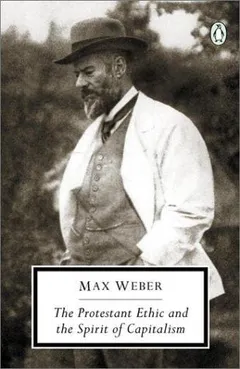
Read these essays alongside The Protestant Ethic to see the general theory of rationalisation and the single case study of how a faith made a world it then no longer needed.
Questions it raises
- Is the state really nothing but the monopoly of legitimate force, and what has to be true of legitimacy for the definition to work?
- Does the ethic of responsibility, which accepts the consequences of one’s acts, really oppose the ethic of ultimate ends, or does every politician need both?
- Is the world disenchanted, and if so, is that a loss, a liberation, or a description that says nothing about how to live?
- Is bureaucracy the most efficient form of organisation, or the most efficient at what it measures, and what does Weber’s admiration for it conceal?
- Why does Weber refuse to reduce status and party to class, and does the refusal answer Marx or evade him?
- What does it mean that most English readers meet Weber through an anthology assembled by two American sociologists, and what Weber did Gerth and Mills make?
Highlights
The state is the human community that successfully claims the monopoly of the legitimate use of physical force within a given territory, and politics means striving to share power or to influence its distribution.
Close paraphrase of the definition that political science adopted.
There are three pure types of legitimate authority: traditional, resting on the sanctity of custom; charismatic, resting on devotion to the extraordinary qualities of a person; and legal, resting on belief in the validity of rules, of which bureaucracy is the purest form.
Paraphrase of the typology that runs through the collection.
The fate of our times is characterised by rationalisation and intellectualisation and above all by the disenchantment of the world, and science cannot tell us which of the warring gods we should serve.
Close paraphrase of the lecture's most famous passage.