The Unconscious
by Sigmund Freud · Das Unbewußte
Assigned by 1 of the 9 reading lists
The central and most complete surviving paper of Freud's ambitious 1915 series on metapsychology. Freud justifies the assumption of unconscious mental processes, carefully distinguishes the descriptive, dynamic and systematic senses of the word, and characterises the system Ucs. as outside ordinary time, exempt from logical contradiction and governed by primary process rather than the orderly secondary process consciousness obeys. The Great Books volume prints it alongside its surviving companions Instincts and Their Vicissitudes and Repression, as well as shorter papers on child sexual enlightenment and the practice of analysis.
We recommendThe Freud Reader, translated by James StracheyW. W. Norton, 1995Peter Gay's anthology contains this and several of the companion metapsychological papers.
As an Amazon Associate, The Great Books earns from qualifying purchases. Bookshop.org links also support this site. How this works.
- Written
- 1915
- Form
- Psychology
- Language
- German
- Length
- Short · 40 ppunder 120 pages
- Difficulty
- Difficult4 of 5 for a first-year reader
James Strachey translation
Buy on Amazon: The Unconscious, opens in a new tabBookshop.org: The Unconscious, opens in a new tab
Why it's on the list
Freud spends this dense theoretical paper doing something more basic than describing what the unconscious contains, he defends the assumption that it exists at all, arguing against the position that consciousness simply is the mind and anything unconscious is, by definition, not really mental. His justification is essentially inferential: certain gaps in conscious experience, dreams, slips, symptoms, only become intelligible once a further, unconscious process is assumed, exactly the way scientists infer an unobservable cause from its observed effects. Freud then does careful conceptual work his earlier, looser usage had blurred, separating the descriptive sense, whatever is not conscious right now, from the dynamic sense, material actively repressed, and the systematic sense, an entire distinct region of the mind operating by its own rules. His portrait of that system, atemporal, exempt from contradiction, governed by primary process, gives psychoanalysis its most rigorous single account of what lies beneath awareness.
Key themes
- Knowledge and truth
- Freud justifies the assumption of unconscious mental processes through inference from otherwise unintelligible gaps in conscious experience, dreams, slips, symptoms, arguing this inferential method is directly comparable to how physical science infers unobservable causes from their observed effects.
- The self and identity
- Freud distinguishes the descriptive, dynamic and systematic senses of unconscious, moving from a loose, merely negative definition, whatever is not currently conscious, toward a precise, technical claim that an entire distinct psychical system operates by its own characteristic rules beneath conscious awareness.
- Madness and the irrational
- Freud characterizes the system Ucs as atemporal, exempt from logical contradiction and governed by primary process rather than the orderly secondary process consciousness obeys, a portrait of unconscious mental functioning that helps explain the otherwise puzzling logic of dreams and neurotic symptoms.
- Reason and passion
- The distinction between primary process, the unconscious system's mode of operating through condensation and displacement, and secondary process, consciousness's more orderly logical functioning, gives Freud a vocabulary for explaining why unconscious material looks so different from ordinary conscious thought.
Which translation to read
Our pick
The Freud Reader, translated by James Strachey
W. W. Norton, 1995
Peter Gay's anthology contains this and several of the companion metapsychological papers.
Amazon: the James Strachey translation, opens in a new tabBookshop.org: the James Strachey translation, opens in a new tab
Overview
About forty pages, the central paper in a series of theoretical works Sigmund Freud composed in 1915 addressing what he called metapsychology, an attempt to develop psychoanalytic theory’s most abstract, systematic foundations rather than its more clinically applied technique. Of the several metapsychological papers Freud wrote during this period, several of which have not survived, The Unconscious remains the most complete and most theoretically ambitious, undertaking a task considerably more basic than simply describing unconscious mental content, defending the very assumption that unconscious mental processes genuinely exist and constitute a legitimate object of scientific study.
Freud’s project here proceeds in two connected stages: first, justifying the theoretical legitimacy of assuming unconscious mental processes at all, against a position holding that consciousness simply is the mind and that anything unconscious therefore falls outside genuine mental life; and second, once this foundational assumption is established, carefully distinguishing several distinct senses in which the term unconscious had been used somewhat loosely in his own earlier writing, developing considerably more precise technical vocabulary for what specifically the unconscious actually is and how it functions.
The argument
Justifying the unconscious. Freud opens by directly defending the theoretical legitimacy of assuming unconscious mental processes exist, arguing that this assumption is both necessary, since conscious experience alone leaves considerable gaps in the ordinary causal connections between mental events, dreams, slips, neurotic symptoms that make no sense without positing some further unconscious process producing them, and legitimate, since this kind of inference from observed effect to unobservable cause proceeds by essentially the same logical method used throughout the physical sciences.
Three senses of unconscious. Freud performs careful conceptual clarification, distinguishing three distinct senses his own earlier usage of unconscious had not always kept properly separated: the merely descriptive sense, referring simply to whatever mental content is not currently conscious at a given moment, including material that could become conscious relatively easily; the dynamic sense, referring specifically to material actively repressed and kept from consciousness by ongoing psychical force, requiring continuous effort to remain excluded; and the systematic sense, referring to an entire distinct region or system of the mind, which Freud designates the system Ucs, operating according to its own characteristic rules rather than simply describing a temporary or contingent state of particular mental content.
Characterizing the system Ucs. Freud offers a genuinely detailed technical portrait of this unconscious system’s actual properties, describing it as exempt from mutual logical contradiction, in which directly opposing ideas can coexist without the tension or resolution consciousness would require, as atemporal, having no reference to ordinary chronological sequence or duration, and as governed throughout by what Freud calls primary process, a mode of mental functioning in which meaning can be freely displaced from one idea onto another or condensed from multiple ideas into a single compressed image.
Primary and secondary process. Freud contrasts this primary process, characteristic of unconscious functioning, with secondary process, the more orderly, logically sequenced mode of thinking characteristic of consciousness, a distinction that gives psychoanalytic theory a technical vocabulary for explaining why unconscious material, when it does surface, in dreams or symptoms, characteristically appears so different in logical form from ordinary conscious thought.
Repression and the relationship between systems. The paper addresses how repressed material actually relates to the broader unconscious system, and how the boundary between unconscious and preconscious, material not currently conscious but readily available to become so, actually functions, extending the paper’s careful conceptual distinctions into an account of how these different mental systems interact and influence one another.
How to read it
Read Freud’s opening justification for assuming unconscious mental processes exist as the paper’s genuine philosophical foundation, and consider how persuasive his specific analogy to scientific inference from unobservable cause to observed effect actually is as a defense of the unconscious’s theoretical legitimacy.
Pay close attention to the three distinguished senses of unconscious, descriptive, dynamic and systematic, since conflating these distinct senses, as Freud’s own earlier, less careful usage sometimes had, produces genuine conceptual confusion that this paper’s careful clarification is specifically designed to resolve.
Notice how the characterization of primary process, atemporal, exempt from contradiction, governed by displacement and condensation, connects directly to and helps explain material Freud had already analyzed elsewhere, particularly dream logic in The Interpretation of Dreams, giving this more abstract theoretical paper concrete application to material readers may already be familiar with from his other work.
Consider this paper’s genuine technical density and its place within a broader, largely unfinished metapsychological project as relevant context; Freud himself abandoned or destroyed several planned companion papers in this series, making The Unconscious an unusually complete surviving example of an ambitious theoretical project that was never fully realized as originally conceived.
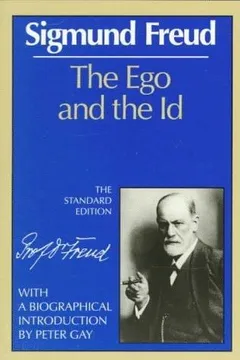
Read this paper alongside Freud’s later structural model in The Ego and the Id to see how the topographical model developed here, conscious, preconscious, unconscious as distinct systems, would eventually be substantially reorganized around the structural division of id, ego and superego, tracking how Freud’s own theoretical framework continued developing after this paper’s original composition.
Questions it raises
- Does Freud’s justification for assuming unconscious mental processes, through inference from otherwise unintelligible gaps in conscious experience, actually establish the unconscious’s legitimacy as successfully as his analogy to physical scientific inference suggests, or does mental inference of this kind face genuine additional difficulties physical scientific inference does not?
- How useful is the distinction between the descriptive, dynamic and systematic senses of unconscious for understanding psychoanalytic theory more broadly? Does this careful conceptual clarification resolve genuine confusion in Freud’s own earlier usage, or does it introduce additional theoretical complexity without corresponding clinical benefit?
- What does the characterization of the unconscious system as atemporal and exempt from logical contradiction suggest about the actual relationship between unconscious mental processes and ordinary conscious reasoning? Does this portrait adequately explain phenomena like dreams and neurotic symptoms, or does it raise further questions about how these two systems actually interact?
- How does the primary process and secondary process distinction hold up as an explanation for why unconscious material appears so logically different from conscious thought when it does surface? Does this distinction offer genuine explanatory power, or does it primarily redescribe an already observed difference without fully accounting for its origin?
- Given that this paper represents part of a larger, ultimately unfinished metapsychological project, several companion papers lost or destroyed, how should a reader weigh its surviving theoretical claims against what Freud may have intended as a more complete, systematic account had the full project been realized?
- How does the topographical model developed here, conscious, preconscious, unconscious as distinct systems, relate to and eventually give way to Freud’s later structural model of id, ego and superego? Does this later reorganization represent genuine theoretical improvement, or does it leave certain questions this earlier paper raised without fully adequate resolution?
Highlights
Freud argues that the assumption of unconscious mental processes is both necessary and legitimate, necessary because conscious data alone leaves considerable gaps in the ordinary connections between mental events, and legitimate because this assumption proceeds by essentially the same inferential logic used throughout the physical sciences to infer unobservable causes from their observed effects.
Paraphrase of Freud's central justifying argument, defending the unconscious's theoretical legitimacy before proceeding to characterize its actual properties.
He distinguishes the merely descriptive sense of unconscious, referring simply to whatever mental content happens not to be conscious at a given moment, from the dynamic sense, referring specifically to material actively repressed and kept from consciousness by ongoing psychical force, and from the systematic sense, referring to an entire distinct region of the mind operating by its own characteristic rules.
Paraphrase of Freud's careful conceptual clarification, separating three distinct meanings his earlier, looser usage of the term had not always kept properly distinguished.
Freud characterizes the system Ucs as exempt from mutual contradiction, atemporal, having no reference to ordinary chronological time, and governed throughout by primary process, in which meaning can be freely displaced from one idea onto another or condensed from several ideas into a single image.
Paraphrase of Freud's technical portrait of the unconscious system's actual characteristic properties, distinguishing it structurally from conscious, logically ordered thought.