The Study of Poetry
Assigned by 1 of the 9 reading lists
Arnold's introduction to T. H. Ward's anthology The English Poets, later placed in Essays in Criticism, Second Series. He predicts that poetry will take over the consoling and sustaining role of religion, and proposes that readers judge poems by keeping in mind touchstone lines from the great masters. He then reviews English poetry from Chaucer to Burns, ranking Chaucer below the classics for lack of high seriousness and setting Dryden and Pope down as classics of prose rather than of poetry, a judgment that provoked argument among critics for generations after.
We recommendCulture and Anarchy and Other Selected ProsePenguin Classics, 2015Prints The Study of Poetry with Arnold's other major critical essays.
As an Amazon Associate, The Great Books earns from qualifying purchases. Bookshop.org links also support this site. How this works.
- Written
- 1880
- Form
- Essay
- Language
- English
- Length
- Short · 30 ppunder 120 pages
- Difficulty
- Moderate2 of 5 for a first-year reader
Why it's on the list
Arnold, who spent his poetry mourning the collapse of religious certainty, spent his best-known essay proposing an unlikely successor: poetry itself, which he predicts will increasingly do the consoling and sustaining work that religion once did, now that religion's factual claims have come under a scrutiny they cannot survive intact. To keep that claim from collapsing into vague uplift, he offers a genuinely useful piece of critical technology, the touchstone, a handful of lines from acknowledged masters, Homer, Dante, Shakespeare, Milton, held in the mind and used to measure any new poem against the highest standard rather than against the fashions of the moment. He then applies his own method with startling severity to the English tradition itself, ranking Chaucer below the touchstone poets for lacking what he calls high seriousness, a judgment that infuriated admirers of Chaucer for a century and forced every later critic to say clearly what they thought high seriousness actually was.
Key themes
- Art and beauty
- Poetry, Arnold predicts, will increasingly take over the sustaining and consoling role that religion has traditionally played, because its ideas are attached to the fact rather than asserted as fact, and so cannot be falsified the way religious dogma now stands at risk of being.
- Education
- The touchstone method proposes holding a small set of lines from indisputably great poets in mind and testing any new poem's quality by direct comparison, a deliberately impressionistic but disciplined alternative to either historical estimate or personal fondness.
- Knowledge and truth
- Arnold distinguishes the real estimate of a poem's worth from two illegitimate substitutes, the historic estimate, which overvalues a poem for its importance in literary history, and the personal estimate, which overvalues a poem because it happens to appeal to the individual critic.
- Language and rhetoric
- The verdict on Chaucer, that he lacks the high seriousness of the touchstone poets despite his other virtues, and the parallel verdict setting Dryden and Pope as classics of English prose rather than poetry, are Arnold's method tested against the two hardest cases in the native tradition.
Which edition to read
Our pick
Culture and Anarchy and Other Selected Prose
Penguin Classics, 2015
Prints The Study of Poetry with Arnold's other major critical essays.
Amazon: the Penguin Classics edition, opens in a new tabBookshop.org: the Penguin Classics edition, opens in a new tab
Overview
About thirty pages, written in 1880 as the general introduction to Thomas Humphry Ward’s four-volume anthology The English Poets, and reprinted soon afterward, in slightly revised form, as the opening essay of Essays in Criticism, Second Series. By this point Matthew Arnold had largely set poetry aside in favor of criticism, and this essay represents his critical method at its most fully developed and most influential, both for the specific evaluative technique it proposes and for the sweeping historical claim about poetry’s cultural future that frames it.
The essay’s occasion, introducing a large anthology meant to survey the whole of English poetry from its beginnings, gives Arnold the opportunity to do two distinct things in a single short piece: state a general theory of what poetry is for and how it should be judged, and then apply that theory directly, working through the English tradition chronologically and ranking its major figures against a standard he takes to be genuinely objective rather than merely a matter of taste.
The argument
The future of poetry. Arnold opens with the essay’s most sweeping and most quoted claim: that poetry’s future is immense, because as the factual and historical claims underlying traditional religion come under increasing intellectual pressure and prove, in his view, unable to survive unchanged, humanity will increasingly need something else to perform religion’s traditional work of interpreting, consoling and sustaining human life. Poetry, he argues, is uniquely positioned to take over this function, because poetic truth, unlike religious dogma, is not asserted as literal historical or scientific fact; its ideas are, in his phrase, attached to the fact rather than presented as the fact itself, which means poetry cannot be falsified or discredited by advancing knowledge the way a religion resting on claims about specific historical events can be. Science, he predicts, will come to seem incomplete without poetry to interpret what science’s own discoveries mean for how a human life should actually be lived.
Why criticism needs a real standard. Having made this large claim for poetry’s importance, Arnold turns to a more practical problem: how should a reader or critic actually judge whether a given poem is good, and how good? He identifies two common but illegitimate ways critics arrive at inflated estimates of a poem’s worth. The historic estimate overvalues a work because of its importance within literary history, its influence on later writers or its role in the development of a language or tradition, treating historical significance as though it were the same thing as intrinsic poetic excellence. The personal estimate overvalues a work simply because it happens to appeal strongly to a particular reader’s own temperament or circumstances, mistaking private fondness for objective merit. Both, Arnold insists, must be set aside in favor of what he calls the real estimate, a judgment of the poem’s actual, intrinsic quality, measured against the highest standard available rather than against historical importance or personal taste.
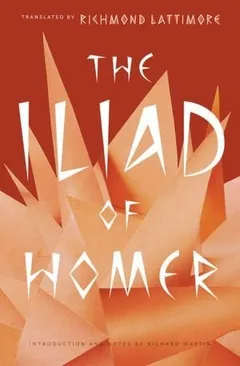
The touchstone method. To make this real estimate practically possible rather than merely an abstract ideal, Arnold proposes his most durable and most widely adopted critical technique: holding in mind a small number of short passages, sometimes no more than a single line, drawn from poets of acknowledged and, in Arnold’s judgment, essentially undisputed greatness, Homer, Dante, Shakespeare, Milton among them, and using these touchstones as a direct point of comparison against any other poem or passage under consideration. A new work, placed mentally beside a genuine touchstone, will either withstand the comparison, revealing genuine poetic quality of the highest order, or it will visibly fall short, and the degree to which it falls short becomes a measure of just how far below the highest rank it actually stands. Arnold is explicit that this method is deliberately impressionistic rather than governed by any set of formal rules that could be mechanically applied; it depends on cultivating, through wide and attentive reading, a discriminating sense that can recognize genuine poetic quality by direct comparison rather than by checklist.
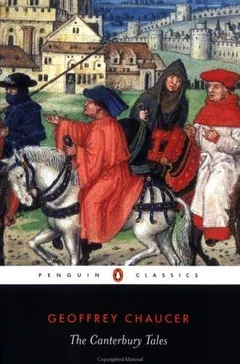
High seriousness, and the verdict on Chaucer. Arnold then applies his method to a chronological survey of English poetry, and the most consequential and most argued-over result comes early, in his treatment of Chaucer. He praises Chaucer extravagantly relative to every other medieval poet, English or continental, crediting him with transcending and effacing, effortlessly, all the romance poetry of Catholic Christendom and all English poetry of his own time. And yet, measured against the touchstone poets, Arnold finds Chaucer’s poetry lacking a specific quality he calls high seriousness, a certain accent or register of moral and emotional depth that Arnold takes to be present in Homer, Dante, Shakespeare and Milton but absent from Chaucer’s characteristic geniality, humor and worldly ease, however genuinely accomplished that different register may be on its own terms. This verdict, denying Chaucer a place among the very highest rank of poets while praising him above everyone else of his own era, struck many later readers as both genuinely perceptive about something real in the difference between Chaucer’s temperament and, say, Dante’s, and also as an oddly narrow standard that penalizes exactly the warmth and humor that make Chaucer distinctive and beloved.
Dryden and Pope as classics of prose. A further and similarly controversial verdict follows regarding the late seventeenth and early eighteenth centuries: Arnold judges Dryden and Pope, for all their technical skill and historical importance in regularizing English verse, to be classics of English prose rather than of English poetry, meaning that their characteristic virtues, wit, clarity, argumentative force, precision of statement, belong properly to the register of accomplished prose even when cast in verse form, rather than to poetry’s own higher and different register of feeling and imaginative power. Like the Chaucer verdict, this judgment provoked considerable and lasting disagreement, particularly from readers and critics who valued the neoclassical tradition Dryden and Pope represent on its own distinct terms rather than measuring it against a standard, high seriousness and imaginative intensity, that Arnold effectively imports from an entirely different kind of poetry.
How to read it
Read the opening pages on poetry’s future first, and take the claim seriously as a genuine historical prediction rather than dismissing it as Victorian overstatement. Whether or not poetry has actually inherited religion’s cultural function in the way Arnold predicted is a real and still debatable question about the last century and a half of Western culture.
Work through the touchstone method with your own example. Choose a poem you admire, hold a genuine touchstone line, from Homer or Shakespeare or wherever your own reading gives you confident access to acknowledged greatness, beside it in your mind, and see whether Arnold’s technique actually produces a clarifying judgment or simply confirms whatever opinion you already held.
Read the verdict on Chaucer as a test case for the whole method rather than as Arnold’s final word on Chaucer’s actual value. Ask specifically what high seriousness is supposed to mean, whether it names something real and distinguishing, or whether it smuggles in a particular, historically contingent taste, favoring epic and tragic registers over comic and genial ones, disguised as an objective standard.
Notice how much weight the essay places on a critic’s cultivated, disciplined taste as opposed to any explicit, statable rule. This is both the touchstone method’s strength, since it resists reducing poetic judgment to a mechanical checklist, and its most vulnerable point, since it makes the whole method depend on trusting one particular critic’s, Arnold’s own, sense of what counts as a genuine touchstone in the first place.
Read this essay alongside Arnold’s own poetry, particularly Dover Beach and the Stanzas from the Grande Chartreuse, to see the same underlying conviction, that poetry must take up work religion can no longer securely do, expressed first as elegy and lament and later as confident critical program.
Questions it raises
- Has poetry actually taken over anything like the consoling, sustaining role Arnold predicted for it, or has that role passed to other cultural forms entirely?
- Is the touchstone method a genuine critical technique, or does it merely dress up personal taste, whichever lines a given critic happens to find moving, in the language of objective comparison?
- What exactly is high seriousness, and can Arnold’s verdict on Chaucer be defended without simply restating a preference for tragic and epic registers over comic and genial ones?
- Does ranking Dryden and Pope as classics of prose rather than poetry illuminate something true about their characteristic virtues, or does it unfairly measure one kind of poetic achievement against a standard drawn from an entirely different kind?
- Arnold distinguishes the real estimate from the historic and personal estimates. Can any critical judgment actually escape historical and personal influence entirely, or is the distinction a useful discipline rather than a fully achievable goal?
- If poetic truth is attached to fact rather than asserted as fact, as Arnold claims, does that genuinely protect poetry from being discredited by advancing knowledge the way he thinks religious dogma can be, or does it just relocate the same vulnerability?
Highlights
The future of poetry is immense, because in poetry, where it is worthy of its high destinies, our race, as time goes on, will find an ever surer and surer stay.
More and more mankind will discover that we have to turn to poetry to interpret life for us, to console us, to sustain us. Without poetry, our science will appear incomplete, and most of what now passes with us for religion and philosophy will be replaced by poetry.
Paraphrase of Arnold's central prediction, that poetry will inherit much of the sustaining function religion has traditionally performed, since its truths are not asserted as literal fact and so cannot be disproved the way religious dogma can.
Short passages, even single lines, from the great masters, will serve our turn quite sufficiently as touchstones to detect the presence or absence of high poetic quality, and also the degree of this quality, in all other poetry which we may place beside them.
Chaucer is not one of the great classics. His poetry transcends and effaces, easily and without effort, all the romance poetry of Catholic Christendom; and it transcends and effaces all the English poetry contemporary with it. But it has not the accent of high seriousness, and to want this is to want the something that gives to poetry its power of forming, sustaining and delighting us.
Paraphrase of Arnold's famous verdict on Chaucer, praising him above every rival of his own time while still denying him the highest rank, the judgment that provoked the most lasting controversy of the essay.