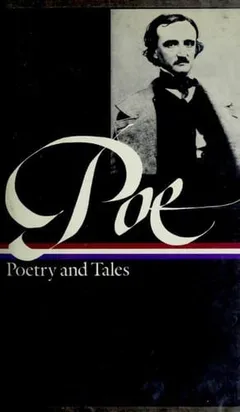
The Poetic Principle
Assigned by 1 of the 9 reading lists
A lecture Poe delivered several times in the last year of his life and published after his death. He argues that a long poem is a contradiction in terms, since poetic excitement cannot be sustained, and denounces the heresy of the didactic, the belief that poetry should teach a moral. Poetry is instead the rhythmical creation of beauty, and its province is taste, between the pure intellect and the moral sense. He illustrates the argument with poems by Longfellow, Bryant, Willis, Shelley, Byron, Moore, Hood, Tennyson and Motherwell, quoted at length.
We recommendEssays and ReviewsLibrary of America, 1984The companion volume to Poetry and Tales, with The Philosophy of Composition and the reviews beside it.
As an Amazon Associate, The Great Books earns from qualifying purchases. Bookshop.org links also support this site. How this works.
- Written
- lecture 1848, published 1850
- Form
- Essay
- Language
- English
- Length
- Short · 25 ppunder 120 pages
- Difficulty
- Moderate2 of 5 for a first-year reader
Why it's on the list
Poe's claim that a long poem is a contradiction in terms, since poetic excitement cannot be sustained, challenges an entire epic tradition running from Homer through Milton, staking out an unusually radical position about the proper scale and duration of genuine poetic experience. His denunciation of the heresy of the didactic, the belief that poetry should teach a moral, separates aesthetic value from ethical instruction with a forcefulness that shaped subsequent debates about art's proper purpose well beyond his own immediate nineteenth-century context. His positioning of poetry's province as taste, located specifically between the pure intellect and the moral sense, offers a genuinely distinct third category for aesthetic experience rather than collapsing it into either rational understanding or ethical judgment. Illustrating his argument through extended quotation from Longfellow, Bryant, Shelley, Byron, Tennyson and other contemporaries gives this theoretical lecture unusual concrete grounding, letting readers test Poe's abstract claims directly against the specific poems he offers as supporting evidence for his own controversial aesthetic theory.
Key themes
- Art and beauty
- Poe's positioning of poetry's province as taste, located specifically between the pure intellect and the moral sense, offers a genuinely distinct third category for aesthetic experience rather than collapsing it into either rational understanding or ethical judgment.
- Language and rhetoric
- Poe's claim that a long poem is a contradiction in terms, since poetic excitement cannot be sustained, challenges an entire epic tradition running from Homer through Milton, staking out an unusually radical position about proper poetic scale and duration.
- Knowledge and truth
- Poe denounces the heresy of the didactic, the belief that poetry should teach a moral, separating aesthetic value from ethical instruction with a forcefulness that shaped subsequent debates about art's proper purpose beyond his own century.
- Virtue and character
- By locating poetry's province specifically outside the moral sense, Poe deliberately excludes conventional virtue and ethical instruction from poetry's defining purpose, insisting beauty rather than moral teaching constitutes poetry's proper and sufficient aim.
Which edition to read
Our pick
Essays and Reviews
Library of America, 1984
The companion volume to Poetry and Tales, with The Philosophy of Composition and the reviews beside it.
Amazon: the Library of America edition, opens in a new tabBookshop.org: the Library of America edition, opens in a new tab
Overview
About twenty-five pages, a lecture Edgar Allan Poe delivered several times in the last year of his life, first in 1848, and published in 1850 after his death. He argues that a long poem is a contradiction in terms, since poetic excitement cannot be sustained, and denounces the heresy of the didactic, the belief that poetry should teach a moral.
Poetry is instead the rhythmical creation of beauty, and its province is taste, between the pure intellect and the moral sense. He illustrates the argument with poems by Longfellow, Bryant, Willis, Shelley, Byron, Moore, Hood, Tennyson and Motherwell, quoted at length.
What happens
Against the long poem. Poe opens by arguing that a long poem is a contradiction in terms, since poetic excitement cannot be sustained across extended length, directly challenging the epic tradition’s assumption that genuine poetry could span many pages.
Denouncing the didactic heresy. Poe denounces what he calls the heresy of the didactic, the belief that poetry should teach a moral, insisting this widespread assumption fundamentally misunderstands poetry’s actual proper purpose and value.
Poetry as the creation of beauty. Poe defines poetry instead as the rhythmical creation of beauty, relocating its central purpose away from moral instruction toward the deliberate cultivation of aesthetic experience through rhythm and sound.
Poetry’s province as taste. Poe positions poetry’s proper province as taste specifically, located between the pure intellect and the moral sense, offering a genuinely distinct third category for aesthetic experience separate from both reason and ethics.
Illustrating through Longfellow and Bryant. Poe illustrates his argument with extended quotation from Longfellow and Bryant, testing his abstract theoretical claims directly against specific poems by contemporary American poets.
Illustrating through Shelley, Byron and Tennyson. Poe further illustrates his argument through quotation from Shelley, Byron, Tennyson and other British contemporaries, grounding his controversial theory in a broad range of actual poetic practice across multiple national traditions.
How to read it
Read Poe’s claim that a long poem is a contradiction in terms as challenging an entire epic tradition running from Homer through Milton, staking out an unusually radical position about the proper scale and duration of genuine poetic experience.
Pay close attention to how the denunciation of the heresy of the didactic separates aesthetic value from ethical instruction with a forcefulness that shaped subsequent debates about art’s proper purpose well beyond Poe’s own immediate nineteenth-century context.
Notice how positioning poetry’s province as taste, located specifically between the pure intellect and the moral sense, offers a genuinely distinct third category for aesthetic experience rather than collapsing it into either rational understanding or ethical judgment.
Consider how illustrating the argument through extended quotation from numerous contemporary poets gives this theoretical lecture unusual concrete grounding, letting readers test Poe’s abstract claims directly against the specific poems he offers as supporting evidence.
For Poe’s theory tested against his own practice rather than his contemporaries’, turn to the poems collection itself: The Raven’s unified structure and the recurring elegies for dead women show these same principles about brevity, effect and beauty worked out in his own verse.
Questions it raises
- Does Poe’s claim that a long poem is a contradiction in terms hold up against the epic tradition’s considerable achievements? Does sustained poetic excitement genuinely prove impossible across greater length, or does Poe’s argument reflect his own particular aesthetic preferences rather than a universal principle?
- How persuasive is the denunciation of the heresy of the didactic? Does separating poetry entirely from moral instruction successfully identify poetry’s proper purpose, or does this position risk excluding genuinely valuable poetry that combines beauty with ethical insight?
- What does positioning poetry’s province as taste, between intellect and moral sense, accomplish that treating poetry as either purely intellectual or purely ethical could not? Does this three-part division of human faculties hold up as a coherent framework?
- How does illustrating the argument through extended quotation from contemporary poets strengthen or complicate Poe’s theoretical claims? Do the specific examples he chooses actually support his abstract argument, or do they sometimes work against it?
- Given that Poe delivered this as a lecture near the end of his life, what does its content suggest about how his aesthetic theory had developed or crystallized by this late point in his career, compared to his earlier critical writing?
- What does this lecture’s continued influence on debates about art’s relationship to morality and instruction suggest about the durability of Poe’s specific theoretical position? Does his sharp separation of beauty from moral teaching still shape contemporary aesthetic debate?
Highlights
Poe argues that a long poem is a contradiction in terms, since poetic excitement cannot be sustained, challenging the entire epic tradition and staking out an unusually radical position about the proper scale and duration of genuine poetic experience.
Paraphrase of the lecture's opening controversial claim, directly challenging epic poetry's traditional length and scope.
Poe denounces the heresy of the didactic, the belief that poetry should teach a moral, insisting instead that poetry is the rhythmical creation of beauty and that its province is taste, between the pure intellect and the moral sense.
Paraphrase of the lecture's central theoretical claim, separating poetry's proper purpose from moral instruction.
Poe illustrates his argument with poems by Longfellow, Bryant, Willis, Shelley, Byron, Moore, Hood, Tennyson and Motherwell, quoted at length, giving this theoretical lecture unusual concrete grounding in actual contemporary poetic practice.
Paraphrase of the lecture's method, grounding abstract theoretical claims in extended quotation from specific poems.