Civilization on Trial
Assigned by 1 of the 9 reading lists
A collection of thirteen lectures and essays from the 1940s in which Toynbee put the ideas of A Study of History to the general reader. He argues that the unification of the world under Western technology and the atomic bomb have put Western civilisation itself on trial, that civilisations die by suicide rather than murder, and that the higher religions, not the civilisations that carried them, are the real subject of history. Essays on Islam, Russia, Greece and Christianity's future are included, and the book made Toynbee for a decade the most widely read historian in the English-speaking world.
We recommendCivilization on TrialOxford University Press, 1948Long out of print; used copies of the Oxford first edition or the later Meridian paperback are easy to find.
As an Amazon Associate, The Great Books earns from qualifying purchases. Bookshop.org links also support this site. How this works.
- Written
- 1948
- Form
- Essay
- Language
- English
- Length
- Medium · 260 pp120 to 300 pages
- Difficulty
- Moderate2 of 5 for a first-year reader
Oxford University Press edition
Find this edition: Civilization on Trial, opens in a new tabBookshop.org: Civilization on Trial, opens in a new tab
Why it's on the list
Arguing that the unification of the world under Western technology and the atomic bomb have put Western civilisation itself on trial gave the anxieties of 1948 a historical frame, the West judged not as the end of history but as one civilisation among twenty facing the test the others failed. Insisting that civilisations die by suicide rather than murder, through the failure of their own creative minorities rather than the strength of their enemies, turned attention inward at the moment the Cold War was turning it outward. Claiming that the higher religions, not the civilisations that carried them, are the real subject of history gave the essays a religious turn that won Toynbee a vast public and lost him the historians. Putting the ideas of a twelve-volume study into thirteen lectures made him for a decade the most widely read historian in the English-speaking world, and the collection is where most readers met the argument that A Study of History carries at length.
Key themes
- History and progress
- The West is judged not as the end of history but as one civilisation among twenty, facing the test the others failed, and the atomic bomb makes the verdict urgent.
- Society and the state
- Civilisations die by suicide rather than murder, through the failure of their own creative minorities, which turns attention inward at the moment the Cold War was turning it outward.
- God and faith
- The higher religions, not the civilisations that carried them, are the real subject of history, a claim that won Toynbee a vast public and lost him the historians.
- War
- The unification of the world under Western technology and the atomic bomb is the challenge to which the West must now respond or fail.
Which edition to read
Our pick
Civilization on Trial
Oxford University Press, 1948
Long out of print; used copies of the Oxford first edition or the later Meridian paperback are easy to find.
Amazon: the Oxford University Press edition, opens in a new tabBookshop.org: the Oxford University Press edition, opens in a new tab
Overview
About two hundred and sixty pages, a collection published in 1948 of thirteen lectures and essays from the 1940s in which Toynbee put the ideas of A Study of History to the general reader. He argues that the unification of the world under Western technology and the atomic bomb have put Western civilisation itself on trial, that civilisations die by suicide rather than murder, and that the higher religions, not the civilisations that carried them, are the real subject of history.
Essays on Islam, Russia, Greece and Christianity’s future are included.
What happens
My view of history. Toynbee opens with an account of how he came to see civilisations rather than nations as the units of history, and to compare the Greek and Western worlds after watching the First World War repeat the Peloponnesian.
The present point in history. He argues that Western technology has unified the world for the first time, so that the West’s fate is now everyone’s, and that the atomic bomb has made the question of whether it can avoid the suicide of earlier civilisations a matter of survival.
Does history repeat itself. Toynbee considers whether the pattern of breakdown he found in twenty civilisations must apply to the West, and answers that the pattern is a challenge, not a fate, since a creative response remains possible.
Islam, the West and the future. He argues that Islam, having met the Western challenge, may play a role in the coming world order, and that the West’s racial and cultural arrogance is the greatest obstacle to that order.
Russia’s Byzantine heritage. Toynbee reads the Soviet Union as the heir of Byzantium rather than a new creation, its totalitarianism and its sense of mission both inherited from the Orthodox empire.
Christianity and civilisation. The closing essays argue that civilisations may exist to serve the higher religions rather than the reverse, that the collapse of the Roman world was the chrysalis of the Church, and that the West’s decline might likewise serve a spiritual end.
How to read it
Read the title essay as the anxieties of 1948 given a historical frame, the West one civilisation among twenty and the bomb the challenge that makes its trial urgent.
Pay close attention to the claim that civilisations die by suicide rather than murder, and to how it turns attention inward at the moment the Cold War was turning it outward.
Notice the religious turn of the closing essays, the higher religions made history’s real subject, and weigh what it gained Toynbee in readers and cost him among historians.
Consider the collection as the form in which most people met the argument of A Study of History, and ask what is lost and gained by putting twelve volumes into thirteen lectures.
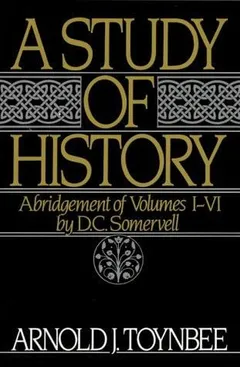
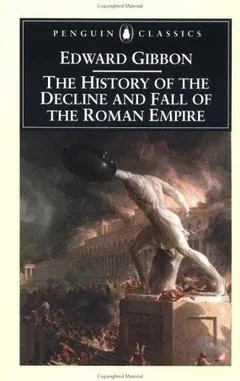
Read this book alongside Gibbon’s Decline and Fall to compare two accounts of Rome’s end, one that blamed Christianity for the fall and one that made the fall Christianity’s chrysalis.
Questions it raises
- Is the claim that civilisations die by suicide rather than murder a historical finding or a moral exhortation, and does it matter which?
- Does the atomic bomb really put the West on trial in the way earlier civilisations were tried, or does a weapon that can end everything break the comparative method?
- What does it mean to say the higher religions are the real subject of history, and can a historian hold that view without ceasing to be one?
- Is the reading of the Soviet Union as Byzantium’s heir an insight or a way of not looking at what was new in it?
- Why did Toynbee’s fame collapse so quickly after the 1950s, and what did the historians who dismissed him fail to answer?
- Is Toynbee’s hope for a creative response to the West’s challenge borne out by the decades since 1948, or has the trial simply been adjourned?
Highlights
The unification of the world under Western technology and the atomic bomb have put Western civilisation itself on trial, and the historian's task is to ask whether it will meet the test that earlier civilisations failed.
Paraphrase of the collection's framing claim, the anxieties of 1948 set in a comparative history.
Civilisations die by suicide rather than murder: the failure comes from within, when a creative minority ceases to create and becomes merely dominant, and the masses withdraw their allegiance.
Paraphrase of the collection's most quoted proposition, drawn from A Study of History.
The higher religions, not the civilisations that carried them, are the real subject of history, and the collapse of a civilisation may be the chrysalis from which a church emerges.
Paraphrase of the collection's religious turn, which distinguishes it from the earlier volumes of the Study.