Is It Colonial Déjà Vu? Indigenous Peoples and Climate Injustice
Assigned by 1 of the 9 reading lists
An essay by the Potawatomi philosopher Kyle Powys Whyte arguing that for Indigenous peoples climate change is not a new crisis but a repetition of colonialism. Settler colonialism, he argues, already worked by disrupting the relationships between Indigenous peoples and their ecosystems, forcing them to adapt rapidly to imposed environmental change, so that anthropogenic climate change intensifies an old injustice rather than starting a new one. Whyte draws on Anishinaabe examples and on the responsibilities of collective continuance to argue that climate justice must address colonial power and Indigenous self-determination rather than treating the climate as a problem that begins now.
We recommendHumanities for the Environment, Integrating Knowledge, Forging New Constellations of PracticeRoutledge, 2017The essay collection edited by Joni Adamson and Michael Davis in which the article first appeared.
As an Amazon Associate, The Great Books earns from qualifying purchases. Bookshop.org links also support this site. How this works.
- Written
- 2017
- Form
- Essay
- Language
- English
- Length
- Short · 20 ppunder 120 pages
- Difficulty
- Demanding3 of 5 for a first-year reader
Why it's on the list
Arguing that for Indigenous peoples climate change is a repetition of colonialism rather than a new crisis reframes the emergency that the rest of the world dates from the industrial age as the latest phase of a disruption that began with removal, allotment and the damming of rivers, and asks whose sense of time a climate policy assumes. Showing that settler colonialism already worked by disrupting the relationships between peoples and their ecosystems, and forcing rapid adaptation to imposed environmental change, turns a history usually told in terms of land and sovereignty into an environmental one, and makes Indigenous peoples the first to have lived through what everyone now fears. Drawing on Anishinaabe examples and the responsibilities of collective continuance grounds the argument in a particular people's practices rather than a general theory, and models a philosophy that begins from a place. Concluding that climate justice must address colonial power and self-determination sets a test that most climate policy fails, and the essay has become a standard reference for anyone asking who the climate crisis is for.
Key themes
- Justice
- Concluding that climate justice must address colonial power and Indigenous self-determination sets a test that most climate policy fails.
- History and progress
- Reframing climate change as the latest phase of a disruption that began with removal, allotment and the damming of rivers asks whose sense of time a climate policy assumes.
- Nature and the cosmos
- Settler colonialism worked by disrupting the relationships between peoples and their ecosystems, making Indigenous peoples the first to live through what everyone now fears.
- Power and authority
- Imposed environmental change, forced adaptation and the loss of the capacity to decide are the shape of colonial power, and climate change reproduces them.
- Home and exile
- Removal from lands and the destruction of the species and waters a people's life was built around are the colonial déjà vu that climate change repeats.
- Society and the state
- Collective continuance, a community's capacity to adapt while keeping its relationships and responsibilities, is the standard by which the essay measures both colonialism and climate policy.
Which edition to read
Our pick
Humanities for the Environment, Integrating Knowledge, Forging New Constellations of Practice
Routledge, 2017
The essay collection edited by Joni Adamson and Michael Davis in which the article first appeared.
Amazon: the Routledge edition, opens in a new tabBookshop.org: the Routledge edition, opens in a new tab
Overview
A twenty-page essay published in 2017 by the Potawatomi philosopher Kyle Powys Whyte arguing that for Indigenous peoples climate change is not a new crisis but a repetition of colonialism. Settler colonialism, he argues, already worked by disrupting the relationships between Indigenous peoples and their ecosystems, forcing them to adapt rapidly to imposed environmental change, so that anthropogenic climate change intensifies an old injustice rather than starting a new one.
Whyte draws on Anishinaabe examples and on the responsibilities of collective continuance to argue that climate justice must address colonial power and Indigenous self-determination.
What happens
The question. Whyte opens by noticing that Indigenous people often respond to warnings about climate change with a sense of having seen this before, and asks what that déjà vu means.
Colonialism as environmental change. He argues that settler colonialism worked by transforming the environments Indigenous peoples depended on, through removal to new lands, the damming and pollution of waters, the destruction of species and the allotment of territory, so that peoples were forced to adapt rapidly to a world they had not chosen.
The Anishinaabe cases. Whyte draws on the history of his own and related peoples, the loss of the sturgeon and the wild rice, the flooding of lands, and the disruption of seasonal rounds, to show what imposed environmental change looked like from inside.
Collective continuance. He defines a community’s capacity to adapt to change while keeping the relationships and responsibilities, to species, waters, seasons and one another, that make it a community, and argues that colonialism attacked exactly this capacity.
Climate change as repetition. Anthropogenic climate change, he argues, intensifies the same injustice: it is imposed by others, it disrupts relationships with ecosystems, and it demands adaptation from peoples whose capacity to adapt colonialism already reduced.
Climate justice. Whyte concludes that climate justice cannot treat the climate as a problem beginning now, but must address colonial power and support Indigenous self-determination, since the capacity for collective continuance is what both injustices attacked.
How to read it
Read the title’s question as a real one, and notice how the essay answers it by turning a history usually told in terms of land and sovereignty into an environmental one.
Pay close attention to the Anishinaabe examples, and to how a philosophy that begins from a particular place differs from a general theory of justice.
Notice the concept of collective continuance, and ask whether it names something that other accounts of justice leave out.
Consider the conclusion’s test for climate policy, that it must address colonial power and self-determination, and apply it to the climate policies you know.
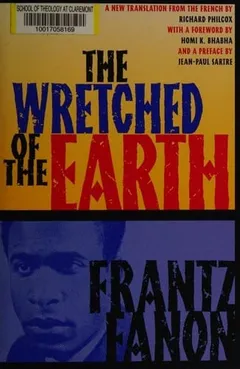
Read this essay alongside Fanon’s Wretched of the Earth to compare two accounts of what colonialism does to a people, one written from the war of decolonisation and one from the ecosystems it left behind.
Questions it raises
- Is climate change really a repetition of colonialism for Indigenous peoples, or does the analogy risk flattening two injustices into one?
- What does it change about climate politics to date the emergency from removal rather than from the industrial age?
- Is collective continuance a concept that applies only to Indigenous communities, or does it name what any community needs to survive change?
- Can climate justice address colonial power and self-determination without ceasing to be climate policy, and what would a policy that met Whyte’s test look like?
- What is gained by grounding the argument in Anishinaabe examples, and what is lost for readers who do not share them?
- Why has a short essay in an academic collection become a standard reference, and what does its reception say about who the climate debate had been leaving out?
Highlights
For Indigenous peoples, Whyte argues, climate change is not a new crisis but a repetition of colonialism, which already worked by disrupting the relationships between peoples and their ecosystems and forcing rapid adaptation to imposed environmental change.
Paraphrase of the thesis announced in the title.
Anishinaabe examples, of the sturgeon, the wild rice and the waters that removal and dams destroyed, show that the environmental change settler societies imposed on Indigenous peoples is the model for what anthropogenic climate change now threatens everyone with.
Paraphrase of the essay's grounding in a particular people's history.
Collective continuance, a community's capacity to adapt to change while maintaining the relationships and responsibilities that make it a community, is the measure of both colonial injustice and climate justice, which must therefore address colonial power and self-determination.
Paraphrase of the essay's standard and its test for climate policy.