Money and class

Wealth, poverty and the distances between them.

110 works · Refine in the browser → · Marked passages →

Aristotle thought money-making had a natural limit and that lending at interest was against nature; the medieval church agreed and Dante put the usurers in hell. Plato’s Republic abolished private property for the guardians because property divides a city into two, the rich and the poor, at war with each other. That diagnosis has never been improved on, only argued with.

The moderns took the other view. Locke made property the reason for government. Adam Smith showed how a society of people pursuing their own gain could produce a wealth no one planned, and the Wealth of Nations is the founding book of economics. Rousseau’s Discourse on Inequality, written a generation earlier, says that the first man who fenced a field and said this is mine was the founder of civil society and of every crime that followed. Marx read them both and wrote the reply.

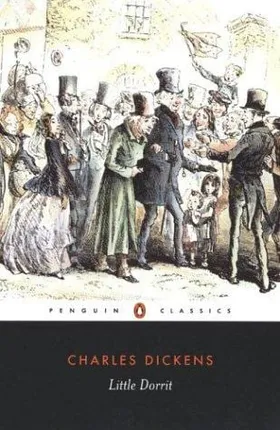
The novel is where the theme lives. Austen’s marriages are transactions and she never pretends otherwise. Dickens’s Little Dorrit is set in a debtors’ prison. George Eliot’s Middlemarch is a whole town organised by money. Tocqueville saw that equality of condition would change everything and Veblen, at the end of the shelf, explained what the rich buy and why.
Discourse on the Origin of InequalityJean-Jacques Rousseau · 1755The Wealth of NationsAdam Smith · 1776Democracy in AmericaAlexis de Tocqueville · 1835-1840Second Treatise of GovernmentJohn Locke · 1689The Communist ManifestoKarl Marx · 1848CapitalKarl Marx · 1867The Canterbury TalesGeoffrey Chaucer · c. 1387-1400Pride and PrejudiceJane Austen · 1813MiddlemarchGeorge Eliot · 1871-1872Gospel of LukeThe Bible · c. 80-90 CEUtopiaThomas More · 1516EmmaJane Austen · 1815Economic and Philosophic Manuscripts of 1844Karl Marx · 1844Madame BovaryGustave Flaubert · 1857A Doll's HouseHenrik Ibsen · 1879Twelfth NightWilliam Shakespeare · c. 1601The MiserMolière · 1668Letters on the EnglishVoltaire · 1733Discourse on Political EconomyJean-Jacques Rousseau · 1755Philosophy of RightG. W. F. Hegel · 1821The German IdeologyKarl Marx · 1845Crime and PunishmentFyodor Dostoevsky · 1866Swann's WayMarcel Proust · 1913DublinersJames Joyce · 1914A Room of One's OwnVirginia Woolf · 1929Song of SolomonToni Morrison · 1977AmosThe Bible · c. 750 BCEFablesAesop · c. 6th c. BCEThe Second Epistle of Paul to the CorinthiansPaul the Apostle · c. 55-56 CEThe MuqaddimahIbn Khaldun · 1377ChroniclesJean Froissart · c. 1370-1400Friendly Admonition to Peace Concerning the Twelve Articles of the Swabian PeasantsMartin Luther · 1525The Twelve Articles of the Swabian PeasantsSwabian Peasants · 1525A Description of Elizabethan EnglandWilliam Harrison · 1577The Taming of the ShrewWilliam Shakespeare · c. 1590-1592ProthalamionEdmund Spenser · 1596The Discovery of GuianaWalter Raleigh · 1596The Merchant of VeniceWilliam Shakespeare · c. 1596-1597Henry IV, Part 2William Shakespeare · c. 1597-1598The Shoemaker's HolidayThomas Dekker · 1599CoriolanusWilliam Shakespeare · c. 1608The AlchemistBen Jonson · 1610A New Way to Pay Old DebtsPhilip Massinger · c. 1625Sir Francis Drake RevivedPhilip Nichols · c. 1593The Would-Be GentlemanMolière · 1670The Way of the WorldWilliam Congreve · 1700Robinson CrusoeDaniel Defoe · 1719A Modest ProposalJonathan Swift · 1729Essays, Moral and PoliticalDavid Hume · 1741-1742Joseph AndrewsHenry Fielding · 1742Tom JonesHenry Fielding · 1749Elegy Written in a Country ChurchyardThomas Gray · 1751Rameau's NephewDenis Diderot · c. 1761London JournalJames Boswell · 1762Minna von BarnhelmGotthold Ephraim Lessing · 1767The Deserted VillageOliver Goldsmith · 1770She Stoops to ConquerOliver Goldsmith · 1773The Journal of John WoolmanJohn Woolman · 1774The School for ScandalRichard Brinsley Sheridan · 1777Poems and SongsRobert Burns · 1786-1796A Vindication of the Rights of MenMary Wollstonecraft · 1790The Autobiography of Benjamin FranklinBenjamin Franklin · 1771A Letter to a Noble LordEdmund Burke · 1796Lyrical BalladsWilliam Wordsworth · 1798Children's and Household TalesJacob and Wilhelm Grimm · 1812-1857The Red and the BlackStendhal · 1830Eugénie GrandetHonoré de Balzac · 1833Père GoriotHonoré de Balzac · 1835TalesHans Christian Andersen · 1835-1872The Pickwick PapersCharles Dickens · 1836-1837Sir Walter ScottThomas Carlyle · 1838Two Years Before the MastRichard Henry Dana Jr. · 1840Cousin BetteHonoré de Balzac · 1846David CopperfieldCharles Dickens · 1849-1850Address to the Legislature of New YorkElizabeth Cady Stanton · 1854Hard TimesCharles Dickens · 1854WaldenHenry David Thoreau · 1854English TraitsRalph Waldo Emerson · 1856The Old Regime and the RevolutionAlexis de Tocqueville · 1856Little DorritCharles Dickens · 1855-1857Adam BedeGeorge Eliot · 1859Sesame and LiliesJohn Ruskin · 1865The IdiotFyodor Dostoevsky · 1869The AmericanHenry James · 1877Rerum NovarumPope Leo XIII · 1891Selected SpeechesBooker T. Washington · 1884-1915Uncle VanyaAnton Chekhov · 1897What Is Art?Leo Tolstoy · 1897The Theory of the Leisure ClassThorstein Veblen · 1899Major BarbaraGeorge Bernard Shaw · 1905The Protestant Ethic and the Spirit of CapitalismMax Weber · 1904Twenty-Three TalesLeo Tolstoy · 1872PygmalionGeorge Bernard Shaw · 1912In Search of Lost TimeMarcel Proust · 1913-1927The MetamorphosisFranz Kafka · 1915The State and RevolutionVladimir Lenin · 1917The Acquisitive SocietyR. H. Tawney · 1920A Lost LadyWilla Cather · 1923The Great GatsbyF. Scott Fitzgerald · 1925Annihilation of CasteB. R. Ambedkar · 1936The General Theory of Employment, Interest and MoneyJohn Maynard Keynes · 1936Mother Courage and Her ChildrenBertolt Brecht · 1939Essays in SociologyMax Weber · 1906The Long LonelinessDorothy Day · 1952A Raisin in the SunLorraine Hansberry · 1959A Black Feminist StatementCombahee River Collective · 1977Slavery, Race, and Ideology in the United States of AmericaBarbara J. Fields · 1990De-Growth vs. a Green New DealRobert Pollin · 2018Degrowth: A DefenceMark Burton and Peter Somerville · 2019Slow Down: The Degrowth ManifestoKohei Saito · 2020