The Metamorphosis
by Franz Kafka · Die Verwandlung
Assigned by 1 of the 9 reading lists
A novella of about sixty pages, published in 1915. Gregor Samsa, a travelling salesman who supports his parents and sister, wakes one morning to find himself changed into a monstrous insect. He cannot go to work; his family is first horrified, then burdened, and finally relieved when he dies. The story is told without explanation or metaphor, in a flat matter-of-fact prose that treats the impossible event as an ordinary domestic problem, forcing the reader to supply the horror the narration itself withholds.
We recommendThe Metamorphosis, translated by Stanley CorngoldBantam Classics, 1972An accurate translation with a useful note on the German; the Norton Critical Edition uses the same translator.
As an Amazon Associate, The Great Books earns from qualifying purchases. Bookshop.org links also support this site. How this works.
- Written
- 1915
- Form
- Novel
- Language
- German
- Length
- Short · 60 ppunder 120 pages
- Difficulty
- Approachable1 of 5 for a first-year reader
Stanley Corngold translation
Buy on Amazon: The Metamorphosis, opens in a new tabBookshop.org: The Metamorphosis, opens in a new tab
Why it's on the list
Kafka's genuinely radical choice is refusing any explanation for Gregor Samsa's transformation, no cause, no metaphor flagged as metaphor, no dream framing that would let readers treat the event as anything other than a plain fact the story reports, and this refusal is what makes the story's actual subject legible: not the transformation itself but the family's escalating practical response to it. Gregor's family moves with unsettling speed from horror through mere burden to open relief at his death, exposing something the story never states outright, that Gregor's entire value to his family had always been economic, his salary the glue holding their affection together, so his transformation reveals rather than causes a dependency already present. Gregor's own continued human consciousness trapped inside an insect body gives the story its tragic dimension, a self still capable of love and guilt housed in a form that cannot communicate either.
Key themes
- Family and inheritance
- Gregor's family moves with unsettling speed from horror through mere burden to open relief at his eventual death, a progression that exposes Gregor's value to his family as having always been primarily economic, his salary the actual glue holding their affection together.
- The self and identity
- Gregor's continued human consciousness, still capable of love and guilt, trapped inside an insect body that can no longer communicate either, gives the story its genuine tragic dimension, an interior self persisting after its external form has become monstrous and unreadable to others.
- Home and exile
- Gregor becomes an exile within his own family home, physically present but increasingly confined to his room and eventually treated as a burden to be managed rather than a person to be cared for, exile achieved without any actual departure from the household.
- Money and class
- The story never states outright that Gregor's entire value to his family had been economic, but his transformation, removing his capacity to work and earn, reveals a dependency that had structured the family's affection for him all along beneath its apparent warmth.
Which translation to read
Our pick
The Metamorphosis, translated by Stanley Corngold
Bantam Classics, 1972
An accurate translation with a useful note on the German; the Norton Critical Edition uses the same translator.
Amazon: the Stanley Corngold translation, opens in a new tabBookshop.org: the Stanley Corngold translation, opens in a new tab
Overview
About sixty pages, a novella by Franz Kafka, published in 1915. Gregor Samsa, a traveling salesman who supports his parents and sister, wakes one morning to find himself changed into a monstrous insect. Kafka refuses any explanation for this transformation, no cause, no metaphor flagged as metaphor, no dream framing, reporting the impossible event in flat, matter-of-fact prose that treats it as an ordinary domestic problem rather than a horrifying impossibility.
Unable to go to work, Gregor watches his family’s response evolve across the story, from initial horror, through a gradually settled burden as they adjust to his transformed presence, to eventual open relief when he dies. This progression exposes something the story never states outright, that Gregor’s value to his family had always been primarily economic, his salary the actual foundation of their apparent affection.
What happens
The transformation. Gregor Samsa wakes one morning to find himself transformed into a monstrous insect, an impossible event the story reports without any explanation or metaphorical framing, establishing from its famous opening the flat, matter-of-fact narrative treatment that will characterize the entire novella.
Unable to work. Gregor’s transformation makes it immediately impossible for him to continue his job as a traveling salesman, removing at a stroke the economic function that had previously defined his role and value within the family household.
The family’s initial horror. Gregor’s family responds initially with genuine horror to his transformed state, unable to comprehend or accept what has happened to him, a response that establishes the considerable distance now separating Gregor from ordinary human contact and understanding.
Adjustment and burden. As the story continues, the family gradually adjusts to Gregor’s transformed presence, their horror settling into a more sustained sense of burden as they reorganize their household and their own working lives around accommodating his continued, increasingly inconvenient existence.
Gregor’s persisting consciousness. Throughout his transformation, Gregor retains his full human consciousness, remaining capable of love and guilt toward his family even as his insect body makes it impossible for him to communicate these feelings or resume any of his previous role supporting them.
Death and relief. Gregor eventually dies, weakened and increasingly neglected, and his family responds not with grief but with open relief, immediately beginning to plan their future without him, a conclusion that confirms the economic foundation underlying their apparent affection throughout the story.
How to read it
Read the story’s complete refusal to explain Gregor’s transformation as its central formal achievement rather than an oversight; by withholding cause, metaphor or dream framing, Kafka forces readers to accept the impossible event as simple fact, making the family’s practical response to it the story’s actual subject.
Pay close attention to how the family’s progression from horror through burden to relief exposes something the narration never states directly, that Gregor’s value to his family had always been primarily economic; his transformation reveals rather than creates this underlying dependency.
Notice how the story’s flat, unremarkable prose style, describing an impossible biological transformation with the same tone a story might use for a delayed train, forces readers to supply the horror the narration itself withholds, making Kafka’s restraint considerably more unsettling than explicit description would achieve.
Consider Gregor’s persisting human consciousness, trapped inside a body that can no longer communicate his continued capacity for love and guilt, as the story’s genuine tragic center; this interior humanity persisting despite external transformation gives the story emotional weight beyond its more obviously grotesque premise.
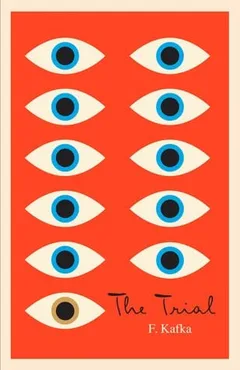
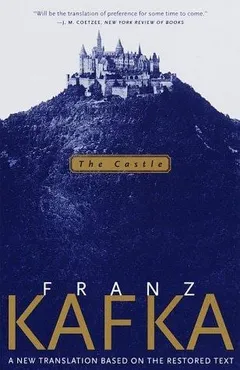
Read this story alongside Kafka’s own The Trial and The Castle to see how the same flat, matter-of-fact narrative treatment of impossible or incomprehensible circumstance, applied here to a single family’s domestic crisis, extends in these longer works into broader institutional and bureaucratic systems.
Questions it raises
- Does the story’s complete refusal to explain Gregor’s transformation strengthen its impact by forcing readers to accept the impossible as simple fact, or does this refusal leave the story’s central premise feeling arbitrary rather than meaningfully connected to its themes about family and economic dependency?
- How does the family’s progression from horror through burden to relief change your understanding of their earlier apparent affection for Gregor? Does this progression suggest their love was always conditional on his economic contribution, or does it reflect a more complicated, gradually eroding response to genuinely difficult circumstances?
- What does Gregor’s persisting human consciousness, trapped in a body that cannot communicate it, contribute to the story that a version without this interior perspective could not achieve? Does knowing Gregor’s continued feelings make the story more tragic, or does this interiority complicate its otherwise flat, external narrative style?
- How does the story’s flat, matter-of-fact prose style shape your emotional response to its content? Does withholding explicit horror or explanation make the story’s events feel more or less disturbing than a more conventionally dramatic treatment might achieve?
- Given how frequently this story gets read as metaphor, for alienation, for capitalism’s reduction of workers to economic function, for family obligation, does treating the transformation as literal impossible fact rather than symbolic device change how persuasively these various interpretive readings actually work?
- What does the story’s ending, the family’s relief and their immediate turn toward planning their future without Gregor, suggest about its ultimate judgment on the family’s conduct? Does the story condemn their response, or does it present this outcome with the same flat, non-judgmental tone it applies throughout to Gregor’s transformation itself?
Highlights
Gregor Samsa wakes one morning to find himself transformed into a monstrous insect, an impossible event the story reports without explanation or metaphor, in flat, matter-of-fact prose that treats the transformation as an ordinary domestic problem rather than a horrifying impossibility.
Paraphrase of the story's famous opening, establishing its deliberately unexplained, matter-of-fact treatment of an impossible event.
Unable to go to work, Gregor watches his family's response evolve across the story, from initial horror at his transformed state, through a gradually settled sense of burden as they adjust to his presence, and finally toward open relief once he eventually dies.
Paraphrase of the story's central emotional arc, tracing the family's response from horror through burden to relief.
Gregor retains his full human consciousness throughout his transformation, still capable of love and guilt toward his family even as his insect body makes it impossible for him to communicate these feelings or resume his previous role supporting them financially.
Paraphrase of the story's genuine tragic dimension, Gregor's interior humanity persisting despite his monstrous external transformation.