The Taming of the Shrew
Assigned by 1 of the 9 reading lists
In a framing scene a drunken tinker is tricked into thinking he is a lord and shown a play. In it, the wealthy Baptista of Padua will not let his popular daughter Bianca marry until her sharp-tongued elder sister Katherina has a husband. The fortune-hunter Petruchio takes the job, marries Kate against her will and subjects her to a regime of hunger, sleeplessness and contradiction until she submits. Bianca's suitors compete by disguise. At the closing feast Kate delivers a long speech on wifely obedience.
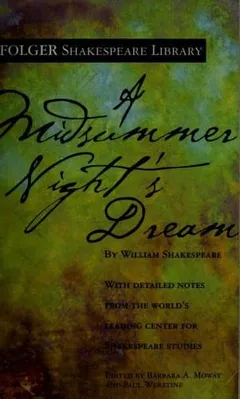
We recommendThe Taming of the ShrewFolger Shakespeare Library (Simon and Schuster), 2004Clear notes and an introduction that faces the play's difficulties squarely.
As an Amazon Associate, The Great Books earns from qualifying purchases. Bookshop.org links also support this site. How this works.
- Written
- c. 1590-1592
- Era
- Renaissance
- Form
- Comedy
- Language
- English
- Length
- Short · 240 ppunder 120 pages
- Difficulty
- Moderate2 of 5 for a first-year reader
Folger Shakespeare Library (Simon and Schuster) edition
Buy this edition: The Taming of the Shrew, opens in a new tabBookshop.org: The Taming of the Shrew, opens in a new tab
Why it's on the list
The framing scene, a drunken tinker tricked into believing himself a lord and shown a play, destabilizes the entire main narrative's status from the outset, inviting audiences to question whether Kate's actual taming should be received as straightforward comic truth or as theatrical entertainment staged specifically to deceive a gullible viewer. Petruchio's regime of hunger, sleeplessness and contradiction imposed on Kate stages psychological domination with unusual explicit detail, marriage's darker coercive potential exposed through methods considerably harsher than comedy typically acknowledges even while the genre's conventions demand eventual happy resolution. Kate's closing speech on wifely obedience remains genuinely difficult to interpret with any confidence, scholars divided over whether it represents sincere capitulation, ironic performance exceeding what Petruchio actually demanded, or some considered strategic accommodation Kate herself chooses rather than passively suffers. Bianca's suitors competing through elaborate disguise adds a parallel plot exploring courtship's own performative deceptions, complicating any simple contrast between Kate's forced submission and her sister's apparently freer, more conventional romantic choice.
Key themes
- Women and men
- Petruchio's regime of hunger, sleeplessness and contradiction imposed on Kate stages psychological domination with unusual explicit detail, marriage's darker coercive potential exposed through methods considerably harsher than comedy typically acknowledges.
- The self and identity
- The framing scene, a drunken tinker tricked into believing himself a lord and shown a play, destabilizes the entire main narrative's status, inviting audiences to question whether Kate's taming should be received as straightforward truth.
- Love and desire
- Kate's closing speech on wifely obedience remains genuinely difficult to interpret with confidence, scholars divided over whether it represents sincere capitulation, ironic performance, or strategic accommodation Kate herself chooses rather than passively suffers.
- Money and class
- Baptista will not let his popular daughter Bianca marry until her sharp-tongued elder sister has a husband, and the fortune-hunter Petruchio takes on Kate specifically for financial gain, staging marriage as economic transaction alongside romantic pursuit.
Which edition to read
Our pick
The Taming of the Shrew
Folger Shakespeare Library (Simon and Schuster), 2004
Clear notes and an introduction that faces the play's difficulties squarely.
Amazon: the Folger Shakespeare Library (Simon and Schuster) edition, opens in a new tabBookshop.org: the Folger Shakespeare Library (Simon and Schuster) edition, opens in a new tab
Overview
Shakespeare’s comedy runs about two hundred and forty pages and was written around 1590 to 1592. In a framing scene a drunken tinker is tricked into thinking he is a lord and shown a play. In it, the wealthy Baptista of Padua will not let his popular daughter Bianca marry until her sharp-tongued elder sister Katherina has a husband.
The fortune-hunter Petruchio takes the job, marries Kate against her will and subjects her to a regime of hunger, sleeplessness and contradiction until she submits. Bianca’s suitors compete by disguise. At the closing feast Kate delivers a long speech on wifely obedience.
What happens
The tinker framed. A drunken tinker named Christopher Sly is tricked into believing he is actually a lord, and a play is performed for his entertainment, establishing the frame within which the main story unfolds.
Baptista’s condition. Baptista of Padua refuses to let his popular younger daughter Bianca marry until her sharp-tongued elder sister Katherina finds a husband first, creating the practical obstacle driving the main plot.
Petruchio takes the job. The fortune-hunter Petruchio agrees to marry Kate specifically for financial gain, taking on a task other suitors have avoided given Kate’s reputation for sharp temper and resistance.
The taming regime. Petruchio marries Kate against her will and subjects her to a systematic regime of hunger, sleeplessness and contradiction, a campaign of psychological domination continuing until she eventually submits.
Bianca’s suitors and disguise. Meanwhile, Bianca’s various suitors compete for her hand through elaborate disguise, a parallel plot exploring courtship’s own performative deceptions alongside the main taming narrative.
Kate’s closing speech. At the closing feast, Kate delivers a long speech on wifely obedience, a passage whose actual tone and sincerity remain genuinely difficult to determine with any critical confidence.
How to read it
Read the framing scene, a drunken tinker tricked into believing himself a lord, as destabilizing the entire main narrative’s status from the outset, inviting audiences to question whether Kate’s taming should be received as straightforward comic truth.
Pay close attention to Petruchio’s regime of hunger, sleeplessness and contradiction; this stages psychological domination with unusual explicit detail, marriage’s darker coercive potential exposed through methods considerably harsher than comedy typically acknowledges.
Notice how Kate’s closing speech on wifely obedience remains genuinely difficult to interpret with confidence, scholars divided over whether it represents sincere capitulation, ironic performance, or strategic accommodation Kate herself chooses rather than passively suffers.
Consider how Bianca’s suitors competing through elaborate disguise adds a parallel plot exploring courtship’s own performative deceptions, complicating any simple contrast between Kate’s forced submission and her sister’s apparently freer romantic choice.
Read this play alongside Shakespeare’s own Much Ado About Nothing to compare two very different treatments of sharp-tongued women and courtship through verbal combat, one resolved through coercive taming, the other through mutual, consensual wit and eventual acknowledged affection.
Questions it raises
- Does the framing scene of the tricked tinker successfully destabilize how audiences should receive the main taming narrative, or does this device get forgotten by most productions and readers well before the play’s more troubling central content actually unfolds?
- How should a contemporary reader approach Petruchio’s systematic regime of hunger, sleeplessness and contradiction? Does the play’s comic framework adequately contain what would otherwise constitute genuinely disturbing psychological abuse, or does the comedy fail to redeem this content?
- What does Kate’s closing speech on wifely obedience actually mean within the play’s own logic? Does its length and rhetorical elaborateness suggest genuine sincerity, or does such excessive performance hint at irony exceeding what straightforward submission would require?
- How does the Bianca subplot, with its suitors competing through disguise, relate to and comment on the main Kate-Petruchio plot? Does this parallel storyline complicate or reinforce the play’s broader treatment of courtship and marriage?
- Given this play’s genuinely troubling content by contemporary standards, how should modern productions and readers approach staging or discussing it? Does historical context adequately explain, or does it merely complicate, engagement with material many now find deeply uncomfortable?
- What does this play’s continued performance and adaptation, despite its controversial content, suggest about how classic works persist in cultural relevance even when their central premises require careful critical framing for contemporary audiences and readers?
Highlights
In a framing scene a drunken tinker is tricked into thinking he is a lord and shown a play, destabilizing the entire main narrative's status from the outset and inviting audiences to question how the following comedy should actually be received.
Paraphrase of the play's distinctive framing device, calling into question the main narrative's own reliability and status.
The fortune-hunter Petruchio takes the job, marries Kate against her will and subjects her to a regime of hunger, sleeplessness and contradiction until she submits, staging psychological domination with unusual explicit detail within a comic framework.
Paraphrase of the play's central and most controversial action, Petruchio's deliberate psychological subjugation of Kate.
At the closing feast Kate delivers a long speech on wifely obedience, a passage remaining genuinely difficult to interpret with confidence, scholars divided over whether it represents sincere capitulation or ironic performance exceeding what Petruchio actually demanded.
Paraphrase of the play's most debated single passage, its ambiguous tone resisting confident critical consensus.