Dubliners
by James Joyce
Assigned by 2 of the 9 reading lists
Fifteen short stories about the inhabitants of Dublin around 1904, arranged from childhood through adolescence and maturity to public life. A boy watches a priest die, a girl cannot bring herself to board a ship with her lover in Eveline, a clerk fails to escape his life in A Little Cloud, a solitary man learns of a woman's death in A Painful Case, and canvassers argue on Ivy Day. The closing novella, The Dead, follows Gabriel Conroy through a New Year's party to a hotel room where his wife tells him about a boy who died for love of her, and snow falls over all Ireland.
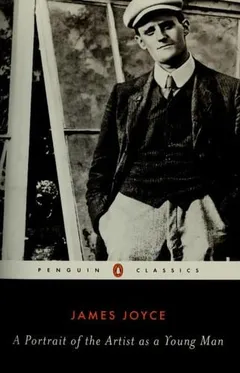
We recommendDublinersPenguin Classics, 2000Terence Brown's edition, with extensive notes on the Dublin streets, songs and politics behind each story.
As an Amazon Associate, The Great Books earns from qualifying purchases. Bookshop.org links also support this site. How this works.
- Written
- 1914
- Form
- Novel
- Language
- English
- Length
- Medium · 250 pp120 to 300 pages
- Difficulty
- Moderate2 of 5 for a first-year reader
Penguin Classics edition
Buy on Amazon: Dubliners, opens in a new tabBookshop.org: Dubliners, opens in a new tab
Why it's on the list
Dubliners took nine years to get into print. Joyce finished it in 1905 and publishers refused it through eighteen rejections, objecting to the naming of real pubs and real people, to the word bloody, and to a passage about Edward VII; one Dublin printer burned the sheets rather than release them. What they were resisting is what makes the book: Joyce writes about ordinary people in a provincial capital with no visible judgement and no plot in the usual sense, and the stories end not with events but with a character seeing something. He called that moment an epiphany, borrowing a theological word, and the technique became the modern short story. Everything Hemingway, Mansfield, Carver and a century of others do with endings begins here. The last story, The Dead, is widely reckoned the best in the language.
Key themes
- Home and exile
- Joyce's word for the condition is paralysis, and he used it in a letter about the book. Almost every story is about someone who could leave, or change, or speak, and does not.
- Money and class
- The economics are exact: rents, wages, the price of a drink, what a clerk earns and what a lodging costs. The characters' options are limited in ways the stories never have to state.
- God and faith
- The church is everywhere and mostly as an institution rather than a faith, supplying the retreat in Grace, the dead priest in The Sisters, and the vocabulary in which people explain themselves to each other.
- The self and identity
- The epiphany is the structural device. A story delivers its meaning when a character sees their own life from outside for a moment, and the recognition changes nothing.
Which edition to read
Our pick
Dubliners
Penguin Classics, 2000
Terence Brown's edition, with extensive notes on the Dublin streets, songs and politics behind each story.
Amazon: the Penguin Classics edition, opens in a new tabBookshop.org: the Penguin Classics edition, opens in a new tab
Overview
Dubliners is fifteen stories and about two hundred and fifty pages, written between 1904 and 1907 and published in 1914 after a fight with publishers that lasted almost a decade. Joyce was twenty-two when he began it.
He told his publisher what he was doing in a letter that is quoted in every edition: his intention was to write a chapter of the moral history of his country, and he chose Dublin because that city seemed to him the centre of paralysis. The stories, he said, are arranged in four movements, childhood, adolescence, maturity and public life, and they are presented in a style of scrupulous meanness, by which he meant a refusal to decorate.
The arrangement matters. The first three stories have child narrators and are told in the first person; the rest move outward through young men, married couples, offices, politics, and finally the long closing novella. The book is designed to be read in order.
Almost nothing happens in most of them. A woman stands on a quay and does not board a ship. A clerk is humiliated at work, borrows against his watch, and hits his son. Two men walk around Dublin and one of them shows the other a coin. The effect depends on precision and on what is withheld, and readers expecting incident often find them flat on a first pass and very different on a second.
What happens
Childhood. The Sisters opens the book with a boy waiting for the death of a priest who has taught him, and the word paralysis on the second page, which the boy says sounded strange to him. Something has gone wrong with the priest, involving a broken chalice and a night when he was found laughing to himself in a confessional, and the adults will not say what. An Encounter has two boys skipping school and meeting a man in a field whose conversation becomes frightening. Araby ends with a boy at a closing bazaar, having got there too late and with too little money, seeing himself as a creature driven and derided by vanity.
Adolescence. Eveline is nineteen, keeps house for a violent father, and has a sailor who wants to take her to Buenos Aires. The story follows her deciding to go, and at the quayside she does not move, and the last image is her face at the barrier, passive, like a helpless animal, giving him no sign. After the Race, Two Gallants and The Boarding House complete the movement, the last of them a small masterwork of coercion in which a landlady and her daughter manoeuvre a lodger into a marriage without any of the three saying what is happening.
Maturity. A Little Cloud has Little Chandler, a clerk with poetic ambitions, meeting an old friend who has made a career in London, going home, failing to quiet his baby, shouting at it, and weeping with shame while his wife takes the child. Counterparts follows a copyist through a day of humiliations at work to a pub where his money runs out, and home, where he beats his son with a stick while the boy offers to say a Hail Mary for him. Clay is about a small spinster at a Hallow Eve party, blindfolded for a game, whose hand lands on a saucer of clay, which means death, and nobody tells her. A Painful Case has Mr Duffy, who ends a friendship with a married woman to keep it proper, read four years later that she has walked in front of a train, and understand, standing in a park at night, that he has been outcast from life’s feast.
Public life. Ivy Day in the Committee Room has canvassers for a municipal candidate sitting round a fire on the anniversary of Parnell’s death, talking about money and the king’s visit, until one of them recites a bad and moving poem about Parnell and nobody knows what to say. A Mother is about a concert and a contract. Grace has a drunk falling down a lavatory stairs and being organised by his friends into a Jesuit retreat, where a priest gives a sermon about setting your accounts right, addressed to businessmen.
The Dead. The last and longest, added after the others, and different in temperature. Gabriel Conroy and his wife Gretta attend the annual Christmas party given by his aunts. Gabriel is anxious, self-conscious, and slightly ashamed of Ireland; he has a run-in with a nationalist woman who calls him a West Briton, worries about his speech, and gives it, and it goes well.
Afterwards, on the stairs, he sees his wife standing still, listening to a tenor singing an old song. In the hotel, expecting tenderness, he finds her thinking about a boy called Michael Furey, who used to sing that song, who was seventeen and ill and stood in the rain under her window the night before she left Galway, and who died a week later. She says she thinks he died for her.
Gabriel, who has never felt anything like that for anyone, lies awake while she sleeps, and the story ends with snow falling over all Ireland, on the living and the dead.
How to read it
Read them in order. The sequence from childhood to public life is the book’s architecture, and The Dead is designed to be arrived at.
Do not expect endings to resolve. Each story stops at the moment of recognition, and what happens next is not the point. If a story feels as though it ended early, look at the last paragraph again and ask what the character has just understood.
Read Eveline, A Painful Case, Counterparts and The Dead first if you want a sample.
Watch the money. Joyce is exact about wages, rents and the price of a drink, and the exactness carries the argument about what these lives can and cannot contain.
Use an annotated edition. The Dublin geography, the political references, particularly around Parnell, and the Catholic detail are all doing work, and an edition with notes will roughly double what you get.
And read The Dead twice. Its first three quarters are a comedy of manners about a party, and on a second reading every detail of that party is preparing the hotel room.
Questions it raises
- Joyce called Dublin the centre of paralysis. Is the condition the city’s, Ireland’s, or something more general the city happens to show clearly?
- The stories end in recognition and nothing changes. Is that realism, or a form the author has imposed?
- Eveline does not board the ship. Is that failure of nerve, or a judgement that the escape was not real?
- Joyce insisted on naming actual pubs and people and lost nine years to it. Why did that matter so much to him?
- Gabriel learns that his wife loved someone who died for her. What exactly is he feeling at the end, and is it grief, jealousy, humility or all three?
- The book refuses to judge its characters. Does the absence of judgement amount to sympathy, or to something colder?
Highlights
There was no hope for him this time: it was the third stroke. Night after night I had passed the house and studied the lighted square of window.
The first sentences of the book. The word paralysis appears three lines later, in the mouth of a boy who says it sounded strange to him, like the word gnomon and the word simony.
She stood among the swaying crowd in the station at the North Wall. He held her hand and she knew that he was speaking to her, saying something about the passage over and over again. All the seas of the world tumbled about her heart.
She does not board the ship. The story ends a few lines later with her face at the barrier giving him no sign of love or farewell or recognition.
Every life is many days, day after day. We walk through ourselves, meeting robbers, ghosts, giants, old men, young men, wives, widows, brothers-in-love. But always meeting ourselves.
Paraphrase of a line from Ulysses, included here because it states plainly what the stories keep doing and what Joyce went on to build a novel out of.
His soul swooned slowly as he heard the snow falling faintly through the universe and faintly falling, like the descent of their last end, upon all the living and the dead.