The State and Revolution
by Vladimir Lenin · Государство и революция
Assigned by 1 of the 9 reading lists
Written in hiding in Finland in the months before the October revolution, and published in 1918. Lenin sets out to recover what he says Marx and Engels actually taught about the state against the socialists who had blunted it. The state, he argues, is not a neutral referee but an instrument by which one class holds down another, so the working class cannot take over the existing machinery of parliament, army and bureaucracy: it must smash it and replace it with something on the model of the Paris Commune. That replacement is the dictatorship of the proletariat, a state of armed workers which, as classes disappear, withers away.
We recommendThe State and RevolutionPenguin Classics, 1992Prints the pamphlet on its own with an introduction placing it between the February and October revolutions.
As an Amazon Associate, The Great Books earns from qualifying purchases. Bookshop.org links also support this site. How this works.
- Written
- 1917
- Form
- Political theory
- Language
- Russian
- Length
- Short · 120 ppunder 120 pages
- Difficulty
- Demanding3 of 5 for a first-year reader
Why it's on the list
Lenin wrote this pamphlet in hiding in the months before October, and its project is genuinely audacious for pure theory composed under such practical pressure, recovering what he insists Marx and Engels really taught about the state from what he considers decades of blunting by mainstream European socialists who had made peace with parliamentary gradualism. His central claim rejects the liberal assumption that the state functions as a neutral referee, arguing it is always an instrument by which one class holds down another, with a radical practical consequence: the working class cannot simply capture the existing machinery of parliament, army and bureaucracy, since that machinery was built to serve the class currently wielding it. Lenin insists it must instead be smashed and replaced on the model of the Paris Commune, marking a genuine break from evolutionary Marxism. His concept of the dictatorship of the proletariat, a state of armed workers that would wither away as classes disappear, provided the theoretical justification the Bolsheviks invoked directly once October succeeded.
Key themes
- Power and authority
- Lenin rejects the liberal assumption that the state functions as a neutral referee mediating between competing class interests, arguing instead that it is always and necessarily an instrument by which one class holds down another, a claim with direct revolutionary consequences.
- Society and the state
- Lenin argues the working class cannot simply capture the existing machinery of parliament, army and bureaucracy through electoral or gradual means, since that machinery was built specifically to serve the class currently wielding it, and must instead be smashed and replaced.
- Justice
- Lenin's concept of the dictatorship of the proletariat, a state of armed workers that would eventually wither away as classes themselves disappear, provides the theoretical justification for a transitional revolutionary state rather than an indefinitely persisting new form of class rule.
- History and progress
- Written in the months before the October Revolution and published just after, the pamphlet's abstract theoretical argument would become a genuine blueprint the Bolsheviks invoked directly once the revolution actually succeeded, connecting pure theory to immediate historical consequence.
Which translation to read
Our pick
The State and Revolution
Penguin Classics, 1992
Prints the pamphlet on its own with an introduction placing it between the February and October revolutions.
Amazon: the Penguin Classics edition, opens in a new tabBookshop.org: the Penguin Classics edition, opens in a new tab
Overview
About a hundred and twenty pages, a political pamphlet by Vladimir Lenin, written in hiding in Finland in the months before the October Revolution and published in 1918. Lenin sets out to recover what he says Marx and Engels actually taught about the state against the mainstream European socialists he believed had blunted this teaching by making peace with parliamentary gradualism.
The state, he argues, is not a neutral referee but an instrument by which one class holds down another, so the working class cannot take over the existing machinery of parliament, army and bureaucracy: it must smash it and replace it with something on the model of the Paris Commune. That replacement is the dictatorship of the proletariat, a state of armed workers which, as classes disappear, withers away.
What happens
Recovering Marx and Engels’s actual teaching. Lenin opens by setting out to recover what he insists Marx and Engels actually taught about the state, arguing that decades of interpretation by mainstream European socialist parties had blunted and distorted their original, considerably more radical theoretical position.
The state as instrument of class domination. Lenin argues directly against the liberal assumption that the state functions as a neutral referee mediating between competing class interests, insisting instead that it is always and necessarily an instrument by which one class holds down another.
Rejecting gradual capture of existing institutions. Building on this claim, Lenin argues that the working class cannot simply take over the existing machinery of parliament, army and bureaucracy through electoral or otherwise gradual means, since this machinery was constructed specifically to serve the class currently wielding it.
Smashing the state and the Paris Commune model. Lenin insists this existing state machinery must instead be smashed entirely and replaced with something modeled on the Paris Commune, a genuine institutional break rather than inheriting and merely repurposing existing structures of parliamentary and bureaucratic power.
The dictatorship of the proletariat. Lenin describes the dictatorship of the proletariat, a state of armed workers, as the specific replacement institution this revolutionary break requires, a transitional form of proletarian state power rather than a permanent new structure of governance.
The withering away of the state. Lenin argues that this dictatorship of the proletariat would eventually wither away entirely as classes themselves disappear under developing socialism, distinguishing his vision from a permanently persisting new form of state power and class rule.
How to read it
Read this pamphlet’s composition circumstances, written in hiding just months before the October Revolution, as directly relevant to its argument; this is genuinely urgent theoretical work composed under immediate practical pressure, aimed at providing ideological justification for revolutionary action Lenin anticipated taking very soon.
Pay close attention to how Lenin’s rejection of the state’s supposed neutrality drives his entire subsequent practical argument; once the state is understood as inherently an instrument of class domination rather than a neutral mediating institution, gradual, electoral capture of existing state machinery becomes theoretically incoherent rather than merely impractical.
Notice how directly this pamphlet’s abstract theoretical argument became genuine practical blueprint once the October Revolution actually succeeded; the Bolsheviks invoked Lenin’s concept of the dictatorship of the proletariat directly to justify the specific revolutionary state structures they subsequently built.
Consider the concept of the state withering away as a genuinely important qualification on the dictatorship of the proletariat; Lenin explicitly frames this new revolutionary state as transitional rather than permanent, a distinction worth weighing against how the actual Soviet state that followed developed in subsequent decades.
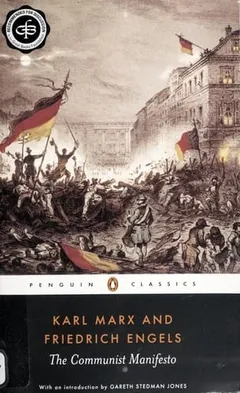
Read this pamphlet alongside Marx’s own Communist Manifesto to compare how directly Lenin’s specific theoretical claims about smashing rather than capturing the state connect to and extend Marx’s earlier, more general revolutionary framework into concrete institutional and strategic argument.
Questions it raises
- Does Lenin’s claim to be recovering Marx and Engels’s authentic original teaching about the state, against decades of supposedly blunted mainstream socialist interpretation, hold up as accurate intellectual history, or does this framing serve primarily to legitimize Lenin’s own specific revolutionary strategy through appeal to authoritative predecessors?
- How persuasive is Lenin’s argument that the state can never function as a neutral referee between class interests? Does this claim adequately account for genuine variation in how different states and political systems actually operate, or does it flatten meaningful institutional differences into a single theoretical category?
- What does the concept of the state withering away actually mean in practical institutional terms, and how should this theoretical concept be weighed against the subsequent actual historical development of Soviet state power, which did not, in fact, wither away as Lenin’s theory predicted?
- How does Lenin’s insistence on smashing rather than capturing existing state machinery compare to more gradualist socialist strategies pursuing change through existing parliamentary institutions? Does Lenin’s argument successfully demonstrate why gradual capture must fail, or does it simply assert this failure as theoretical necessity?
- Given that this pamphlet was written specifically to provide theoretical justification for imminent revolutionary action, how should readers weigh its genuine philosophical claims against its evident strategic and political purpose? Does the pamphlet’s practical urgency shape or potentially compromise its theoretical rigor?
- What does the considerable gap between this pamphlet’s vision of a withering-away transitional state and the actual subsequent history of Soviet state power suggest about the relationship between revolutionary theory and its eventual practical implementation? Does this gap reflect a failure of Lenin’s specific theory, or of its later application?
Highlights
Lenin argues that the state is not a neutral referee standing above class conflict but is always and necessarily an instrument by which one class holds down another, a claim that directly challenges liberal and mainstream socialist assumptions about the state's essentially neutral function.
Paraphrase of Lenin's central theoretical claim, rejecting liberal neutrality in favor of understanding the state as inherently class-based.
Lenin argues that the working class cannot simply take over the existing machinery of parliament, army and bureaucracy through gradual or electoral means, since this machinery was built specifically to serve the ruling class, and must instead be smashed entirely and replaced with something modeled on the Paris Commune.
Paraphrase of Lenin's central practical conclusion, breaking from evolutionary socialism's assumption that existing state institutions could simply be captured and repurposed.
Lenin describes the dictatorship of the proletariat as a state of armed workers, a genuinely transitional institution that would, as classes themselves disappear under socialism, eventually wither away entirely rather than persist indefinitely as a new permanent form of class rule.
Paraphrase of Lenin's concept of the transitional revolutionary state, explicitly framed as temporary rather than permanent.