Swann's Way
by Marcel Proust · Du côté de chez Swann
Assigned by 2 of the 9 reading lists
The first volume of In Search of Lost Time, published at the author's expense in 1913. Combray recalls the narrator's childhood summers in a provincial town, his anguish waiting for his mother's goodnight kiss, and the taste of a madeleine dipped in tea that brings the whole past back. Swann in Love, a novel within the novel set before the narrator's birth, tells how the cultivated Charles Swann fell in love with the courtesan Odette, was consumed by jealousy, and married her after his love had died. A short third part, Place-Names, describes the narrator's boyhood love for their daughter Gilberte.
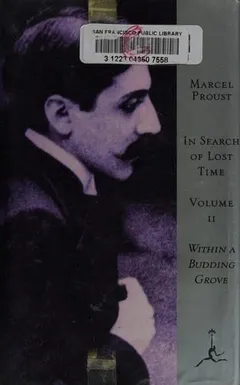
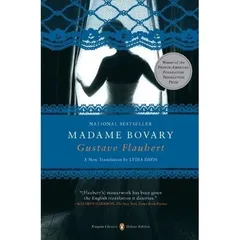
We recommendSwann's Way, translated by Lydia DavisPenguin Classics, 2004Close to Proust's sentences and free of Scott Moncrieff's embroidery; the Modern Library Kilmartin-Enright text is the other standard.
As an Amazon Associate, The Great Books earns from qualifying purchases. Bookshop.org links also support this site. How this works.
- Written
- 1913
- Form
- Novel
- Language
- French
- Length
- Long · 450 pp300 to 700 pages
- Difficulty
- Difficult4 of 5 for a first-year reader
Lydia Davis translation
Buy on Amazon: Swann's Way, opens in a new tabBookshop.org: Swann's Way, opens in a new tab
Why it's on the list
A publisher's reader turned this down in 1912 with the complaint that he could not understand why a man needed thirty pages to describe turning over in bed before going to sleep. He had identified the method exactly and drawn the wrong conclusion. Proust slows narration down until the ordinary contents of a mind, a taste, a jealousy, a piece of music, a name, become available for examination, and what he finds is that we do not possess our own lives: the past is not stored where the will can reach it, and comes back only by accident, complete, through a sensation. The madeleine is the most famous paragraph in modern fiction and the argument around it is what made the novel the instrument it became for Woolf, Joyce, Beckett and everyone after. It is also, in Swann in Love, the most exact anatomy of jealousy ever written.
Key themes
- The self and identity
- Voluntary memory gives back only a summary the intellect has already filed. Involuntary memory, triggered by a taste or an uneven paving stone, returns the thing itself, and Proust's whole enterprise rests on the difference between the two.
- Love and desire
- Love in Proust is a disease of the imagination that attaches to whoever is unavailable. Swann loves Odette in proportion to what he cannot verify, and the anatomy of his jealousy is so thorough that it functions as a general theory.
- Art and beauty
- Three artists run through the book: the writer Bergotte, the painter Elstir, the composer Vinteuil. The little phrase from Vinteuil's sonata becomes the national anthem of Swann's love and outlasts it, surviving as art when the feeling has gone.
- Money and class
- Two social worlds are set against each other, the Verdurins' bourgeois salon with its ferocious rules about who is a bore, and the Guermantes aristocracy glimpsed from a distance, and Swann moves between them to his cost.
Which translation to read
Our pick
Swann's Way, translated by Lydia Davis
Penguin Classics, 2004
Close to Proust's sentences and free of Scott Moncrieff's embroidery; the Modern Library Kilmartin-Enright text is the other standard.
Amazon: the Lydia Davis translation, opens in a new tabBookshop.org: the Lydia Davis translation, opens in a new tab
Overview
Four hundred and fifty pages, the first of seven volumes, published at Proust’s own expense in November 1913 after several houses rejected it. One of the readers was Andre Gide, at Gallimard, who later called the refusal the worst mistake of his life.
Proust was forty-two, known in Paris as a society dilettante who had written some essays and a translation of Ruskin, and generally not taken seriously. He was severely asthmatic, had withdrawn into a cork-lined room on the boulevard Haussmann, slept by day and wrote by night, and would die in 1922 with the last volumes still unrevised.
The whole work is A la recherche du temps perdu, which C. K. Scott Moncrieff rendered as Remembrance of Things Past, a phrase from a Shakespeare sonnet that is lovely and wrong. In Search of Lost Time is now standard and is what Proust meant: an active search, and time that has been lost.
This volume has three parts of very different character. Combray is childhood memory. Swann in Love is a self-contained novel about a man the narrator has not yet met, set before his birth. Place-Names: The Name is a short coda about first love and the way a place name can be more real than the place.
The famous difficulty is the sentences, which are long, subordinated and precise. They are not decoration. Each one is following a perception through its qualifications, and once you accept their pace they are not hard.
What happens
Combray. It opens with a man in the dark, half asleep, uncertain where or when he is, his body reassembling from memory the rooms he has slept in. This is the theme announced before anything happens: identity is held together by memory, and memory is unreliable.
The core of the first movement is the drama of the goodnight kiss. The child cannot sleep without his mother’s kiss; on the evening Swann comes to dinner she cannot come up; he sends a note by the servant, waits, and finally ambushes her on the stairs. His father, unexpectedly, tells her to stay the night in his room. The child gets what he wanted and recognises it as a defeat, a first concession to his own nervous weakness that marks the beginning of a long decline in the family’s expectations of him.
Then the madeleine. Years later, in Paris, in winter, his mother offers him tea and a small scalloped cake. He raises the spoonful to his lips and something enormous happens that he cannot at first identify. He drinks again, and less happens. He tries a third time and it weakens further. He puts down the cup and forces himself to work backwards, refusing the easier distractions of the mind, and finally the memory surfaces: his aunt Leonie used to give him a madeleine dipped in tea on Sunday mornings in Combray. And with that the entire town comes back, not as a list of facts but as a place, streets and church and gardens and flowers and the whole of his aunt’s house, springing out of a cup of tea like the Japanese paper shapes that unfold in water.
The rest of Combray is that recovered world. Aunt Leonie, who has not left her bed in years and monitors the village through her window with the intensity of a police force. Francoise, the cook, magnificent and merciless. The two walks, Swann’s way past the Tansonville estate with its hawthorn hedge, and the Guermantes way along the river, which the child takes to be opposite directions and irreconcilable worlds. The steeples of Martinville seen from a moving carriage, shifting position against each other, which he writes about and which is his first piece of prose. Legrandin the snob. Bloch. The girl with reddish hair and freckles behind the hedge, Gilberte, who makes a gesture he takes for an insult.
Swann in Love. A sharp change of register. Third-person, ironic, socially exact, and set fifteen years before the narrator’s birth.
Charles Swann is wealthy, Jewish, a friend of the Prince of Wales, a member of the Jockey Club, and an art connoisseur perpetually about to write his essay on Vermeer. He is received in the highest society and goes slumming in the salon of Madame Verdurin, a bourgeois hostess who has assembled a small court of faithful and expels anyone who betrays an interest in a world beyond it.
There he meets Odette de Crecy, a courtesan. He does not find her attractive; she is not his type. He becomes interested when he notices her resemblance to a figure in a Botticelli fresco, which lets him file her under something he already values. Then one evening he arrives late at the Verdurins’ and she has gone, and he searches the restaurants of Paris for her, and by the time he finds her he is in love.
What follows is a clinical account of what love does to a clever man. The little phrase from Vinteuil’s sonata becomes their song. He begins to lie to see her, then to interrogate her, then to torment himself with questions he knows he should not ask. She lies, casually and badly. He reads her letters. He goes at night to a window he believes is hers, knocks, and wakes two strangers. The Verdurins turn against him and promote a rival. Odette’s account of a possible incident with another woman, extracted piece by piece, destroys him.
And then it ends, not by resolution but by exhaustion, and he wakes one day free and appalled: he has wasted years, wanted to die, felt his greatest love, for a woman who was not his type.
He marries her. Proust tells us this almost in passing, later, and the effect is devastating.
Place-Names: The Name. Back to the narrator, now an adolescent in Paris. He plays with Gilberte, Swann and Odette’s daughter, in the Champs-Elysees, and is in love with her, and the pattern of the previous section begins to repeat in a minor key: the waiting, the significance read into nothing, the name that contains more than the person.
The volume ends with the narrator, years afterwards, walking in the Bois de Boulogne, trying to find the scene he remembers of Odette among the carriages, and finding only a park with motorcars in it. Memory sought deliberately gives nothing back. Only the accident works.
How to read it
Read fifteen or twenty pages a day and do not fight the tempo. People fail at Proust by reading him like a plot novel and waiting for something to happen. The events are all interior and they are happening continuously.
Get through the first fifty pages. They are the hardest, they are about falling asleep, and readers who give up give up there. Once Combray opens out after the madeleine the book becomes much easier.
Do not try to hold the names. Minor characters recur across three thousand pages; nobody keeps them straight on a first reading, and there is an index in most editions.
Read Swann in Love as a novel in its own right if you want a way in. It is about two hundred pages, it has a conventional shape, and it is the best single demonstration of what Proust can do. Some readers start there and go back.
On translations: Lydia Davis stays close to Proust’s syntax and is the one to read now. Scott Moncrieff is more mellifluous and less accurate, and the Kilmartin and Enright revision of him is a reasonable compromise.
Notice the structure under the surface. Combray and Swann in Love are the same story told twice: a person kept awake by needing someone who will not come. The child’s mother and Swann’s Odette are placed deliberately in parallel, and the whole novel proceeds by that kind of rhyme.
And keep the argument in view. This is a novel with a thesis: that the life we live is largely lost to us, that habit and intelligence bury it, that it survives in sensation and can be recovered by accident, and that the work of recovering it is what art is. Everything, including the seven volumes to come, follows from the paragraph about the cake.
Questions it raises
- Is involuntary memory really different in kind from ordinary recollection, or does it only feel different?
- Swann loves Odette most when he knows least about her. Is that a fact about Swann or about love?
- The narrator gets the kiss he wanted and calls it a defeat. Why?
- Proust gives two hundred pages to a man he has never met, set before his birth. What does the novel gain from that?
- Vinteuil’s phrase outlives the love it belonged to. Is art what remains when feeling has passed, or a way of refusing to let it pass?
- The book argues that the past cannot be recovered by will. What then is the status of the four hundred and fifty pages you have just read?
Highlights
For a long time I went to bed early.
Longtemps, je me suis couché de bonne heure. Probably the most discussed first sentence in French literature, and untranslatable in its tense.
No sooner had the warm liquid mixed with the crumbs touched my palate than a shudder ran through me and I stopped, intent upon the extraordinary thing that was happening to me. An exquisite pleasure had invaded my senses.
The whole of Combray and its surroundings, taking shape and solidity, sprang into being, town and gardens alike, from my cup of tea.
To think that I have wasted years of my life, that I have longed to die, that I have felt my greatest love, for a woman who did not appeal to me, who was not my type.
Swann's verdict on the affair, arrived at after the jealousy has burned out, and immediately before the reader learns that he married her.
The places we have known do not belong solely to the world of space in which we situate them for our greater convenience. They were only a thin slice among contiguous impressions which formed our life at that time.
Paraphrase of the closing pages, in which the narrator returns to the Bois de Boulogne years later and finds the past irrecoverable by will.