Rerum Novarum
Assigned by 1 of the 9 reading lists
The encyclical of May 1891 issued by Pope Leo XIII that founded modern Catholic social teaching. Writing on the condition of workers in industrial society, Leo rejects socialism and the abolition of private property but insists that employers owe their workers a just wage, humane conditions and rest, that the state must protect the poor, and that workers have the right to form associations. Later popes marked its anniversaries with their own major statements, Quadragesimo Anno in 1931 and Centesimus Annus in 1991.
We recommendRerum NovarumLibreria Editrice Vaticana, 1891The Vatican's English text is freely available online and is the version most courses use.
As an Amazon Associate, The Great Books earns from qualifying purchases. Bookshop.org links also support this site. How this works.
- Written
- 1891
- Form
- Theology
- Language
- Latin
- Length
- Short · 40 ppunder 120 pages
- Difficulty
- Moderate2 of 5 for a first-year reader
Libreria Editrice Vaticana edition
Find this edition: Rerum Novarum, opens in a new tabBookshop.org: Rerum Novarum, opens in a new tab
Why it's on the list
Leo XIII wrote directly into the specific crisis industrial capitalism had created for workers by 1891, and the encyclical's achievement is refusing the era's dominant binary choice between unregulated capitalism and socialist abolition of private property, carving out a distinctly Catholic third position that would define the Church's social teaching for the following century. Leo rejects socialism firmly, defending private property as a natural right, but this rejection comes paired with demanding obligations on employers that mainstream economic liberalism did not recognize as binding, a just wage, humane conditions, adequate rest, treated as matters of actual justice rather than optional charity. His insistence that the state has a legitimate role protecting the poor challenged laissez-faire orthodoxy, while his defense of workers' right to form associations gave the Catholic labor movement genuine papal sanction. Later popes marking its anniversaries with Quadragesimo Anno in 1931 and Centesimus Annus in 1991 confirm its status as the founding text of a still-developing tradition.
Key themes
- Justice
- Leo insists that employers owe their workers a just wage, humane conditions and rest as matters of actual justice rather than optional charity, refusing the era's dominant assumption that labor conditions fell entirely outside the scope of binding moral or legal obligation.
- Money and class
- Leo rejects socialism and defends private property as a natural right while simultaneously demanding genuine concessions from employers, carving out a distinctly Catholic third position between unregulated capitalism and socialist abolition of property that neither side fully anticipated.
- Society and the state
- Leo's insistence that the state has a legitimate, active role in protecting the poor directly challenged laissez-faire orthodoxy's assumption that government should remain neutral regarding labor conditions, giving state intervention explicit Catholic theological justification.
- Liberty and rights
- Leo's defense of workers' right to form associations gave the emerging Catholic labor movement genuine papal sanction it had previously lacked, treating collective organization as a legitimate exercise of freedom rather than a threat to social order.
Which translation to read
Our pick
Rerum Novarum
Libreria Editrice Vaticana, 1891
The Vatican's English text is freely available online and is the version most courses use.
Amazon: the Libreria Editrice Vaticana edition, opens in a new tabBookshop.org: the Libreria Editrice Vaticana edition, opens in a new tab
Overview
About forty pages, the encyclical of May 1891 that founded modern Catholic social teaching, issued by Pope Leo XIII directly into the specific crisis industrial capitalism had created for workers by that period. Writing on the condition of workers in industrial society, Leo refuses the era’s dominant binary choice between unregulated capitalism and socialist abolition of private property, carving out instead a distinctly Catholic third position.
Leo rejects socialism and the abolition of private property but insists that employers owe their workers a just wage, humane conditions and rest, that the state must protect the poor, and that workers have the right to form associations. Later popes marked its anniversaries with Quadragesimo Anno in 1931 and Centesimus Annus in 1991.
What happens
Addressing industrial workers’ condition. Leo opens the encyclical by addressing directly the specific condition of workers within industrial society, a subject papal teaching had not previously engaged with this level of sustained, focused attention amid the era’s rapid economic and social transformation.
Rejecting socialism and defending private property. Leo rejects socialism and the abolition of private property firmly, defending property as a natural right rather than a historical accident or arbitrary social convention that could legitimately be abolished through collective political action.
Demanding just wages and humane conditions. Despite this rejection of socialism, Leo insists that employers owe their workers a just wage, humane working conditions and adequate rest, treating these obligations as matters of actual justice rather than optional charity employers might extend or withhold at their own discretion.
The state’s obligation to protect the poor. Leo argues that the state must actively protect the poor, directly challenging the era’s dominant laissez-faire economic orthodoxy, which held that government should remain essentially neutral regarding labor conditions and leave workers’ treatment to private negotiation.
The right to form associations. Leo affirms workers’ right to form associations, giving the emerging Catholic labor movement genuine papal sanction and theological justification it had previously lacked, treating collective organization as legitimate exercise of freedom rather than social threat.
A living tradition marked by later encyclicals. The encyclical’s continued significance is confirmed by later popes marking its anniversaries with their own major statements, Pius XI’s Quadragesimo Anno in 1931 and John Paul II’s Centesimus Annus in 1991, establishing Rerum Novarum as the founding text of an ongoing, actively developing tradition.
How to read it
Read the encyclical’s careful balancing position, rejecting socialism while still demanding genuine concessions from employers, as its central and most historically significant achievement; Leo refuses both sides of the era’s dominant ideological binary rather than simply choosing between unregulated capitalism and socialist property abolition.
Pay close attention to how Leo frames employer obligations, just wage, humane conditions, rest, as matters of actual binding justice rather than optional charitable discretion; this framing gave Catholic social teaching real practical bite against contemporary economic liberalism’s assumption that labor conditions fell outside legitimate moral or legal obligation.
Notice how directly the encyclical’s defense of state intervention to protect the poor challenged laissez-faire orthodoxy; this argument provided explicit theological justification for government involvement in labor conditions at a moment when such intervention remained genuinely contested territory.
Consider the encyclical’s continued influence, marked by major follow-up statements from later popes across the following century, as evidence of its genuine foundational status; Rerum Novarum functions not as a single historical document but as the actual starting point for an ongoing, still-developing tradition of Catholic social teaching.
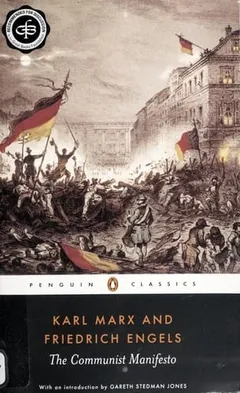
Read this encyclical alongside Marx’s Communist Manifesto to compare two fundamentally different nineteenth-century responses to industrial capitalism’s treatment of workers, Marx’s call for revolutionary abolition of private property against Leo’s attempt to reform capitalism’s excesses while preserving its underlying property structure.
Questions it raises
- Does Leo’s careful balancing position, rejecting socialism while demanding genuine employer obligations, represent a coherent and defensible third way between capitalism and socialism, or does this position risk satisfying neither side’s more fundamental concerns about the underlying economic system?
- How persuasive is Leo’s defense of private property as a natural right rather than a historical or social convention? Does this theological grounding provide a stronger foundation for property rights than purely secular political or economic arguments might offer?
- What does the encyclical’s demand that employers provide just wages and humane conditions as matters of justice, rather than charity, actually mean in practical enforcement terms? Does the encyclical provide adequate guidance for how these obligations should be concretely implemented or enforced?
- How does Leo’s defense of state intervention to protect the poor compare to more fully developed subsequent theories of the welfare state? Does this encyclical’s argument for limited protective intervention anticipate or diverge from how twentieth-century welfare states would eventually develop?
- Given the encyclical’s continued relevance marked by major follow-up statements across more than a century, what does this sustained engagement suggest about how successfully Catholic social teaching has adapted its founding principles to genuinely new economic circumstances, from industrial capitalism through to contemporary globalized economies?
- What does Leo’s affirmation of workers’ right to form associations suggest about the Catholic Church’s broader relationship to organized labor movements historically? Does this endorsement represent genuine solidarity with worker organizing, or does it reflect a more cautious, institutionally mediated form of support?
Highlights
Leo rejects socialism and the abolition of private property directly, defending property as a natural right, while simultaneously insisting that employers owe their workers a just wage, humane working conditions and adequate rest as genuine matters of justice rather than optional charitable discretion.
Paraphrase of the encyclical's central balancing position, refusing both unregulated capitalism and socialist property abolition.
Leo argues that the state must protect the poor, directly challenging laissez-faire economic orthodoxy's assumption that government should remain neutral regarding labor conditions and leave workers' treatment entirely to private negotiation between employer and employee.
Paraphrase of Leo's argument for legitimate state intervention in labor conditions, a genuine challenge to contemporary economic liberal orthodoxy.
Leo affirms workers' right to form associations, giving the emerging Catholic labor movement genuine papal sanction and theological justification it had previously lacked, treating collective worker organization as a legitimate exercise of freedom rather than a threat to social order.
Paraphrase of Leo's endorsement of worker associations, a significant institutional development for Catholic engagement with organized labor.