The Would-Be Gentleman
by Molière · Le Bourgeois gentilhomme
Assigned by 1 of the 9 reading lists
Monsieur Jourdain, a rich cloth merchant's son, spends his money on masters of music, dancing, fencing and philosophy in the hope of passing as a nobleman, and discovers with delight that he has been speaking prose all his life. He refuses to let his daughter marry a commoner, so her suitor disguises himself as the son of the Grand Turk and confers a bogus title on Jourdain in a mock ceremony. A comedy-ballet with music by Lully, written for Louis XIV's court.
We recommendThe Would-Be Gentleman, in The Miser and Other Plays, translated by John Wood and David CowardPenguin Classics, 2000Readable prose with the ballet interludes retained.
As an Amazon Associate, The Great Books earns from qualifying purchases. Bookshop.org links also support this site. How this works.
- Written
- 1670
- Form
- Comedy
- Language
- French
- Length
- Short · 100 ppunder 120 pages
- Difficulty
- Approachable1 of 5 for a first-year reader
John Wood and David Coward translation
Find this edition: The Would-Be Gentleman, opens in a new tabBookshop.org: The Would-Be Gentleman, opens in a new tab
Why it's on the list
Monsieur Jourdain's discovery that he has been speaking prose all his life, made with genuine delight rather than embarrassment, captures the play's central comic mechanism, a man so eager to acquire the trappings of nobility that even the most basic, already possessed fact about himself arrives as astonishing new information worth celebrating. His refusal to let his daughter marry a commoner, despite being a commoner himself by birth, exposes the specific hypocrisy of social climbing, rejecting in others the very status he himself is desperately trying to escape through purchased masters and imitated manners. The mock ceremony conferring a bogus noble title on Jourdain, staged by his daughter's disguised suitor, resolves the plot through exactly the kind of elaborate theatrical deception Jourdain's own vanity has made him newly vulnerable to, turning his social aspiration itself into a weapon against him. Written as court entertainment for Louis XIV with Lully's music integrated throughout, the play stages its critique of aristocratic pretension inside the very court culture most invested in maintaining those same social distinctions.
Key themes
- Money and class
- Monsieur Jourdain's refusal to let his daughter marry a commoner, despite being a commoner himself by birth, exposes the specific hypocrisy of social climbing, rejecting in others the very status he is desperately trying to escape.
- Education
- Jourdain spends his money on masters of music, dancing, fencing and philosophy hoping to pass as a nobleman, treating acquired learning as a purchasable commodity rather than genuine cultivation.
- Art and beauty
- Jourdain's delighted discovery that he has been speaking prose all his life captures the play's central comic mechanism, basic already-possessed facts arriving as astonishing new information to a man desperate for self-improvement.
- Family and inheritance
- The mock ceremony conferring a bogus noble title on Jourdain, staged by his daughter's disguised suitor, resolves the marriage plot through exactly the theatrical deception his own vanity has made him vulnerable to.
Which translation to read
Our pick
The Would-Be Gentleman, in The Miser and Other Plays, translated by John Wood and David Coward
Penguin Classics, 2000
Readable prose with the ballet interludes retained.
Amazon: the John Wood and David Coward translation, opens in a new tabBookshop.org: the John Wood and David Coward translation, opens in a new tab
Overview
About a hundred pages, Molière’s comedy-ballet, first performed in 1670 with music by Lully, written for the court of Louis XIV. Monsieur Jourdain, a rich cloth merchant’s son, spends his money on masters of music, dancing, fencing and philosophy in the hope of passing as a nobleman.
He discovers with delight that he has been speaking prose all his life. He refuses to let his daughter marry a commoner, so her suitor disguises himself as the son of the Grand Turk and confers a bogus title on Jourdain in a mock ceremony.
What happens
Jourdain’s purchased education. Monsieur Jourdain, a rich cloth merchant’s son, spends his money on masters of music, dancing, fencing and philosophy, hoping this purchased instruction will let him pass convincingly as a nobleman among genuine aristocrats.
The discovery of prose. Jourdain discovers with genuine delight that he has been speaking prose all his life, a comic revelation in which the most basic, already-possessed fact about himself arrives as astonishing new information.
Refusing his daughter’s marriage. Jourdain refuses to let his daughter marry a commoner, despite being a commoner himself by birth, exposing the specific hypocrisy of a social climber rejecting in others the status he is desperately trying to escape.
The suitor’s disguise as the Grand Turk’s son. Angélique’s suitor, unable to win Jourdain’s approval directly, disguises himself as the son of the Grand Turk, exploiting Jourdain’s vulnerability to exactly the exotic aristocratic status he most craves.
The mock ceremony. The disguised suitor confers a bogus noble title on Jourdain in an elaborate mock ceremony, resolving the marriage plot through theatrical deception matching Jourdain’s own vanity and social aspiration.
Music, dance and comedy integrated. Throughout the play, musical and dance interludes by Lully integrate directly with the spoken comedy, reflecting the work’s origin as court entertainment rather than purely literary theater performed independently.
How to read it
Read Jourdain’s delighted discovery that he has been speaking prose all his life as the play’s central comic mechanism; a man so eager to acquire nobility’s trappings finds even basic self-knowledge newly astonishing when framed as valuable instruction.
Pay close attention to how Jourdain’s refusal to let his daughter marry a commoner, despite his own common birth, exposes social climbing’s specific hypocrisy, rejecting in others the very status he is desperately trying to escape through purchased masters.
Notice how the mock ceremony conferring a bogus title resolves the plot through exactly the kind of elaborate theatrical deception Jourdain’s own vanity has made him newly vulnerable to, turning his social aspiration itself into the weapon against him.
Consider the play’s origin as court entertainment for Louis XIV, with Lully’s music integrated throughout; this context lets Molière stage his critique of aristocratic pretension inside the very court culture most invested in maintaining those social distinctions.
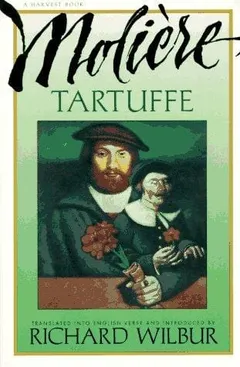
Molière’s Tartuffe rewards a comparative reading here: both plays hinge on a household’s vulnerability to deception, but where Jourdain’s undoing is his own hunger for status, the Orgon family in that later play falls for religious counterfeit rather than social flattery.
Questions it raises
- Does Jourdain’s delighted discovery that he has been speaking prose all his life primarily satirize his own foolishness, or does it also gently mock the pretensions of the masters and tutors profiting from his desperate desire for self-improvement?
- Jourdain refuses to let his daughter marry a commoner despite his own common birth: does this specific hypocrisy make him more culpable than a merely foolish figure, or does the play let his vanity excuse it as harmless self-delusion?
- What does the elaborate mock ceremony conferring a bogus title suggest about the play’s ultimate attitude toward Jourdain’s aspiration? Does this resolution punish his vanity, indulge it, or do both simultaneously through theatrical deception?
- How does the play’s origin as court entertainment for Louis XIV shape its satire of social climbing? Does staging this critique for an audience deeply invested in aristocratic distinction change how the comedy’s central joke should be read?
- Given that music and dance interludes integrate throughout rather than standing separate from the spoken comedy, how does this comedy-ballet form shape the play’s overall comic effect compared to Molière’s more purely spoken comedies?
- What does this play’s continued relevance to discussions of social aspiration and class anxiety suggest about the durability of Molière’s satire? Does Jourdain’s specific comic folly still illuminate contemporary forms of status-seeking and purchased self-improvement?
Highlights
Monsieur Jourdain, a rich cloth merchant's son, spends his money on masters of music, dancing, fencing and philosophy in the hope of passing as a nobleman, and discovers with delight that he has been speaking prose all his life.
Paraphrase of the play's central comic premise, Jourdain's social aspiration and his delighted discovery of already-possessed knowledge.
Jourdain refuses to let his daughter marry a commoner despite being a commoner himself by birth, so her suitor disguises himself as the son of the Grand Turk and confers a bogus title on Jourdain in an elaborate mock ceremony.
Paraphrase of the play's resolution, exposing Jourdain's social hypocrisy through theatrical deception matching his own vanity.
The play is a comedy-ballet with music by Lully, written for the court of Louis XIV, integrating dance and musical interludes throughout the dramatic action rather than treating them as separate entertainment from the spoken comedy.
Paraphrase of the play's distinctive theatrical form, combining spoken comedy with integrated music and dance for its royal audience.