Rameau's Nephew
by Denis Diderot · Le Neveu de Rameau
Assigned by 1 of the 9 reading lists
A dialogue in a Paris café between Moi, a philosopher, and Lui, the nephew of the composer Rameau, a failed musician, parasite and mimic who lives by flattering the rich. Lui defends with brilliance and candour a life of sponging, lying and self-interest, argues that genius and virtue rarely go together, acts out whole operas and dinner parties, and unsettles the philosopher's confidence in the reward of virtue without quite defeating it. Diderot never published it; the manuscript reached Goethe, who translated it into German in 1805, and the French text appeared later.
We recommendRameau's Nephew and D'Alembert's Dream, translated by Leonard TancockPenguin Classics, 1976Pairs the two dialogues most often assigned; Margaret Mauldon's Oxford version is a good alternative.
As an Amazon Associate, The Great Books earns from qualifying purchases. Bookshop.org links also support this site. How this works.
- Written
- written c. 1761-1774, published 1805
- Language
- French
- Length
- Short · 100 ppunder 120 pages
- Difficulty
- Demanding3 of 5 for a first-year reader
Leonard Tancock translation
Find this edition: Rameau's Nephew, opens in a new tabBookshop.org: Rameau's Nephew, opens in a new tab
Why it's on the list
Diderot never published this dialogue in his lifetime, and its genuine strangeness may be exactly why: Lui, the nephew of the famous composer Rameau, argues for a life of flattery, parasitism and self-interested lying with such brilliance, such candor and such evident intelligence that the philosopher Moi, meant to represent reasoned virtue, never quite manages to defeat him, only to keep arguing. Lui's central, genuinely disturbing claim, that genius and virtue rarely travel together, and that a society which rewards flattery and performance over honest merit has effectively made his own parasitic cunning a rational response to real conditions rather than simple moral failure, unsettles the Enlightenment confidence in virtue's ultimate reward without ever fully collapsing it. Lui's extraordinary physical performances, acting out entire operas and imagined dinner parties alone at the café table, make the dialogue as much theatrical spectacle as philosophical argument. Goethe translated the manuscript into German before the original French text was even properly established, and Hegel later made Lui a central figure in his own account of a fractured, self-alienated modern consciousness.
Key themes
- Virtue and character
- Lui argues that genius and virtue rarely coincide, and defends a life built on flattery and self-interest as a rational response to a society that actually rewards exactly this kind of performance over honest merit, a challenge Moi's philosophical confidence in virtue's reward never fully answers.
- Art and beauty
- Lui's extraordinary solo performances, acting out entire operas and imagined dinner conversations by himself at the café table, blur the line between genuine artistic genius and mere parasitic mimicry, raising the question of whether his talent for performance is itself a kind of authentic gift.
- Money and class
- Lui's frank account of surviving as a flatterer and hanger-on among Paris's wealthy patrons exposes the actual economic mechanics underlying eighteenth-century patronage, in which genuine talent mattered less than skill at performed subservience and entertainment.
- The self and identity
- Lui's simultaneous self-awareness and self-justification, knowing exactly what he is and defending it anyway with real intelligence, produces a genuinely unstable, divided self that later philosophers, Hegel above all, would treat as an early and prophetic image of modern alienated consciousness.
Which translation to read
Our pick
Rameau's Nephew and D'Alembert's Dream, translated by Leonard Tancock
Penguin Classics, 1976
Pairs the two dialogues most often assigned; Margaret Mauldon's Oxford version is a good alternative.
Amazon: the Leonard Tancock translation, opens in a new tabBookshop.org: the Leonard Tancock translation, opens in a new tab
Overview
About a hundred pages, a philosophical dialogue written by Denis Diderot over an extended and genuinely uncertain period, likely composed and revised sometime between roughly 1761 and 1774, and never published during Diderot’s own lifetime, surviving only in manuscript until Goethe encountered a copy and translated it into German, publishing that translation in 1805, well before a reliable French original text was established and published. The dialogue takes the form of a wide-ranging conversation in a Paris café between two figures, Moi, a philosopher clearly modeled closely on Diderot’s own voice and values, and Lui, the nephew of the celebrated composer Jean-Philippe Rameau, a failed musician who has settled into a precarious existence as a parasite, flatterer and entertainer among Paris’s wealthy patrons.
The dialogue’s genuine strangeness, and likely part of why Diderot never published it, lies in how thoroughly Lui’s arguments in defense of his own parasitic, self-interested way of life resist easy philosophical defeat; rather than staging a simple contest Moi’s reasoned virtue clearly wins, Diderot gives Lui genuine brilliance, candor and rhetorical force, producing a work that unsettles Enlightenment confidence in virtue’s ultimate reward without ever fully collapsing that confidence either.
The argument
Lui’s defense of a parasitic life. At the dialogue’s center is Lui’s sustained, remarkably candid defense of his own existence, surviving through flattery, mimicry and calculated self-interest rather than through honest labor or genuine artistic achievement of his own. Rather than expressing shame or offering excuses, Lui argues directly and with evident intellectual pleasure that his way of life represents a rational, even admirable adaptation to how Parisian high society actually operates, a system that rewards entertaining flattery considerably better than it rewards honest, unglamorous merit.
Genius against virtue. Lui advances a genuinely provocative claim that runs through much of the dialogue: that genius and conventional virtue rarely travel together, and that demanding moral respectability from genuinely talented or brilliant people may actually work against the production of real artistic or intellectual achievement. Moi resists this claim without ever fully refuting it, and the dialogue leaves the tension between genius and virtue considerably less resolved than a more conventional philosophical treatise defending virtue might have allowed.
The solo performances. In the dialogue’s most theatrically vivid sequences, Lui performs, entirely alone at the café table, extended imitations of complete operas and imagined society dinners, switching voices, postures and even imagined instruments with total physical commitment, drawing onlookers and producing a spectacle Moi records with genuine, largely unresolved admiration despite his continuing philosophical disapproval of the man performing it. These performances make the dialogue function as much as theatrical writing as philosophical argument, and complicate any easy separation between Lui’s parasitic cunning and what might be genuine, if badly channeled, artistic talent.
The social critique. Lui’s sharpest and most genuinely difficult argument redirects moral responsibility away from his own individual choices and onto the broader social system that produces and rewards them: a society that pays flatterers better than it pays honest, hardworking people, he argues, has no legitimate grounds for moral shock when clever, ambitious people become flatterers rather than honest laborers, making his own corruption less a personal moral failing than a rational, almost inevitable adaptation to real incentives Parisian society itself has established.
An unresolved ending. The dialogue closes without any clean philosophical resolution, Moi neither fully converted to Lui’s cynical realism nor able to claim decisive victory for his own position, an ending that reflects the dialogue’s larger refusal to stage a simple contest between clearly right and clearly wrong positions, leaving readers considerably less settled than a more conventional philosophical dialogue in the Socratic tradition typically would.
How to read it
Read Lui’s arguments with genuine openness to their actual force rather than assuming Moi’s philosophical position must automatically win the exchange; Diderot’s real achievement lies precisely in making Lui’s defense of a parasitic, self-interested life genuinely difficult to dismiss, however morally troubling its conclusions remain.
Pay close attention to the solo performance sequences as doing real argumentative work rather than functioning as mere comic or theatrical interlude; Lui’s evident talent in these performances complicates any simple judgment that he possesses no genuine gift at all, raising real questions about the relationship between his parasitic social role and whatever authentic artistic capacity he might actually possess.
Notice how the dialogue’s genuine formal instability, no clear victor, no tidy moral resolution, itself constitutes part of its philosophical achievement, resisting the more conventional Enlightenment confidence that reasoned argument, properly conducted, should straightforwardly vindicate virtue over vice.
Consider the dialogue’s unusual publication history, unpublished by Diderot himself and reaching print first in German translation decades before an established French text existed, as relevant context for understanding why this particular work remained so genuinely unsettled and unsettling relative to Diderot’s other, more confidently Enlightenment-aligned writing.
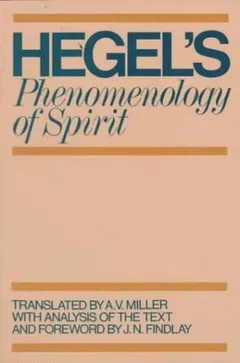
Read this dialogue alongside Hegel’s later treatment of Lui as a philosophically significant figure of fractured, self-alienated modern consciousness in the Phenomenology of Spirit, to see how a work Diderot himself apparently could not settle on how to present became, for a later and very different philosophical tradition, a genuinely important and productive image of divided selfhood.
Questions it raises
- Does Lui’s argument that his parasitic way of life represents a rational adaptation to Parisian society’s actual incentives successfully shift moral responsibility from himself to the broader social system, or does this argument function more as clever self-justification than genuine ethical analysis?
- What is the effect of Diderot giving Lui’s position such genuine rhetorical brilliance and candor rather than making him an easily dismissed villain? Does this choice strengthen the dialogue’s philosophical seriousness, or does it risk making vice too attractive relative to Moi’s comparatively duller virtue?
- How should a reader interpret Lui’s extraordinary solo performances, as evidence of genuine artistic talent wasted on parasitic performance, as further evidence of his skill at manipulation and flattery, or as something the dialogue deliberately leaves ambiguous between these two readings?
- Why might Diderot have chosen never to publish this dialogue during his own lifetime? What does this choice suggest about how comfortable he actually was with the unresolved tension between Lui’s and Moi’s positions, compared to his more confidently argued published philosophical work?
- Does the dialogue’s genuine claim that genius and virtue rarely coincide hold up as a general observation, or does it depend too heavily on Lui’s own particular, self-interested framing of the question to constitute a genuinely persuasive philosophical position?
- What does Hegel’s later use of Lui as a figure of divided, self-alienated modern consciousness reveal about the dialogue’s philosophical afterlife? Does this later philosophical appropriation illuminate something genuinely present in Diderot’s original text, or does it impose a considerably later philosophical framework onto material that was not originally designed to support it?
Highlights
Lui declares that he would rather be a brilliant madman than a dull, sensible fool, and defends this preference at length, arguing that dullness serves no one while even a corrupt genius at least provides entertainment and occasional insight.
Paraphrase of Lui's characteristic rhetorical strategy, defending vice not by denying its wrongness but by insisting it beats mediocrity.
Lui performs, alone at the café table, an entire imagined opera and an entire imagined society dinner in rapid succession, switching voices, postures and instruments with such total physical commitment that onlookers gather to watch, and Moi records the performance with genuine, unresolved admiration.
Paraphrase of the dialogue's most theatrically vivid sequence, in which Lui's parasitic cunning and genuine performative genius become nearly impossible to separate.
Lui argues that a society which pays flatterers better than it pays honest men has no right to be shocked when clever people become flatterers, and that his own corruption is simply a rational adaptation to the actual incentives Parisian society provides rather than any personal moral failing.
Paraphrase of Lui's sharpest argument, redirecting moral blame from his own individual choices toward the social system that rewards them.