Eugénie Grandet
Assigned by 1 of the 9 reading lists
In the provincial town of Saumur, old Grandet, a cooper turned millionaire, keeps his wife and daughter in cold rooms and counts every candle. When his ruined nephew Charles arrives from Paris, Eugénie falls in love with him and gives him her hoard of gold coins to make his fortune in the Indies. Her father's fury when he finds out, her mother's death, and Charles's eventual betrayal leave Eugénie the richest woman in the region, living as frugally as her father did. A study of avarice and of a woman's unspent love.
We recommendEugénie Grandet, translated by Sylvia RaphaelOxford University Press (Oxford World's Classics), 2009Accurate and readable, with a helpful introduction and notes.
As an Amazon Associate, The Great Books earns from qualifying purchases. Bookshop.org links also support this site. How this works.
- Written
- 1833
- Form
- Novel
- Language
- French
- Length
- Medium · 220 pp120 to 300 pages
- Difficulty
- Moderate2 of 5 for a first-year reader
Sylvia Raphael translation
Buy on Amazon: Eugénie Grandet, opens in a new tabBookshop.org: Eugénie Grandet, opens in a new tab
Why it's on the list
Balzac's most compact and most quietly devastating novel is about a miser, and it is not really about the money at all, it is about what happens to everyone around a person who has made accumulation the entire purpose of his life. Old Grandet counts candle stubs and rations sugar for his own wife and daughter while sitting on one of the largest fortunes in the province, and Balzac never lets you laugh him off as a comic type; his greed has a genuine, almost frightening logic to it, each small cruelty following reasonably from the one before. Eugénie, raised in that cold house, gives away her entire private fortune to a cousin she has known for weeks, which is not really an act of romantic folly so much as the first and only time she has ever been allowed to want something, and the novel's real cruelty is what happens after: she becomes, by the end, the richest woman in the region, living exactly as frugally as the father she never managed to escape.
Key themes
- Money and class
- Grandet's avarice is worked out in exact, almost forensic detail, every candle, every lump of sugar, every transaction calculated to the last sou, and Balzac makes his logic disturbingly coherent rather than simply grotesque.
- Love and desire
- Eugenie's love for Charles is her first and only act of independent desire after a childhood spent entirely subordinated to her father's will, which is why giving away her gold matters more as an assertion of self than as a romantic gesture.
- Virtue and character
- Eugenie's mother, gentle and entirely without will of her own after decades under Grandet's rule, offers one model of what the household produces; Eugenie's quiet, devastating endurance after Charles's betrayal offers another, harder one.
- The self and identity
- The novel's cruelest irony is its ending: Eugenie inherits enormous wealth and uses it exactly as her father would have, living in cold frugality despite having every means to live otherwise, as though the house itself has shaped her more deeply than any single choice could undo.
Which translation to read
Our pick
Eugénie Grandet, translated by Sylvia Raphael
Oxford University Press (Oxford World's Classics), 2009
Accurate and readable, with a helpful introduction and notes.
Amazon: the Sylvia Raphael translation, opens in a new tabBookshop.org: the Sylvia Raphael translation, opens in a new tab
Overview
About two hundred and twenty pages, published in 1833, one of the earliest and most tightly constructed novels in Balzac’s vast Human Comedy, and, for many readers, the best introduction to his work precisely because of that compactness; where his later novels sprawl across hundreds of pages and dozens of characters, Eugénie Grandet concentrates its full effect into a single household, a handful of characters, and a story told with real economy and control.
Set in the small provincial town of Saumur, in the Loire valley, the novel is Balzac’s study of avarice as a psychological and social force, embodied in the figure of old Grandet, a former cooper who has, through a combination of shrewdness, luck and the confiscation of church property during the Revolution, become one of the wealthiest men in the province while maintaining, deliberately, the outward appearance and habits of a modest tradesman. Balzac was in his early thirties when he wrote it, still establishing the ambitious scheme of the interconnected Human Comedy, and the novel’s careful, almost mathematical construction, tracing exactly how a single dominant character trait shapes and eventually damages everyone in a household, became a model for much of what he wrote afterward.
What happens
The Grandet household. Old Grandet, a former cooper who made his first fortune buying confiscated church vineyards cheaply during the Revolution and has multiplied it many times since through decades of shrewd, relentless accumulation, rules his household with an absolute and minutely detailed control over every expenditure. His wife, gentle, pious and entirely without independent will after decades of subjection to her husband, and his daughter Eugénie, now twenty-three, live in conditions of real material deprivation despite the family’s enormous and largely secret wealth, rationed candles, counted lumps of sugar, cold unheated rooms, all imposed by a father whose exact, almost ritualistic management of these tiny household economies Balzac renders in extraordinary, faintly hypnotic detail.
Charles arrives. On the evening of Eugénie’s birthday, her ruined Parisian cousin Charles Grandet arrives unexpectedly, sent by his father, who has just gone bankrupt and, unknown to Charles at the point of his arrival, has shot himself rather than face the disgrace. Charles is everything the Saumur household is not, fashionable, worldly, elegantly dressed, and Eugénie, who has never before been permitted anything resembling her own desire, falls immediately and completely in love with him.
Old Grandet, informed of his brother’s death and ruin, calculates coldly how to manage the situation to his own advantage and reputation, eventually engineering a scheme, through his notary and banker, to settle his dead brother’s debts in a way that costs Grandet himself almost nothing while preserving the family name, all while showing his devastated, penniless nephew a chilly, calculated hospitality that never risks an actual sou of his own fortune.
Eugénie’s gift. Before Charles departs for the Indies, where he intends to rebuild his fortune, Eugénie secretly gives him her entire private hoard, gold coins given to her over the years as birthday and New Year gifts, money that is, within the household’s peculiar economy, genuinely her own to dispose of. It is the first and only significant act of independent will in Eugénie’s entire adult life, and Balzac is careful to present it not primarily as romantic folly but as something closer to a first assertion of selfhood, a use of her own resources according to her own desire rather than her father’s, in a household where every other resource and every other desire has always belonged to him.
Grandet’s fury, and the mother’s death. When old Grandet discovers that Eugénie’s gold is gone, his rage is immediate, extreme and sustained; he confines his daughter to bread and water in her room for months, in a domestic tyranny Balzac describes with real, uncomfortable specificity. Eugénie’s mother, already frail and worn down by decades under Grandet’s rule, is devastated by the conflict between husband and daughter, and her health, already failing, declines further; she dies before the novel’s central crisis fully resolves, a death Balzac presents as the final, cumulative cost of a lifetime spent entirely subordinated to her husband’s will.
Betrayal, and the inheritance. Charles, in the Indies, prospers considerably, but prospers by abandoning the values, and eventually the memory, of the cousin who financed his new start; he returns to France years later engaged to a wealthy, aristocratic woman whose family connections will advance him socially, writing Eugénie a cold, businesslike letter proposing, in place of the marriage she had waited faithfully to have with him, merely to repay the money she once gave him.
Old Grandet dies not long afterward, having spent his final months obsessively counting and recounting his fortune even as his own physical strength failed him, and Eugénie inherits the whole of his enormous wealth, becoming, in the novel’s own phrase, the richest woman in the province. The novel’s final and most devastating irony is what she does with this inheritance: rather than using it to escape the frugal, joyless household of her childhood, Eugénie continues to live largely as her father lived, in careful, habitual austerity, her vast means seemingly incapable of undoing the pattern the house itself instilled in her, devoting much of her fortune instead to charitable and religious purposes, in a life the town regards, not entirely wrongly, as a kind of quiet, lifelong penance for a love that was never returned.
How to read it
Read the opening chapters describing the Grandet household’s daily economies slowly, without rushing toward the plot. Balzac’s minute, almost obsessive rendering of exactly how avarice organizes a household’s smallest details, the counted sugar lumps, the rationed candles, is doing real characterization work, not merely atmospheric decoration, and it establishes the logic that governs everything that follows.
Notice that Balzac never makes Grandet simply ridiculous or purely comic, in the way misers are often played for laughter in earlier literary tradition. His avarice has an internal coherence, each small cruelty following reasonably from principles Grandet genuinely holds, and taking that coherence seriously is what makes the novel disturbing rather than merely amusing.
Read Eugénie’s gift to Charles as an act of self-assertion rather than only as romantic naivety. In a household where every resource has always belonged, in practice, to her father’s will rather than her own, giving away money that is genuinely hers is the first time she exercises anything like independent agency, and the novel’s later tragedy depends on recognizing what that gesture actually cost her to make.
Pay close attention to the novel’s final pages and to what Eugénie does with her inheritance. The apparent irony, that vast wealth changes nothing about how she actually lives, is the novel’s real subject, more than either the miser’s comic vices or the young woman’s thwarted romance individually.
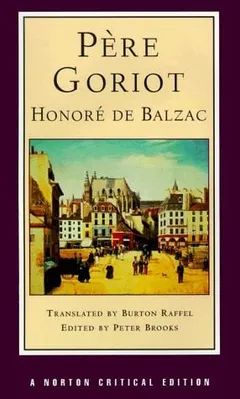
Read this novel alongside Père Goriot, written not long after, to see two different Balzac fathers, one who beggars himself entirely for his daughters’ advancement in society, one who impoverishes his family while sitting on a fortune, and consider what the comparison reveals about the range of ways paternal power distorts a household in Balzac’s fiction.
Questions it raises
- Is Grandet’s avarice best understood as a personal vice, or as a logical, if extreme, extension of the same acquisitive values the whole surrounding society organizes itself around?
- Eugénie’s gift to Charles is her first act of independent will. Does that make it more admirable, more understandable, or does it simply show how narrow her range of choice actually was?
- Why does inheriting enormous wealth change nothing about how Eugénie actually lives? What does that suggest about how deeply a childhood household can shape a person regardless of later circumstance?
- Charles abandons the values that once bound him to Eugénie in favor of social advancement. Is he simply weak, or is he doing exactly what the novel’s surrounding society trains everyone to do?
- Eugénie’s mother is destroyed by decades of subjection with no act of resistance at all, while Eugénie’s one act of resistance also ends badly. What is the novel suggesting about the available options for a woman in this household?
- The town regards Eugénie’s later charitable austerity as a kind of quiet penance. Is that an accurate reading of her choices, or does it impose a sentimental narrative on what might simply be habit she never learned to break?
Highlights
In certain provincial houses there are faces marked by no more expression than is on the face of an ox at pasture, and it is thus that the town of Saumur described the face of old Grandet.
Gold in itself is nothing, said Grandet, it is only good for turning into gold.
Paraphrase of Grandet's philosophy of money, in which accumulation is treated as an end sufficient in itself rather than a means to any further comfort or purpose.
She gave him her whole fortune, without calculating the sacrifice, as a woman gives, because to her giving was the natural language of her heart.
Paraphrase of the narrator's account of Eugenie handing over her hoard of gold coins to Charles, her one unguarded act of will in a lifetime otherwise shaped entirely by her father's.
She goes to heaven surrounded by a train of good deeds, said an old woman of the town, and this was the only epitaph Saumur ever gave to the richest woman in the province, who lived as her father had taught her to live.
Paraphrase of the novel's final characterization of Eugenie, wealthy beyond any need and living, to the end, in the same frugal austerity Grandet imposed on the household throughout her childhood.