Creative Evolution
by Henri Bergson · L'Évolution créatrice
Assigned by 1 of the 9 reading lists
Bergson's best known book argues that life is driven by an élan vital, an original impulse that pushes through matter into ever new forms and cannot be reduced to mechanism or to design. He contrasts intellect, which evolved to handle solid bodies and so treats everything as spatial and calculable, with intuition, which grasps duration and life from within. The book examines Darwinian and Lamarckian accounts of evolution, the branching of instinct and intelligence, and the intellect's inability to think becoming.
We recommendCreative Evolution, translated by Arthur MitchellDover, 1998The 1911 authorised translation, still the one most readers use, in an inexpensive reprint.
As an Amazon Associate, The Great Books earns from qualifying purchases. Bookshop.org links also support this site. How this works.
- Written
- 1907
- Form
- Treatise
- Language
- French
- Length
- Long · 410 pp300 to 700 pages
- Difficulty
- Difficult4 of 5 for a first-year reader
Arthur Mitchell translation
Buy on Amazon: Creative Evolution, opens in a new tabBookshop.org: Creative Evolution, opens in a new tab
Why it's on the list
Bergson won the Nobel Prize in Literature largely on this book, and for a decade after its 1907 publication he may have been the most famous philosopher alive, packing lecture halls in Paris and New York. His idea is that evolution is explained by neither Darwinian mechanism, chance sorted by selection, nor by fixed design unfolding a plan, but by an elan vital, a creative impulse pushing through matter, generating forms that could not have been predicted from what came before. The argument depends on a distinction between intellect, evolved to manipulate solid objects and so treating everything, including life, as static and calculable, and intuition, a rarer capacity for grasping duration and change from within. The book shaped early twentieth-century literature and remains the most ambitious attempt to think evolution as creativity rather than mechanism.
Key themes
- Nature and the cosmos
- The elan vital is not a substance or a designer but a creative impulse running through the history of life, branching into different lines, plants, instinct-driven animals, intelligence-driven animals, each a different, incomplete solution to the same underlying push toward greater freedom of action.
- Knowledge and truth
- Intellect evolved specifically to handle solid bodies in space, which is why it excels at science and technology and fails, structurally, to grasp duration, change and life, which are not made of separable, recombinable parts the way solid matter is.
- Science and method
- Bergson examines both Darwinian mechanism and Lamarckian and finalist theories of evolution and finds each inadequate on its own terms, arguing that only a creative, unpredictable impulse can explain the convergent appearance of complex organs, like the eye, along entirely separate evolutionary lines.
- Fate and freedom
- Because intellect cannot think true novelty, cannot conceive of something genuinely new before it exists, Bergson argues that a philosophy built entirely on intellect will always underestimate life's creativity and mistake real innovation for the mere rearrangement of pre-existing possibilities.
Which translation to read
Our pick
Creative Evolution, translated by Arthur Mitchell
Dover, 1998
The 1911 authorised translation, still the one most readers use, in an inexpensive reprint.
Amazon: the Arthur Mitchell translation, opens in a new tabBookshop.org: the Arthur Mitchell translation, opens in a new tab
Overview
About four hundred and ten pages, published in 1907, the book that made Henri Bergson, for roughly a decade, one of the most famous and most publicly discussed philosophers in the Western world, his Paris lectures drawing crowds so large that carriages reportedly lined the streets outside the Collège de France and society figures competed for seats, and his eventual 1927 Nobel Prize in Literature was awarded substantially on the strength of this single book’s style and reach as much as for any specific philosophical school he founded.
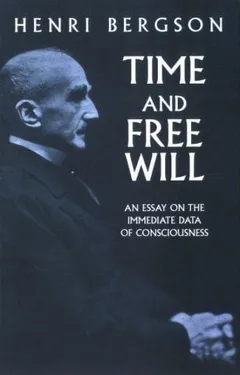
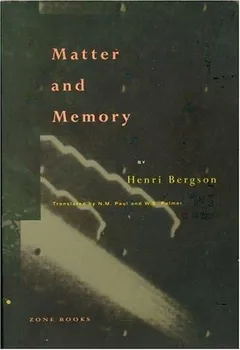
Bergson had already developed the core methodological distinction the book depends on, between intellect and intuition, in his earlier, shorter works, Time and Free Will and Matter and Memory, but Creative Evolution is where he applies that distinction to its largest possible subject: the history of life itself, and the question of what, if anything, actually drives and explains biological evolution. The book arrived at a moment when Darwinian natural selection was widely, though not universally, accepted as the mechanism of evolution, and when Lamarckian theories emphasizing the inheritance of acquired characteristics, and various finalist or vitalist alternatives positing some guiding purpose behind evolutionary change, remained live competing positions in a debate that had not yet settled into anything like the modern evolutionary synthesis.
The argument
Intellect and intuition. Bergson’s foundational distinction, carried over from his earlier work and now extended to its widest application, separates two fundamentally different modes of knowing. Intellect, he argues, evolved specifically as a practical tool for manipulating solid bodies in space, for calculating, measuring, and predicting the behavior of discrete, separable objects that can be recombined and rearranged, which is precisely why intellect excels at science, mathematics and technology, disciplines concerned with exactly this kind of solid, spatializable material. But this same practical origin gives intellect a structural blind spot: it can only grasp time itself, and living, changing processes generally, by treating them as though they too were made of discrete, static, spatially arrangeable units, freezing genuine flow and continuous change into a sequence of separate snapshots strung together, which Bergson insists falsifies the actual character of duration and life.
Intuition, by contrast, is the rarer capacity to grasp duration and change from within, sympathetically entering into a process rather than standing outside it and representing it spatially. Bergson does not present intuition as opposed to or replacing intellect, which remains indispensable for practical action and scientific work; rather, he argues that a complete philosophy requires recognizing intellect’s proper domain and limits, and turning to intuition specifically for those aspects of reality, above all life and consciousness in their genuine temporal unfolding, that intellect structurally cannot adequately grasp.
Against mechanism. Applying this framework to evolution, Bergson first examines and finds inadequate the strictly mechanistic account of evolution associated with orthodox Darwinism as then understood, pure chance variation sorted by natural selection with no further guiding principle. His central objection turns on the problem of convergent evolution: strikingly similar complex organs, most famously the camera-like eye, have evolved independently along entirely separate evolutionary lines, in mollusks and in vertebrates, for instance, lines whose last common ancestor possessed nothing resembling either resulting eye. Bergson argues that pure chance, operating independently along genuinely separate lines, should not be expected to arrive repeatedly at such similar, highly complex solutions, and that this recurring convergence suggests some further explanatory factor beyond blind mechanical chance and selection alone.
Against finalism. But Bergson is equally critical of the opposite extreme, finalist or providentialist theories that posit evolution as the gradual unfolding of a predetermined plan or design, with each stage merely realizing a blueprint already fully specified in advance. This account, he argues, is simply mechanism’s mirror image, since it too treats the future as already contained, in principle, within the past, merely locating the determining cause in a plan rather than in prior physical conditions; both mechanism and finalism, on Bergson’s analysis, deny genuine, unpredictable novelty, the emergence of something that could not, even in principle, have been fully calculated or foreseen from what preceded it.
The élan vital. Bergson’s own proposed alternative is the élan vital, an original creative impulse or vital thrust that pushes continuously through matter, generating genuinely new forms as it goes, not according to any fixed predetermined plan, but through a real, ongoing, creative struggle with the resistance matter itself offers. Life, on this account, is not executing a blueprint and is not simply the product of accumulated chance; it is closer to an artist genuinely improvising, where each new creative step is real, adds something to the world that did not exist before, and could not have been predicted with certainty in advance, even though, looking backward once it has occurred, it can be made to appear as though it followed necessarily from what came before.
The branching of life. Bergson traces this creative impulse as it divides, under the pressure of matter’s resistance, into different evolutionary directions, most importantly the parallel but divergent paths of instinct and intelligence. Instinct, most fully developed in insects, particularly social insects like bees and ants, achieves a kind of direct, unreflective, sympathetic knowledge of its object, doing what it does without needing to represent or calculate it intellectually, but at the cost of remaining largely fixed and inflexible. Intelligence, most fully developed in humans, gains flexibility, the capacity to fabricate new tools and solve novel problems, but at the cost of losing instinct’s direct, immediate sympathy with its object, understanding things only from outside, through spatial representation and calculation. Neither instinct nor intelligence, on Bergson’s account, is simply higher than the other; each is an incomplete, one-sided development of the same underlying vital impulse, and Bergson suggests that intuition itself is best understood as instinct that has become capable of reflecting on itself, a kind of recovered, self-aware sympathy operating alongside, rather than replacing, developed intelligence.
The whole universe as duration. In its final chapters, the book extends Bergson’s account beyond biological evolution specifically to the universe as a whole, arguing that reality generally, not merely individual consciousness or the history of life, should be understood as a single, continuous, genuinely creative flow, duration on a cosmic scale, rather than as a fixed mechanical system merely unfolding predetermined states through time, a picture Bergson takes classical physics and its underlying spatialized concept of time to have mistakenly assumed.
How to read it
Read the first chapter carefully; it lays out the core critique of both mechanism and finalism together, using the convergent-eye example, and establishes the basic terms, élan vital, duration, intellect and intuition, that the rest of the book develops and applies.
Read this book after, or at least alongside, Bergson’s earlier and shorter works, particularly An Introduction to Metaphysics, which states the intellect-intuition distinction in its clearest, most compact form, since Creative Evolution largely presupposes that distinction rather than re-deriving it from scratch.
Take Bergson’s critique of Darwinian mechanism as a serious philosophical challenge from his own historical moment rather than as a verdict on contemporary evolutionary biology, which has developed considerably since 1907, including genetic and molecular mechanisms unavailable to either Bergson or his Darwinian contemporaries, and which addresses convergent evolution through developmental and genetic constraints Bergson had no access to.
Notice how much of the book’s continuing influence has been literary and cultural rather than narrowly scientific or philosophical. Writers including Proust and Woolf are frequently discussed in relation to Bergsonian duration, and the book’s vivid, almost novelistic prose style, unusual for serious philosophy, was itself part of why it reached such an enormous general readership in its own time.
Read the treatment of instinct and intelligence as branching, incomplete solutions with particular care; it is one of Bergson’s more genuinely productive ideas, resisting the simpler assumption that intelligence simply represents a higher evolutionary achievement than instinct, and it anticipates, in its own vocabulary, later biological and philosophical interest in the genuine diversity of cognitive strategies across different evolutionary lines.
Questions it raises
- Does the convergent evolution of complex organs like the eye actually require something beyond chance and selection to explain, or has subsequent evolutionary biology found adequate mechanistic explanations Bergson could not have anticipated?
- Is the élan vital a genuine explanatory concept, or does it name the very thing needing explanation, creative novelty in evolution, without actually accounting for how or why it occurs?
- Bergson argues intellect structurally cannot grasp genuine duration and change. Is this a real limitation of a specific cognitive faculty, or does it depend on defining intellect narrowly enough to guarantee the conclusion?
- What would it mean, concretely, to know something through intuition rather than intellect, and is Bergson’s distinction between the two ultimately a difference in kind or only a difference in degree of attention?
- Does treating instinct and intelligence as equally valid, incomplete branches of one underlying impulse change how we should evaluate claims about animal cognition relative to human cognition?
- Bergson extends duration from individual consciousness to the entire universe. Is this extension warranted by the earlier arguments about life and mind, or does it require an additional, separately justified leap?
Highlights
The impetus of life, of which we are speaking, consists in a need of creation. It cannot create absolutely, because it is confronted with matter, that is to say with the movement that is the inverse of its own. But it seizes upon this matter, which is necessity itself, and strives to introduce into it the largest possible amount of indetermination and liberty.
The eye of a mollusc such as the scallop, for example, though it is not fundamentally different in structure from the eye of a vertebrate, has been formed independently, through a wholly different series of stages, and this convergence toward the same complex result is what mechanism cannot easily explain.
Paraphrase of Bergson's argument from convergent evolution, the independent appearance of similarly complex organs like the eye along unrelated evolutionary lines, which he takes as evidence against a purely mechanistic, chance-driven account of adaptation.
Intellect is characterized by a natural inability to comprehend life, and it represents becoming as a series of states, each of which is homogeneous with itself and consequently does not endure.
Paraphrase of Bergson's central claim about the intellect's structural limitation, that it can only grasp reality by breaking it into static, spatialized snapshots, which is precisely why it cannot grasp duration and genuine change.
The systems marked off by science endure only through their connection with the whole of the rest of the universe. In truth, there is not one universe, only one universe, one single flow, one continuous history, and it is the whole that endures.
Paraphrase of Bergson's cosmological extension of duration, arguing that the entire universe, not merely individual consciousness, is genuinely temporal and creative rather than a fixed mechanism merely unfolding in time.