The Evolution of Physics
Assigned by 1 of the 9 reading lists
A history of physical ideas written for the general reader, composed with Leopold Infeld directly in English and using no mathematics whatsoever. It follows the rise of the mechanical view from Galileo and Newton, its slow decline as the field concept emerged from the work of Faraday and Maxwell, the puzzles about light and the hypothetical ether that led to relativity, and finally the strange, uncomfortable evidence that eventually forced physicists to accept quantum theory. The authors present the history of physics as a detective story in which each apparently solved case only raises a new and harder one, an image that organizes the whole book.
We recommendThe Evolution of PhysicsSimon and Schuster, 1967The Touchstone paperback of the original text, written in English by Einstein and Infeld.
As an Amazon Associate, The Great Books earns from qualifying purchases. Bookshop.org links also support this site. How this works.
- Written
- 1938
- Language
- English
- Length
- Medium · 300 pp120 to 300 pages
- Difficulty
- Moderate2 of 5 for a first-year reader
Why it's on the list
Einstein and his collaborator Leopold Infeld wrote this history of physics using no mathematics at all, a genuinely difficult constraint that forces the book to convey what physics actually is entirely through concept and image rather than equation. Their governing metaphor, physics as a detective story in which each apparently solved case only raises a harder, deeper one, organizes the whole narrative, from the mechanical worldview Galileo and Newton established, through its unraveling as Faraday and Maxwell's field concept revealed phenomena mechanics could not explain, to the puzzles about light and ether that led to relativity, and finally to the strange evidence that forced physics to accept quantum theory despite how uncomfortable its implications were even for physicists as accomplished as Einstein himself. Written by one of the people who had done the most to cause physics's own recent revolution, the book remains one of the clearest accounts ever written of how scientific theories actually get replaced.
Key themes
- Science and method
- The book's central organizing metaphor treats physics as a detective story in which each apparently solved case raises a new, harder one, framing scientific progress as a continuing process of discovering better questions rather than simply accumulating final, settled answers.
- History and progress
- Einstein and Infeld trace physics's development as a sequence of conceptual revolutions, the mechanical worldview giving way to the field concept, the field concept giving way to relativity and quantum theory, each new framework not simply correcting errors but reorganizing what physics could ask.
- Nature and the cosmos
- The book's central case studies, the shift from mechanical to field explanations of physical phenomena, and the genuinely strange behavior of light and matter at atomic scales, work through fundamental questions about the actual structure of physical reality using concept and analogy rather than mathematics.
- Knowledge and truth
- Written entirely without mathematical formalism, the book demonstrates that genuine physical understanding can be communicated, though not fully derived or proven, through careful conceptual explanation, testing how much of modern physics's actual content can survive translation out of its native mathematical language.
Which edition to read
Our pick
The Evolution of Physics
Simon and Schuster, 1967
The Touchstone paperback of the original text, written in English by Einstein and Infeld.
Amazon: the Simon and Schuster edition, opens in a new tabBookshop.org: the Simon and Schuster edition, opens in a new tab
Overview
About three hundred pages, co-written by Albert Einstein and his collaborator Leopold Infeld and published in 1938, composed directly in English rather than translated from German, and built around a genuinely demanding self-imposed constraint: explaining the historical development of modern physics, from classical mechanics through relativity and quantum theory, using no mathematical formalism whatsoever, relying entirely on conceptual explanation, analogy and narrative to convey ideas ordinarily expressed through equation. Einstein undertook the project partly for practical reasons, needing income during a period of financial difficulty following his emigration from Germany, but the resulting book became something considerably more significant than its origins might suggest, a genuinely influential model for how difficult physics could be communicated to educated general readers without either mathematical apparatus or serious sacrifice of conceptual accuracy.
The book’s governing organizational device, physics as an unfolding detective story in which each apparently solved mystery raises a new, harder mystery rather than bringing inquiry to a satisfying close, structures the entire historical narrative that follows, giving readers a framework for understanding scientific progress not as steady accumulation of settled final answers but as a continuing, open-ended process of discovering increasingly difficult and increasingly fundamental questions.
What happens
The mechanical worldview. The book opens by tracing the rise of the mechanical view of physical reality established chiefly by Galileo and Newton, in which physical phenomena are explained through particles interacting via direct forces according to precise mathematical laws, a framework that achieved extraordinary predictive success across an enormous range of physical phenomena and that many physicists, for generations, believed represented physics’s essentially complete and final form.
The field concept’s challenge. Einstein and Infeld trace the mechanical worldview’s gradual unraveling as the work of Michael Faraday and James Clerk Maxwell revealed electromagnetic phenomena that resisted adequate explanation through direct particle interaction alone, leading to the development of the field concept, treating reality as continuous fields filling space rather than as discrete particles interacting through direct contact or force, a genuinely fundamental conceptual shift the authors present as one of physics’s most significant and, in their assessment, least popularly appreciated revolutions.
Light, ether and relativity. The book works through the genuinely puzzling experimental evidence surrounding the behavior of light, including failed attempts to detect the hypothetical ether medium physicists had assumed light waves required for propagation, puzzles that led directly, through Einstein’s own theoretical work, to the special and later general theories of relativity, presented here through careful conceptual explanation of thought experiments rather than through the tensor calculus and field equations Einstein’s own more technical writing, including The Meaning of Relativity, actually employs.
The evidence forcing quantum theory. The book’s later chapters address the genuinely strange, apparently contradictory experimental evidence concerning the behavior of light and matter at atomic scales, phenomena that sometimes behaved as continuous waves and sometimes as discrete particles depending on how they were observed, evidence that eventually forced physicists, including Einstein himself despite his own persistent philosophical discomfort with quantum theory’s implications, to accept a genuinely new and considerably stranger framework for understanding physical reality at the smallest scales.
Physics as an ongoing detective story. Throughout, the authors return to their central organizing metaphor, insisting that each apparent resolution in physics’s historical development, the mechanical worldview, the field concept, relativity, quantum theory, has consistently raised new and generally harder questions rather than closing physics’s fundamental inquiry, presenting scientific progress as an open-ended, continuing process rather than a steady march toward final, complete understanding.
How to read it
Read the book’s deliberate avoidance of mathematical formalism as a genuine test of how much of modern physics’s actual conceptual substance can be communicated through careful explanation alone, rather than as mere simplification for a general audience; Einstein and Infeld are attempting something genuinely difficult, conveying real physical understanding without the mathematical language physics ordinarily relies on for precision.
Pay close attention to how the detective story metaphor organizes the entire historical narrative, since this framework, physics as continuing inquiry rather than settled accumulated answer, shapes not just the book’s overall structure but its treatment of each individual historical transition it covers.
Notice how directly the authors’ treatment of the evidence forcing quantum theory reflects Einstein’s own genuine, well-documented philosophical discomfort with quantum mechanics’s implications, even as the book presents the observational evidence for quantum theory fairly and without minimizing its scientific force.
Consider the book’s unusual authorship and circumstances, written directly in English by Einstein working with Infeld partly for practical financial reasons during a period of genuine personal upheaval following his emigration from Germany, as relevant context for understanding both its accessible, deliberately non-technical approach and its genuine seriousness of purpose despite that accessibility.
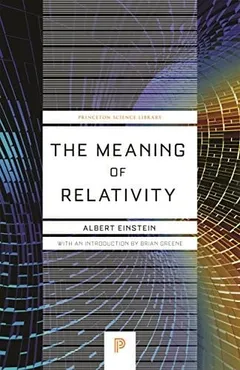
Read this book alongside Einstein’s more technical Meaning of Relativity to see directly how differently the same physicist, working with a collaborator toward a different intended audience, can present fundamentally the same underlying physical ideas, comparing what conceptual explanation without mathematics gains in accessibility against what it necessarily sacrifices in precision and derivability.
Questions it raises
- Does the book’s deliberate avoidance of mathematical formalism succeed in conveying genuine physical understanding, or does explanation without the underlying mathematics inevitably remain at the level of analogy and metaphor rather than actual physical comprehension?
- How does the detective story metaphor, physics as continuing inquiry rather than settled final answer, compare to more triumphalist popular narratives of scientific progress as steady accumulation toward complete understanding? Which framework more accurately reflects how physics has actually developed historically?
- What does Einstein’s own documented philosophical discomfort with quantum theory’s implications, evident even in a book he co-authored presenting the evidence for quantum mechanics fairly, suggest about the relationship between a scientist’s personal philosophical commitments and their capacity to accept well-supported but uncomfortable empirical conclusions?
- How does the field concept’s displacement of the purely mechanical worldview compare, as a historical case study, to relativity’s and quantum theory’s later displacement of classical physics more broadly? Do these transitions share a common underlying pattern, or does each represent a genuinely distinct kind of scientific revolution?
- Given that this book was written partly for practical financial reasons during a period of personal upheaval in Einstein’s life, how should a reader weigh these practical origins against the book’s evident seriousness of intellectual purpose and its lasting influence as a model of science communication?
- What does the book’s continuing popularity and influence, nearly a century after its original publication, suggest about the enduring value of genuinely accessible, non-mathematical explanation of difficult physics, compared to more technical or more purely popular treatments of the same historical material?
Highlights
Einstein and Infeld describe the transition from the mechanical worldview to the field concept as one of the most fundamental and least appreciated revolutions in the history of physics, a shift from thinking of reality as particles interacting through direct forces to thinking of reality as continuous fields filling all of space.
Paraphrase of the authors' account of the conceptual shift from mechanics to field theory, developed through Faraday's and Maxwell's work.
They compare the physicist's task to that of a detective who, having gathered certain facts through direct observation, must use pure thinking to find connections between them, and they insist that each apparently solved mystery in physics has historically raised a new, deeper and harder mystery rather than bringing inquiry to a close.
Paraphrase of the book's central organizing image, applied throughout to physics's actual historical development.
The authors describe the genuinely strange, seemingly contradictory experimental evidence about the behavior of light, sometimes appearing to act as a wave and sometimes as a stream of particles, that eventually forced physicists to accept quantum theory despite how uncomfortable and counterintuitive its actual implications turned out to be.
Paraphrase of the authors' account of the empirical pressure that led reluctant physicists, including Einstein himself, toward accepting quantum mechanics.