The Forces of Matter
Assigned by 1 of the 9 reading lists
Six Christmas lectures Faraday gave at the Royal Institution over the winter of 1859 to 1860, part of a series originally designed to bring serious science to younger and general audiences, printed from shorthand notes taken at the time. He treats in turn gravitation, cohesion, chemical affinity, heat, magnetism and electricity, showing entirely by live experiment, without mathematics, how each force actually acts and how the different forces are related and genuinely convertible one into another. The lectures are a plain, accessible introduction to the idea of the conservation and correlation of forces that dominated mid-Victorian physics.
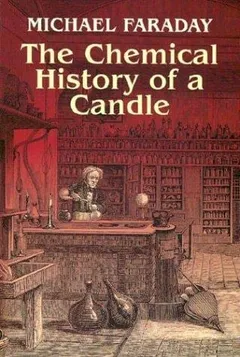
We recommendThe Forces of MatterPrometheus Books, 1993A standalone reprint; the lectures also appear in Harvard Classics volume 30 with the Candle lectures.
As an Amazon Associate, The Great Books earns from qualifying purchases. Bookshop.org links also support this site. How this works.
- Written
- 1860
- Language
- English
- Length
- Short · 100 ppunder 120 pages
- Difficulty
- Approachable1 of 5 for a first-year reader
Why it's on the list
Faraday gave these as Christmas lectures at the Royal Institution, a series originally designed for young audiences, and their plainness is exactly the point, six talks that build an entire physical worldview, gravitation, cohesion, chemical affinity, heat, magnetism and electricity, from experiments an attentive listener could watch happen in real time rather than from equations requiring advanced training. Faraday's central, genuinely important claim, developed across all six lectures rather than stated as abstract doctrine, is that these apparently distinct forces are not truly separate phenomena at all but different expressions of a smaller number of underlying relationships, convertible into one another under the right conditions, an idea that placed his own popular lectures at the center of one of Victorian physics's most consequential themes. Coming from a man with almost no formal mathematical education, who built his entire career on this kind of careful experimental demonstration, the lectures model scientific reasoning built from observation outward rather than from theory down.
Key themes
- Science and method
- Faraday builds each lecture around live experimental demonstration rather than mathematical derivation, modeling a mode of scientific reasoning built outward from direct observation, a method reflecting his own largely self-taught background and his consistent lifelong preference for experiment over abstract theory.
- Nature and the cosmos
- The lectures' central claim, developed across all six forces in turn, is that gravitation, cohesion, chemical affinity, heat, magnetism and electricity are not truly separate phenomena but interconvertible expressions of a smaller number of underlying relationships, a unifying picture of the physical world.
- Education
- Designed for the Royal Institution's Christmas lecture series aimed partly at young audiences, the lectures demonstrate that genuinely difficult physical concepts can be conveyed accurately through careful experimental demonstration rather than requiring advanced mathematical training as a prerequisite.
Which edition to read
Our pick
The Forces of Matter
Prometheus Books, 1993
A standalone reprint; the lectures also appear in Harvard Classics volume 30 with the Candle lectures.
Amazon: the Prometheus Books edition, opens in a new tabBookshop.org: the Prometheus Books edition, opens in a new tab
Overview
About a hundred pages, the printed text, taken from shorthand notes made at the time, of six lectures Michael Faraday delivered at the Royal Institution in London over the winter of 1859 to 1860, part of the Institution’s well-established Christmas Lecture series, originally conceived to bring serious scientific instruction to younger audiences and general listeners rather than to a specialist scientific readership. Faraday, by this point in his career one of the most celebrated experimental scientists in Britain despite having received almost no formal mathematical education, built the lectures entirely around live experimental demonstration, a method reflecting both his own considerable talent for accessible, vivid experimental presentation and his consistent lifelong preference for direct empirical demonstration over abstract mathematical derivation.
The six lectures take up, in sequence, gravitation, cohesion, chemical affinity, heat, magnetism and electricity, treating each as a distinct force in its own right while building, across the full sequence, toward a genuinely unifying argument: that these apparently separate physical forces are not truly independent phenomena but interconvertible expressions of a smaller number of underlying physical relationships, a central claim of what Victorian physicists were increasingly calling the conservation and correlation of forces.
What happens
Gravitation and cohesion. Faraday opens with straightforward demonstrations of gravitational attraction, falling bodies and simple pendulum experiments, before extending the same basic principle of attractive force down to particle scale in his treatment of cohesion, showing through direct experimental manipulation how the same fundamental kind of attraction that holds planets in their orbits also holds the smallest particles of ordinary solid matter together, establishing from the lectures’ opening the continuity between cosmic-scale and particle-scale physical forces that will organize the entire sequence.
Chemical affinity. Faraday extends his unifying argument into chemistry, demonstrating through experiments on combustion and chemical combination how chemical affinity, the force by which distinct substances combine to form new compounds, operates according to the same basic underlying principles of attraction organizing gravitation and cohesion, rather than constituting some entirely separate, unrelated category of physical phenomenon requiring its own independent explanation.
Heat. The lectures on heat examine its relationship to the other forces already discussed, demonstrating experimentally how heat can be produced through mechanical motion, through chemical reaction and through other physical processes, building toward Faraday’s central claim about the genuine convertibility of physical forces into one another rather than their existing as merely analogous but fundamentally separate phenomena.
The convertibility of forces. Running through and connecting the entire lecture sequence is Faraday’s demonstration, built experiment by experiment rather than asserted as abstract theoretical doctrine, that these various forces are genuinely convertible into one another under appropriate physical conditions, motion into heat, chemical reaction into heat and light, a demonstrated convertibility that constitutes the lectures’ central and most historically significant argument.
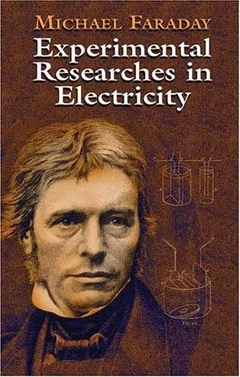
Magnetism and electricity. The closing lectures on magnetism and electricity draw directly on Faraday’s own earlier landmark original research, conducted decades before these particular Christmas lectures, which had done more than any other single body of scientific work to establish the fundamental relationship between electrical and magnetic phenomena, demonstrating through direct experiment how electrical current produces magnetic effects and how magnetic action can in turn generate electrical current, completing the lecture sequence’s broader argument for force convertibility with the specific relationship Faraday himself had been most responsible for discovering and demonstrating.
How to read it
Watch for how consistently Faraday builds each conceptual claim directly from live experimental demonstration rather than from mathematical derivation or abstract assertion; this experimental method is not merely a pedagogical accommodation for a general audience but reflects Faraday’s own genuine scientific practice and his consistent preference for direct empirical demonstration throughout his career.
Pay close attention to how the six lectures build cumulatively toward the central claim about force convertibility, recognizing that this unifying argument emerges gradually across the full sequence of experimental demonstrations rather than being stated upfront as abstract theoretical doctrine to be illustrated afterward.
Notice how directly the closing lectures on magnetism and electricity draw on Faraday’s own earlier, considerably more technical original research, giving these particular popular lectures a direct connection to some of the most historically significant experimental physics of the entire nineteenth century.
Consider Faraday’s own biography, largely self-taught and lacking formal mathematical training, as directly relevant to understanding both the lectures’ accessible experimental method and their genuine scientific seriousness; Faraday’s career itself demonstrated that rigorous physical insight did not necessarily require the mathematical formalism more typically associated with theoretical physics.
Read these lectures as a historically significant popular expression of the broader Victorian physics theme of conservation and correlation of forces, a concept that would soon be developed further, in more mathematically rigorous form, by physicists including James Prescott Joule and Hermann von Helmholtz, giving Faraday’s accessible demonstrations real connection to major contemporary theoretical developments.
Questions it raises
- Does Faraday’s experimental, non-mathematical method of demonstrating force convertibility succeed in conveying genuine physical understanding, or does the absence of mathematical formalism necessarily limit how precisely and how generally the underlying relationships can actually be established and communicated?
- How does Faraday’s own biography, largely self-taught and without formal mathematical training, relate to his distinctive experimental approach and his considerable success as both a research scientist and a popular science communicator? What does his example suggest about the relationship between formal training and genuine scientific insight?
- What does the lectures’ original context, part of a Christmas series explicitly designed to reach younger and general audiences, suggest about Faraday’s own view of science communication’s importance relative to his purely original research contributions?
- How persuasive is the lectures’ central unifying claim, that gravitation, cohesion, chemical affinity, heat, magnetism and electricity are all interconvertible expressions of a smaller number of underlying relationships, when evaluated against later, more mathematically developed accounts of energy conservation and force unification in physics?
- Given that the closing lectures draw directly on Faraday’s own earlier landmark research on electromagnetism, how does encountering that research in this later, more accessible popular format change a reader’s understanding of it compared to encountering the original technical research papers directly?
- What does the continuing accessibility and historical significance of these lectures suggest about the value of experimentally grounded, non-mathematical science communication as a genuine mode of conveying serious physical understanding, both in Faraday’s own Victorian context and for science communication more broadly today?
Highlights
Faraday demonstrates gravitation through simple falling-body experiments before moving to cohesion, showing through direct manipulation how the same underlying attractive forces that hold planets in orbit also hold the smallest particles of ordinary matter together in solid form.
Paraphrase of Faraday's opening lectures, establishing through direct experimental demonstration the continuity between cosmic-scale and particle-scale attractive forces.
He shows through experiments on combustion and chemical reaction how chemical affinity, the force by which different substances combine to form new compounds, operates by the same basic principles of attraction organizing the other forces he discusses, rather than as an entirely separate category of physical phenomenon.
Paraphrase of Faraday's treatment of chemical affinity, extending his broader unifying argument to chemistry.
Faraday demonstrates directly, through experiments converting motion into heat and heat into further effects, that these forces are not simply analogous to one another but genuinely convertible, one into another, under the right physical conditions, illustrating what would become known as the conservation and correlation of forces.
Paraphrase of Faraday's central unifying claim, demonstrated experimentally rather than asserted as abstract theoretical doctrine.
In his closing lectures on magnetism and electricity, Faraday shows through direct demonstration how electrical current produces magnetic effects and how magnetic action can in turn generate electrical current, the same fundamental relationship his own earlier research had done more than any other single body of work to establish.
Paraphrase of Faraday's closing lectures, drawing directly on his own earlier landmark research establishing the relationship between electricity and magnetism.