Seventeenth Century
The scientific revolution, Descartes, Hobbes, Milton, Pascal and Locke.
79 works · Refine in the browser →
The century of the scientific revolution, the English civil war, and the first modern philosophy. Galileo saw the moons of Jupiter, Kepler found the ellipses, Harvey traced the blood, and Newton, at the end, wrote the Principia and it was done: the universe ran on three laws and a calculus. Bacon had said in 1620 that this was how knowledge should work, by experiment and induction, and the Novum Organum is the manifesto.
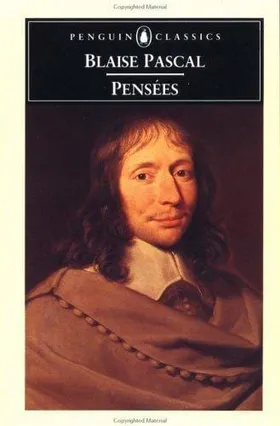
Descartes made the method into a philosophy and found in his own doubt the one certainty. Hobbes applied the method to politics and derived an absolute state from the fear of death. Spinoza applied it to God and produced an ethics laid out like geometry. Pascal, who had done the mathematics, said the whole enterprise missed the point and wrote the Pensées. Locke closed the century with the two books the next one was built on, on human understanding and on government.
The literature is the greatest in English. Shakespeare’s tragedies belong here by date: Lear, Macbeth, the Tempest. Milton wrote Paradise Lost blind, after his side had lost the war. Cervantes’s Quixote is the first novel and Molière and Racine the French stage at its height. It is the shelf most students read in the third year, and the one where the modern world is recognisably beginning.