The Provincial Letters
by Blaise Pascal · Les Provinciales
Assigned by 2 of the 9 reading lists
Eighteen letters published anonymously in 1656 and 1657 in defence of Antoine Arnauld and the Jansenists of Port-Royal against the Sorbonne and the Jesuits. The early letters, written as reports from a puzzled Parisian to a friend in the provinces, use comic dialogue to expose the theological hair-splitting over grace. The middle letters turn on Jesuit casuistry, quoting their own moral handbooks to show how mental reservation and probable opinion excuse almost any sin. The last letters answer the Jesuits directly. The work was placed on the Index and burned, and admired by Voltaire.
We recommendThe Provincial Letters, translated by A. J. KrailsheimerPenguin Classics, 1967The standard English translation, with an introduction on the quarrel between the Jansenists and the Jesuits.
As an Amazon Associate, The Great Books earns from qualifying purchases. Bookshop.org links also support this site. How this works.
- Written
- 1656-1657
- Form
- Satire
- Language
- French
- Length
- Medium · 300 pp120 to 300 pages
- Difficulty
- Demanding3 of 5 for a first-year reader
A. J. Krailsheimer translation
Find this edition: The Provincial Letters, opens in a new tabBookshop.org: The Provincial Letters, opens in a new tab
Why it's on the list
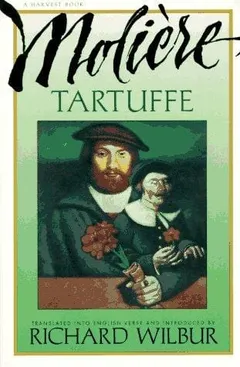
A quarrel between two religious factions about the mechanics of divine grace produced, almost accidentally, the first modern French prose and one of the great pieces of polemical writing in any language. Pascal was defending Port-Royal against the Jesuits and the Sorbonne, and he made the fatal discovery that the fastest way to destroy an opponent is to quote him accurately at length while pretending to be impressed. The letters are funny, and their comedy does real damage: by the eighth or ninth the reader has watched Jesuit confessors excuse duelling, usury, perjury and murder out of their own published manuals. Voltaire said the best comedies of Moliere had nothing wittier, and the argument about whether moral rules bend to circumstances is still had in the terms Pascal set.
Key themes
- Language and rhetoric
- The method is impersonation. Pascal writes as a bemused layman getting the doctrine explained to him by a courteous Jesuit father, and lets the explanation condemn itself. He never has to state the objection; the reader arrives at it first.
- Virtue and character
- Casuistry is the target: the practice of resolving hard moral cases by applying general rules to circumstances. Pascal shows that with enough authorities to cite and enough distinctions to draw, any act can be permitted by someone.
- God and faith
- Underneath the satire is the Augustinian question of grace. Can a person keep God's commandments by his own effort, or is grace necessary and given only to some? Pascal thinks the Jesuit answer flatters human capacity and empties the doctrine.
- Power and authority
- The Sorbonne condemned propositions that Pascal argues are not in the book they were condemned from, and the letters press the distinction between a question of fact, which no authority can settle by decree, and a question of doctrine.
Which translation to read
Our pick
The Provincial Letters, translated by A. J. Krailsheimer
Penguin Classics, 1967
The standard English translation, with an introduction on the quarrel between the Jansenists and the Jesuits.
Amazon: the A. J. Krailsheimer translation, opens in a new tabBookshop.org: the A. J. Krailsheimer translation, opens in a new tab
Overview
Eighteen letters, published one at a time between January 1656 and March 1657 as anonymous pamphlets, printed secretly and distributed on the streets of Paris while the police looked for the press. Pascal was thirty-three, already famous for the calculating machine and the experiments on the vacuum, and he wrote under the name Louis de Montalte. He was never identified in his lifetime with certainty, though everyone guessed.
The occasion is narrow and now obscure. Antoine Arnauld, the leading theologian of Port-Royal, was about to be censured by the Faculty of Theology at the Sorbonne. Behind that was the Jansenist controversy: the Augustinus, a vast posthumous book by the Flemish bishop Cornelius Jansen arguing that Augustine’s doctrine of grace had been abandoned, five propositions extracted from it and condemned by the Pope, and the Jansenist reply that the propositions were heretical but were not in Jansen’s book.
The friends at Port-Royal asked Pascal to write something the public could follow. He produced the first letter in a few days and it sold out.
What happened next is why the book survives. Around the fourth letter Pascal stops defending Arnauld and goes on the attack, turning from the technicalities of grace to Jesuit moral theology, and from there the letters become something no one had written before: theological polemic in the voice of an ordinary intelligent man, in short plain sentences, addressed to people who had never read a word of scholastic Latin.
The argument
Letters 1 to 3: the manufactured heresy. The narrator, a Parisian writing to a friend in the provinces, goes to find out what the fuss is about. He interviews Thomists, Jansenists and Jesuits and cannot get anyone to say plainly what Arnauld is accused of.
The comedy is that the disputed term, proximate power, turns out to mean something different to everyone who uses it, and Pascal’s narrator concludes that the Molinists and Thomists agree on the doctrine and differ only in whether they will say the word. The censure is therefore about a word, not a belief, and it was engineered by counting votes.
Under the joke is a serious distinction that Pascal returns to at the end. The Church may declare what is heretical, which is a question of doctrine. It may not declare by decree that a particular sentence appears on a particular page of a book, which is a question of fact, open to anyone with eyes.
Letters 4 to 10: the casuists. The heart of the book. Pascal invents a device: the narrator visits a friendly Jesuit father who is delighted to explain the achievements of his order’s moral theologians, and the narrator plays the admiring student. Every quotation is real, cited by author, book and page, from Escobar, Bauny, Filiutius, Lessius and Vasquez, and Pascal read them all.
The doctrines exposed:
Probabilism. If an opinion is defended by a single grave doctor, it may be safely followed, even against the common view. Since there is a grave doctor for nearly everything, nearly everything has a defence.
Directing the intention. The act is judged by the end the agent has in view. A man fighting a duel sins if he intends to kill his enemy, but not if he intends only to defend his honour, and he may do the identical thing in either case. Pascal’s narrator works through the applications with mounting enthusiasm: the servant who helps his master to a rendezvous, the judge who takes a present, the man who kills to avoid a slap.
Mental reservation. A promise may be made in words while a qualifying clause is silently added, and an oath is not perjury if the speaker attaches a meaning to it in his own mind.
Philosophical sin. An act against nature and reason committed without an actual thought of God is not a mortal sin, which Pascal notes would excuse most of the world.
The technique never varies. The father is charming, the narrator is grateful, the quotations pile up, and by the seventh letter the reader is doing all the work of indignation unprompted. It is a devastating way to argue and it invented the modern form of it.
Letters 11 to 16: the reply. The Jesuits answered in print, accusing Pascal of mockery, impiety and misquotation. He drops the fiction and writes in his own voice.
Letter 11 defends laughter: the things of God are not to be mocked, but the errors of men may be, and Pascal cites scripture and the Fathers ridiculing false teaching. Letter 12 answers the charge of misquoting by reproducing the passages again at greater length. Letters 13 to 16 handle the accusations of calumny, and Letter 16 contains the famous apology for its own length.
Letters 17 and 18: fact and doctrine. Addressed to Father Annat, the king’s confessor. Pascal makes his final stand on the distinction: he signs the condemnation of the five propositions without reserve, and denies that they are in Jansen’s book, and argues that no ecclesiastical authority can compel belief about a matter of fact which anyone may verify by reading. The letters break off unfinished.
How to read it
Read letters 4 through 10 first and read them all. That is the section that made the book and it is continuously funny.
Then come back for letters 1 to 3 if you want the quarrel, and read 17 and 18 for the serious argument about what authority can and cannot settle.
Do not worry about the theology of grace. You need only know that the Jansenists were Augustinian rigorists who held that grace is irresistible and given to some, and that the Jesuits held a doctrine leaving more to human will. Pascal thinks the second flatters people, and you can follow every joke without taking a position.
Remember that Pascal is not a neutral witness. He quotes accurately, but he quotes selectively, and the casuists he pillories were trying to solve a real problem: how to counsel actual people in situations where rules conflict. A tradition of case-based moral reasoning that had genuine merits took a wound here it never recovered from, and the word casuistry has meant sophistry in English ever since. Whether that was fair is worth asking.
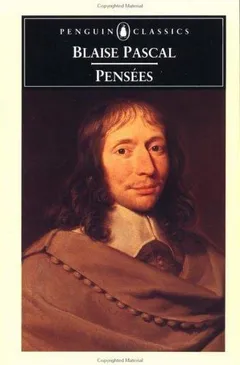
Read it beside the Pensees. Same author, same years, utterly different registers, and the contrast tells you something about a mind that could do both.
And notice the prose. Before these letters, serious French argument was written in long Latinate periods. Pascal wrote short sentences in the vocabulary of conversation, and every French writer after him, including Voltaire who despised his religion, learned from the result.
Questions it raises
- Is a moral rule that bends to circumstances corrupted, or is a rule that never bends useless?
- Probabilism says a single serious authority makes an opinion safe to follow. What is wrong with that, and how is it different from taking expert advice?
- Pascal insists that no authority can decree a matter of fact. Where does that principle apply today?
- The satire works because the quotations are real. Does accuracy make selective quotation fair?
- Directing the intention sounds absurd here, yet intention does bear on culpability in every legal system. Where is the line?
- Is ridicule a legitimate instrument in a serious argument, or does it foreclose the reply?
Highlights
I have made this letter longer than usual because I have not had time to make it shorter.
The most quoted sentence in the book, and often misattributed. Pascal was writing the letters at speed, in secret, and under threat of arrest.
You are very fortunate, Father, to be able to say that, for otherwise I should have thought it a great sin.
Paraphrase of the narrator's running reply as the Jesuit father explains that the method of directing the intention permits the duellist, the usurer and the murderer to act without sin.
So, Father, we may kill for an apple, if it would be shameful to lose it? I know it is theft, but not every theft is a light matter.
Paraphrase. Pascal's narrator repeatedly draws the conclusion the quoted casuist has licensed, and the Jesuit agrees to it.
When one man is close to another he becomes further from himself.
Paraphrase of Pascal's argument that authorities cited against one another produce not truth but a market of opinions, each backed by a name.
It is a strange and tedious war when violence attempts to vanquish truth. All the efforts of violence cannot weaken truth, and serve only to give it fresh vigour.