Macbeth
Assigned by 4 of the 9 reading lists
Returning from a battle he has just won for his king, the Scottish general Macbeth meets three witches who hail him as future king. Urged on by his wife, he murders King Duncan while the king is a guest under his roof, and takes the throne. To hold it he has his friend Banquo killed and Macduff's wife and children slaughtered. Lady Macbeth walks in her sleep trying to wash her hands and dies offstage; Macduff and Duncan's son Malcolm lead an English army against him; and the witches' second set of prophecies, which promised he could not be harmed, come true in ways he did not imagine.
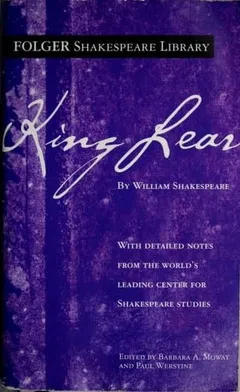
We recommendMacbethFolger Shakespeare Library (Simon and Schuster), 2003Short play, facing-page notes; the standard classroom text.
Also goodcompare
- Arden Shakespeare, Third Series. Edited by Sandra Clark and Pamela Mason, with the long introduction and textual notes you want if you are writing about it.
As an Amazon Associate, The Great Books earns from qualifying purchases. Bookshop.org links also support this site. How this works.
- Written
- c. 1606
- Form
- Tragedy
- Language
- English
- Length
- Short · 250 ppunder 120 pages
- Difficulty
- Demanding3 of 5 for a first-year reader
Folger Shakespeare Library (Simon and Schuster) edition
Buy this edition: Macbeth, opens in a new tabBookshop.org: Macbeth, opens in a new tab
Why it's on the list
Macbeth is the shortest of the tragedies and the fastest, and it is the one that puts the audience inside the criminal's head rather than outside it. We know what Macbeth is going to do before he does, we hear him argue himself out of it and be argued back, and we watch him get exactly what he wanted and find it worthless, which is a structure no other revenge or ambition play manages. It is also the play in which Shakespeare wrote his most famous lines about meaninglessness, and where the question of whether the witches cause anything or only report it has never been settled. Written for a king who had published a book on witchcraft and who traced his line from Banquo, in the year after the Gunpowder Plot, it is topical and permanent at the same time.
Key themes
- Fate and freedom
- The witches state what will happen and never tell him to do anything. Every step toward the crown is taken by Macbeth, and the play refuses to say whether the prophecy caused the act or described a man who was already capable of it.
- Power and authority
- What Macbeth wins is a throne nobody obeys willingly. The second half is a study of rule sustained only by murder, in which the king is more frightened than anyone he governs.
- Guilt and redemption
- The blood will not wash off and the sleep does not come back. Guilt here is not remorse leading anywhere; it is a physical condition, and the two who share it experience it in opposite order.
- Women and men
- Lady Macbeth asks to be unsexed, and taunts her husband with not being a man. The play keeps tying courage to manhood and then showing what that definition costs, right up to the man not born of woman.
Which edition to read
For Macbeth the edition is most of the decision. Our pick is the Folger Shakespeare Library (Simon and Schuster) edition; the other is good for different reasons.
Our pick
Macbeth
Folger Shakespeare Library (Simon and Schuster), 2003
Short play, facing-page notes; the standard classroom text.
Amazon: the Folger Shakespeare Library (Simon and Schuster) edition, opens in a new tabBookshop.org: the Folger Shakespeare Library (Simon and Schuster) edition, opens in a new tab
Also good
Macbeth
Arden Shakespeare, Third Series, 2015
Edited by Sandra Clark and Pamela Mason, with the long introduction and textual notes you want if you are writing about it.
Amazon: the Arden Shakespeare, Third Series edition, opens in a new tabBookshop.org: the Arden Shakespeare, Third Series edition, opens in a new tab
Overview
Macbeth is barely two thousand lines, about half the length of Hamlet, and it moves faster than anything else Shakespeare wrote. There is no subplot to speak of. The murder that would be the climax of another play happens in Act II, and the remaining three acts are about what it is like to have done it.
The text is probably not entirely his. The Folio version, our only source, is short even by the standards of a short play, and the scenes involving the goddess Hecate, along with two songs, almost certainly come from Thomas Middleton, whose play The Witch contains them. Many productions cut them. Nothing essential turns on it, but it explains why the witch material sometimes changes register abruptly.
The source is Holinshed’s Chronicles, which Shakespeare rearranged freely. The historical Macbeth reigned for seventeen fairly successful years; Holinshed’s Banquo was an accomplice in the murder. Shakespeare compressed the reign into what feels like weeks and made Banquo innocent, which is usually explained by the fact that James I, on the throne since 1603, claimed descent from him and had written a treatise on witchcraft. The play was probably first performed in 1606, months after the Gunpowder Plot and the trial of the Jesuit Henry Garnet, whose defence of equivocation under oath is what the drunken Porter is joking about.
What happens
Three witches agree to meet Macbeth on the heath. Scotland has just survived a rebellion and a Norwegian invasion, put down by Macbeth with extraordinary personal violence, described admiringly in the second scene. Riding home with Banquo, he meets the witches, who greet him as Thane of Glamis, which he is, Thane of Cawdor, which he does not know he has just become, and king hereafter. They tell Banquo he will father kings though he will not be one. Within minutes, messengers arrive with the Cawdor title, and Macbeth is already imagining a murder and frightening himself with it.
Duncan names his son Malcolm as heir, and announces he will spend the night at Macbeth’s castle. Lady Macbeth, reading her husband’s letter, decides for both of them, and asks the spirits to unsex her and fill her with cruelty. Macbeth arrives and tries twice to stop: his soliloquy in Act I scene 7 lists every reason not to do it, kinship, hospitality, Duncan’s virtues, the certainty that such deeds return on the doer, and ends by admitting he has no motive but ambition. He tells his wife they will proceed no further. She asks whether he is a man, offers to dash her own nursing child’s brains out rather than break such a promise, and he agrees.
He follows a dagger he can see and cannot touch, kills Duncan offstage, and comes back holding the grooms’ daggers, unable to go back, unable to say amen. She takes them from him. The knocking begins, the Porter jokes his way to the gate about equivocators and drink, and Macduff discovers the body. Macbeth kills the grooms before they can speak. Duncan’s sons flee, which makes them look guilty, and Macbeth is crowned.
From here the play is about maintenance. He fears Banquo and the prophecy about Banquo’s line, and hires murderers, but Banquo’s son Fleance escapes. At the banquet that night Banquo’s ghost takes Macbeth’s seat and only he can see it, and the court is dismissed in disorder. He goes back to the witches, who show him three apparitions: beware Macduff; none of woman born shall harm him; he is safe until Birnam Wood comes to Dunsinane. The last thing they show him is a line of eight kings stretching into the future, all Banquo’s.
Reassured of the wrong things, he sends men to Macduff’s castle and has his wife and children killed. In England, Malcolm tests Macduff by pretending to be worse than Macbeth, and then tells him what has happened at home. Macduff’s reaction, asking twice whether all his pretty ones are gone, and being told to take it like a man, and answering that he must also feel it as a man, is the play’s quiet centre.
In Act V the two halves fall in together. Lady Macbeth walks in her sleep, washing hands that are not dirty, saying the things she must not say, watched by a doctor who says her trouble is beyond his practice. Macbeth, besieged, hears a cry and is told his wife is dead, and answers with the tomorrow speech. Malcolm’s army cuts branches from Birnam Wood to hide its numbers. Macduff, born by caesarean section, is not of woman born in the required sense. Macbeth, told this at the last moment, fights anyway, and is killed. Malcolm is proclaimed king.
How to read it
Read the soliloquies as arguments, not as mood. Act I scene 7 and Act II scene 1 are Macbeth thinking, in real time, with the conclusions changing under him, and the play depends on our hearing him decide.
Watch the marriage. It reverses. In the first half she is decisive and he is unstrung; in the second he stops telling her anything, plans the murders alone, and she is left with hands she cannot clean. They are never alone together after the banquet.
Pay attention to what the witches actually say. They make predictions, not commands. They never mention murder. Everything they tell him is true, and every disaster comes from what he assumes it means. Whether that makes them innocent is a good question for a seminar.
Read the Porter scene rather than skipping it. It is the only comedy in the play, it is about damnation and equivocation, and its placement immediately after the murder is deliberate.
Notice the imagery. Blood, sleep, children, clothing that does not fit, and light and darkness recur so insistently that tracking one of them through the play is a genuinely useful way to read it.
The common misreading is that Lady Macbeth is the villain and Macbeth her instrument. He is imagining the murder in Act I scene 3, before she has read his letter, and she collapses long before he does.
Questions it raises
- Do the witches cause anything? Would Macbeth have acted without them, and does the play let you answer?
- He lists every reason against the murder and does it anyway. What kind of knowledge is that, and is it the same failure Phaedra and Medea describe?
- Lady Macbeth asks to be unsexed in order to be cruel. Does the play accept that cruelty is masculine, or is that the belief it is examining?
- Macbeth gets the crown and finds it worthless almost immediately. Is that a fact about crime, or about ambition, or about him?
- The tomorrow speech says life signifies nothing. Is that the play’s view, or the view of a man who has made it true for himself?
- Malcolm’s restoration puts everything back. Does the ending repair Scotland, or is it just the next reign?
Highlights
Fair is foul, and foul is fair: / Hover through the fog and filthy air.
I have no spur / To prick the sides of my intent, but only / Vaulting ambition, which o'erleaps itself / And falls on th' other.
Will all great Neptune's ocean wash this blood / Clean from my hand?
Out, damned spot! Out, I say! One, two. Why then, 'tis time to do't. Hell is murky.
It is a tale / Told by an idiot, full of sound and fury, / Signifying nothing.
The end of the tomorrow speech, spoken on being told his wife is dead.