The Odyssey
by Homer · Ὀδύσσεια
Assigned by 9 of the 9 reading lists
- Written
- c. 725 BCE
- Form
- Epic poetry
- Language
- Greek
- Length
- Long · 400 pp300 to 700 pages
- Difficulty
- Demanding3 of 5 for a first-year reader
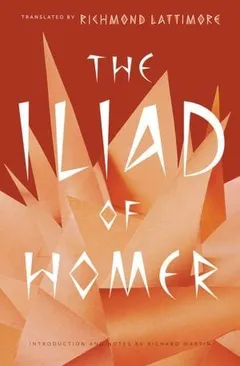
We recommendThe Odyssey of Homer, translated by Richmond LattimoreHarper Perennial Modern Classics, 2007Line-for-line and plain, the companion to his Iliad and the translation the Great Books set uses.
Also good
- Robert Fagles. The most readable verse version, and a good first encounter.
- Emily Wilson. Fast iambic pentameter, and an introduction that takes the slave women seriously.
These links go straight to Amazon and Bookshop.org and earn this site nothing today. Prices are the same either way. How this works.
Ten years after the fall of Troy, Odysseus has still not come home to Ithaca, where suitors are eating up his household and courting his wife Penelope. His son Telemachus sets out to look for news. Odysseus, released from the nymph Calypso, is wrecked among the Phaeacians and tells them of his wanderings, the Cyclops, Circe, the descent to the dead, the Sirens, Scylla and the cattle of the Sun. Returned to Ithaca in disguise as a beggar, he is recognised by his old nurse and his dog, strings the great bow, kills the suitors with Telemachus, and is reunited with Penelope and his father.
Why it's on the list
If the Iliad is about dying well, the Odyssey takes on the harder problem: getting home, and finding that home has moved on without you. It invents the survivor's story, the man who wins by lying, waiting and enduring rather than by charging a wall. Programs assign it because it is the first long narrative in Greek to care about a household, a marriage, a servant's loyalty and an old father's decline, and because its shape, a going out and a coming back, became the shape of the novel. Joyce rebuilt it in Dublin, Walcott in the Caribbean. It is also the first poem to wonder whether cleverness is really a virtue, and to hint that a hero's worst enemy can be his own appetite for being admired.
Key themes
- Home and exile
- Odysseus turns down immortality with a goddess in exchange for a rocky island and an ageing wife. The poem never quite explains why, and that silence is the point.
- Heroism and honour
- The hero here is not the strongest but the most enduring and the best liar. He survives by refusing to say his own name.
- Family and inheritance
- Four generations are in play at once, and the last book has a grandfather, a father and a son arming together.
- Women and men
- Penelope's weaving trick is as good as anything her husband does, and the poem keeps testing whether the two of them can still trust each other.
- Knowledge and truth
- Odysseus wants to hear the Sirens and to see inside the Cyclops' cave. Curiosity is his gift, and it repeatedly kills his crew.
Overview
Twenty-four books, but built very differently from the Iliad. The war poem moves forward in a straight line for a few weeks. This one begins in the tenth year after the war, holds its hero offstage for four books, then gives him four books in which he narrates his own adventures in the first person, and spends its entire second half in one small place doing one thing: getting a beggar into a hall full of enemies and out again alive.
That structure is worth noticing before you start, because the famous monsters occupy less of the poem than most readers expect. Cyclops, Circe, the Sirens and Scylla are all inside Books 9 to 12, and they are a story Odysseus tells at a dinner party in order to get a ride home. He is a man with an interest in how he sounds. The poem’s second half, Books 13 to 24, has no monsters at all. It has pig farmers, a nurse washing a stranger’s feet, a dog, a bow and a slaughter.
The poem is also full of other people’s stories. Nestor, Menelaus, Helen and the ghost of Agamemnon all describe what happened to the men who came back from Troy, and every one of those returns is a warning. Agamemnon walked into his own house and was murdered at dinner by his wife and her lover. That is the outcome the whole second half is designed to avoid.
What happens
Books 1 to 4, often called the Telemachy: the gods decide Odysseus should be released; Athena, disguised, prods the young Telemachus into calling an assembly and then sailing to Pylos and Sparta for news of his father. He learns nothing decisive but stops being a boy.
Books 5 to 8: Hermes orders Calypso to let Odysseus go. He builds a raft, is wrecked by Poseidon, washes up naked on the island of the Phaeacians, is found by the princess Nausicaa, and is entertained by her parents. A bard sings about Troy and Odysseus weeps, which gives him away.
Books 9 to 12: the wanderings, told by Odysseus himself. The Lotus Eaters, the blinding of Polyphemus, the bag of winds, the cannibal Laestrygonians, Circe’s pigs, the visit to the dead where he speaks with his mother and with Achilles, the Sirens, the choice between Scylla and Charybdis, and the crew’s fatal decision to eat the cattle of the Sun. Every man but Odysseus dies.
Books 13 to 20: Ithaca. Athena disguises him as an old beggar. He is sheltered by the swineherd Eumaeus, reveals himself to Telemachus, enters his own palace, is insulted and struck, is recognised by his nurse Eurycleia from a scar, and watches the suitors at their dinner while planning what to do about them.
Books 21 to 24: Penelope proposes the contest of the bow. Nobody can string it. The beggar does, kills Antinous with the first arrow, and with Telemachus and two loyal slaves kills every suitor. Twelve slave women who slept with them are hanged. Penelope tests him with the bed. The last book takes him to his father Laertes and ends with Athena stopping a blood feud.
How to read it
Read Books 1 to 4 without impatience. They look like a delay and they are actually the poem teaching you what is at stake in a household, so that the killing in Book 22 lands as something other than an action sequence.
Watch for hospitality. Almost every episode is a test of it: how a host treats a stranger who arrives with nothing. The Cyclops eats his guests, the suitors abuse a beggar, the Phaeacians and Eumaeus get it right. The poem’s ethics are almost entirely made of this one question.
Be suspicious of Odysseus as a narrator. He is the only source for the monsters, he is talking to people he needs a ship from, and he lies constantly elsewhere in the poem, often beautifully and for no clear reason. Whether the wanderings happened as told is a question the text lets you ask.
Do not treat the hanging of the twelve slave women as a detail. It is the moment where the poem’s idea of a restored household is hardest to accept, and any honest reading has to sit with it.
If you must select, read 1, 5, 6, 9, 11, 19, 21, 22 and 23. Book 19, the foot washing, is the finest scene in the poem and the one most often skipped.
Questions it raises
- Why does Odysseus refuse immortality with Calypso? What does Ithaca have that she does not?
- Penelope may recognise her husband long before she says so. Does the poem want us to think she does?
- Is Odysseus admirable? He loses every man under his command and lies to nearly everyone who helps him.
- What is the point of Book 11, where the dead tell him things he mostly cannot use?
- Can the killing of the suitors count as justice when the poem also has to have Athena suppress the revenge it provokes?
- Does the reunion in Book 23 restore the marriage, or only end the plot?
Highlights
Tell me, O Muse, of that ingenious hero who travelled far and wide after he had sacked the famous town of Troy.
The first word of the Greek is polytropon, a man of many turns.
I would rather be a paid servant in a poor man's house and be above ground than king of kings among the dead.
The shade of Achilles to Odysseus, correcting the Iliad's whole scale of values.
Asked his name by the Cyclops, Odysseus answers that it is Nobody, and later cannot resist shouting his real name back from the ship.
Paraphrase.
Penelope tests him by ordering the marriage bed carried out of the room, and he tells her it cannot be moved, because he cut it from a living olive tree still rooted in the floor.
Paraphrase.