Ulysses
by James Joyce
Assigned by 1 of the 9 reading lists
A single day in Dublin, 16 June 1904, told in eighteen episodes that loosely parallel Homer's Odyssey. Stephen Dedalus, back from Paris and mourning his mother, leaves the Martello tower and teaches a class. Leopold Bloom, an advertising canvasser, cooks breakfast, attends a funeral, visits a newspaper, eats lunch, and wanders the city while his wife Molly waits at home for her lover. The two men meet at a maternity hospital and a brothel, and Bloom takes Stephen home. Each episode has its own style, from newspaper headlines to a play script to Molly's unpunctuated monologue.
We recommendUlyssesVintage, 1986The Gabler corrected text, the edition most courses and guides key to.
As an Amazon Associate, The Great Books earns from qualifying purchases. Bookshop.org links also support this site. How this works.
- Written
- 1922
- Form
- Novel
- Language
- English
- Length
- Epic · 780 ppover 700 pages
- Difficulty
- Formidable5 of 5 for a first-year reader
Why it's on the list
Joyce compresses Homer's decade-long Odyssey into a single Dublin day, 16 June 1904, and that compression is the novel's actual argument rather than a clever formal gimmick: an ordinary advertising canvasser cooking breakfast, attending a funeral, eating lunch and wandering the city carries the same epic weight as Odysseus's mythic voyage home, because genuine heroism lives in patient daily endurance rather than supernatural adventure. Each of the eighteen episodes adopts its own radically distinct style, newspaper headlines, a play script, Molly's famous unpunctuated closing monologue, treating literary form as inseparable from the particular consciousness each episode inhabits rather than a neutral container. Leopold Bloom's essential decency toward Stephen Dedalus, mourning his own dead mother and estranged from his father, gives the novel's technical audacity a warm emotional center. Molly's closing monologue completes the argument that interior consciousness itself deserves the sustained attention epic once reserved for heroes.
Key themes
- The self and identity
- Each of the novel's eighteen episodes renders its central character's interior consciousness through radically distinct technique, treating literary form as inseparable from the particular mind and situation each episode inhabits rather than a neutral container for narrative content.
- Home and exile
- Stephen Dedalus, returned from Paris and estranged from his living father, and Leopold Bloom, an outsider within his own Dublin community, both navigate forms of exile the novel treats as compatible with, rather than opposed to, genuine belonging within the city's daily life.
- Family and inheritance
- Leopold Bloom's essential decency toward Stephen Dedalus substitutes an adoptive, chosen paternal warmth for the biological relationship Stephen's own estranged father cannot provide, giving the novel's technical experimentation a genuinely warm emotional center.
- Language and rhetoric
- Molly Bloom's closing monologue, flowing without punctuation through memory, desire and eventual affirmation, completes the novel's structural argument that unfiltered interior consciousness deserves the same sustained literary attention epic poetry once reserved exclusively for gods and heroes.
Which edition to read
Our pick
Ulysses
Vintage, 1986
The Gabler corrected text, the edition most courses and guides key to.
Amazon: the Vintage edition, opens in a new tabBookshop.org: the Vintage edition, opens in a new tab
Overview
About seven hundred and eighty pages, James Joyce’s novel published in 1922, compressing a single day in Dublin, 16 June 1904, into eighteen episodes that loosely parallel Homer’s Odyssey. Stephen Dedalus, recently returned from Paris and mourning his mother’s death, leaves the Martello tower where he has been staying and teaches a history class, carrying his grief and his strained relationship with his own living father throughout the day’s subsequent events.
Leopold Bloom, an advertising canvasser, cooks breakfast, attends a funeral, visits a newspaper office, eats lunch, and wanders the city while his wife Molly waits at home for her lover. The two men meet at a maternity hospital and a brothel, and Bloom takes Stephen home. Each of the novel’s eighteen episodes adopts its own distinct style, from newspaper headlines to a play script to Molly’s famous unpunctuated closing monologue.
What happens
Stephen’s morning. Stephen Dedalus, recently returned from Paris and still mourning his mother’s recent death, leaves the Martello tower where he has been staying with his companions and proceeds to teach a history class, his grief and his estranged relationship with his own living father coloring the day’s subsequent events.
Bloom’s ordinary day. Leopold Bloom moves through an ordinary day’s activities, cooking breakfast at home, attending a funeral for an acquaintance, visiting a newspaper office in his work as an advertising canvasser, eating lunch, and wandering through Dublin’s streets, each episode rendered in its own distinct narrative style.
Molly’s expected visitor. Throughout Bloom’s wandering day, his wife Molly waits at home for a scheduled visit from her lover, a domestic situation Bloom remains aware of without directly confronting, a quiet undercurrent running beneath the novel’s more immediately visible daytime events.
Stephen and Bloom’s convergence. As the day progresses into evening, Stephen and Bloom’s separate paths finally converge, the two men meeting first at a maternity hospital and later at a brothel, bringing together the novel’s two central consciousnesses after their parallel, independent movement through the same city.
Bloom’s kindness toward Stephen. Following their meeting, Bloom takes the younger, grieving Stephen home with him, offering an essential, unforced decency and a kind of adoptive paternal warmth that substitutes for the relationship Stephen’s own estranged father has failed to provide him.
Molly’s closing monologue. The novel closes with Molly Bloom’s extended interior monologue, flowing without punctuation through memory, desire and an eventual affirmative recollection, the technical culmination of the novel’s broader commitment to rendering interior consciousness with total, unfiltered fidelity.
How to read it
Read the novel’s loose parallel to Homer’s Odyssey as productive analogy rather than rigid correspondence; Joyce uses the epic framework to suggest that Bloom’s ordinary day carries genuine heroic weight, without requiring readers to track every specific correspondence between the ancient poem and the modern novel’s considerably more mundane events.
Pay close attention to how each episode’s distinct style, newspaper headlines, catechism question-and-answer, dramatic script, connects directly to the particular consciousness or situation it renders; the novel’s formal variation is not decorative experimentation but treats literary technique as inseparable from what is actually being represented.
Notice how Bloom’s essential decency toward Stephen gives the novel’s considerable technical audacity a genuinely warm emotional center; amid the book’s formal complexity, this quiet, largely wordless kindness between an older outsider and a grieving young man provides the narrative’s most direct emotional through-line.
Consider Molly’s closing unpunctuated monologue as the novel’s structural argument stated in its purest form; unfiltered interior consciousness, rendered without the mediating structure ordinary punctuation and paragraph would impose, receives here the same sustained literary attention epic poetry once reserved exclusively for gods and heroes.
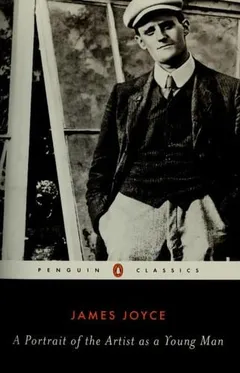
Read this novel alongside Joyce’s own earlier Portrait of the Artist as a Young Man to trace Stephen Dedalus’s development across two related works, seeing how the same character’s earlier formation connects to and informs his more fragmentary, grief-marked presence within this later, considerably more technically ambitious novel.
Questions it raises
- Does compressing epic heroism into a single ordinary Dublin day successfully argue that daily endurance carries the same weight as mythic adventure, or does the considerable technical difficulty required to make this argument risk undermining its own claim about ordinary life’s inherent significance?
- How does each episode’s radically distinct style shape your experience of reading the novel as a unified whole? Does this formal variation successfully unify around Bloom and Stephen’s convergence, or does the novel’s technical range threaten to fragment it into disconnected individual set pieces?
- What does Bloom’s essentially wordless kindness toward Stephen accomplish that more explicit emotional declaration could not achieve? Does the novel’s considerable formal complexity actually serve this quiet emotional center, or does technical ambition sometimes overshadow the human relationship at the story’s core?
- How does Molly’s closing unpunctuated monologue function differently from the novel’s other stylistic experiments? Does removing punctuation entirely represent a genuine advance in rendering interior consciousness, or does this technique risk becoming more notable for its difficulty than its actual representational achievement?
- Given the novel’s considerable difficulty and length, what does its continued canonical status suggest about the relationship between technical ambition and lasting literary value? Does the novel’s demanding form ultimately serve its content, or does its reputation depend partly on difficulty itself being mistaken for achievement?
- How does the loose Homeric parallel actually function for readers unfamiliar with the Odyssey’s specific structure? Does the novel require this classical knowledge to be fully appreciated, or does its more immediate rendering of Dublin life and consciousness succeed independently of readers tracking the mythic correspondence?
Highlights
Stephen Dedalus, recently returned from Paris and mourning his mother's death, leaves the Martello tower where he has been staying and proceeds to teach a history class, carrying his grief and his strained relationship with his own living father throughout the day's subsequent events.
Paraphrase of the novel's opening Stephen-centered episodes, establishing his grief and family estrangement.
Leopold Bloom moves through an ordinary day's activities, cooking breakfast, attending a funeral, visiting a newspaper office, eating lunch, and wandering Dublin's streets, while his wife Molly waits at home for a scheduled visit from her lover, a domestic situation Bloom is aware of but does not directly confront.
Paraphrase of Bloom's central day-long narrative arc, establishing the domestic situation underlying his wandering.
Bloom and Stephen finally meet at a maternity hospital and later at a brothel, and Bloom subsequently takes the younger, grieving man home with him, offering an essential, unforced decency and adoptive paternal warmth that substitutes for the relationship Stephen's own estranged father has failed to provide.
Paraphrase of the novel's central convergence, Bloom's quiet kindness toward Stephen giving the narrative its emotional resolution.
The novel closes with Molly Bloom's extended interior monologue, flowing without punctuation through memory, desire, and an eventual affirmative recollection, a technical culmination of the novel's broader commitment to rendering interior consciousness with total, unfiltered fidelity.
Paraphrase of the novel's famous closing technique, its final and most sustained rendering of unmediated interior consciousness.