The Iliad
by Homer · Ἰλιάς
Assigned by 8 of the 9 reading lists
- Written
- c. 750 BCE
- Form
- Epic poetry
- Language
- Greek
- Length
- Long · 600 pp300 to 700 pages
- Difficulty
- Demanding3 of 5 for a first-year reader
We recommendThe Iliad, translated by Richmond LattimoreUniversity of Chicago Press, 2011Line-for-line faithful, and the translation most programs assign.
Also good
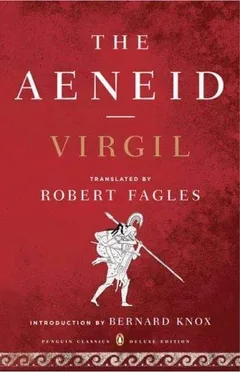
- Robert Fagles. Faster and more vivid; the one to read for pleasure.
- Emily Wilson. Clear iambic pentameter, superb introduction.
These links go straight to Amazon and Bookshop.org and earn this site nothing today. Prices are the same either way. How this works.
In the tenth year of the Greek siege of Troy, Achilles, the best of the Greek warriors, is stripped of a captive woman by his commander Agamemnon and withdraws from the fighting in fury. Without him the Greeks are driven back to their ships. His closest companion Patroclus borrows his armour to rally them and is killed by Hector, Troy's champion. Achilles returns in a grief that turns to savagery, kills Hector, and drags his body behind a chariot for days. The poem ends not in victory but in a tent at night, where Hector's old father Priam kneels to kiss the hands of the man who killed his son, and asks for the body back.
Why it's on the list
The Iliad is where the Western argument about what a human life is worth begins. It is a war poem that refuses to make war glorious and a hero poem whose hero is nearly unbearable, and it holds both positions without flinching. Programs put it first because it sets the terms almost everything after it will argue with: Plato wants it banned from his city, Virgil rewrites it for an empire, Augustine remembers weeping over it, Simone Weil read it as the truest account of force ever written, and Tolstoy measured War and Peace against it. Read it and you can hear those arguments happening. Skip it and most of the shelf is answering a question you never heard asked.
Key themes
- War
- The poem gives the same weight to a Trojan spearman's death as to Hector's, and it names the father waiting at home for him.
- Heroism and honour
- Achilles knows he can have a long obscure life or a short glorious one. The poem asks whether he chose right.
- Death and mortality
- The gods are the immortal audience. Only mortals can act meaningfully, because only their choices cost anything.
- Reason and passion
- Rage is the poem's first word, and what Achilles has to pass through before he can pity Priam.
- Family and inheritance
- Almost every death is measured by who is left: Hector's wife and infant son, Priam's fifty sons, Achilles' father waiting for a boy who will not come home.
Overview
The Iliad covers a few weeks near the end of a ten-year war, and it leaves out the war’s most famous episodes. There is no judgement of Paris, no wooden horse, no fall of the city. What it covers instead is a quarrel between two Greeks and everything that follows from it. That narrowing is the poem’s first decision and its most important one: it is not a history of a war but a study of what war does to the people inside it.
Two things make the poem strange to a modern reader. The first is the similes. Battle keeps stopping so that a dying man can be compared to a felled poplar, a mule train, a mother shielding her child. These are not decoration. They are the poem’s way of keeping the ordinary peaceful world in view while men destroy each other, and the contrast is the argument. The second is the gods, who quarrel, cheat and take sides, and who are also the poem’s way of saying that the universe is not on anyone’s side. They are immortal, so nothing they do costs them anything. Only mortals can act meaningfully, because only mortals can lose.
What happens
Books 1 to 8. Agamemnon is forced to give up a captive, Chryseis, and compensates himself by taking Briseis from Achilles. Achilles, publicly dishonoured, withdraws his contingent and asks his goddess mother Thetis to persuade Zeus to let the Trojans win until the Greeks understand what they have lost. The poem catalogues the ships, stages a duel between Paris and Menelaus that should have ended the war and doesn’t, gives Diomedes a day of glory, and follows Hector home to Troy, where his baby son is frightened by the horsehair crest on his helmet.
Books 9 to 17. An embassy offers Achilles a fortune to return and he refuses it, in a speech that rejects the whole economy of honour the poem runs on. The Greeks are driven back behind their wall; Hector breaks through it. Patroclus, unable to watch, persuades Achilles to lend him his armour, drives the Trojans back, and is killed by Hector. The armies fight over his corpse for an entire book.
Books 18 to 24. Achilles learns of the death and his grief is terrible. Hephaestus forges him new armour, including a shield that carries the whole world he has given up: a city at peace, a wedding, a harvest, a trial. He returns, kills without mercy, chokes a river with bodies, kills Hector, and drags him behind his chariot. Then Priam crosses the lines alone at night, and the poem’s last book is not a battle but two enemies weeping together and a funeral.
How to read it
Read it in a translation that keeps the line, and read some of it aloud. The poem was composed to be heard, and its rhythm carries meaning that prose flattens. Lattimore is the most faithful and the one most programs assign; Fagles moves faster; Wilson is the clearest in English metre. Any of the three is a real encounter with the poem.
Do not skip the battle books in the middle. They are where the moral seriousness lives. Homer refuses to let any death be anonymous: a minor Trojan gets a name, a father, a home town, sometimes a bride waiting. That accumulation is the point, and it cannot be summarised.
Watch two patterns. First, what honour actually buys. Almost every character is pursuing it and almost every character is destroyed by it. Second, hands: Achilles’ hands kill Hector, and in Book 24 Priam kisses those same hands. The poem is built to bring you to that gesture.
If you must read selectively, take Books 1, 6, 9, 16, 18, 22 and 24. Book 24 is not an epilogue. It is the reason the poem exists, and reading the Iliad without it leaves you with a different and much smaller work.
Questions it raises
- Is Achilles right to withdraw? What does Agamemnon owe him, and what does he owe the army?
- In Book 9 Achilles refuses gifts that would restore his honour. Has he seen through the system, or has he simply lost the ability to be satisfied?
- The poem is scrupulously fair to the Trojans, and Hector is its most sympathetic figure. Is it on anyone’s side?
- What is the shield of Achilles doing in the middle of the poem? What does it say about what he is fighting for?
- Why does the poem end with Hector’s funeral rather than Achilles’ death or the sack of Troy?
- Is Achilles’ pity for Priam a change in his character, or the completion of it?
Highlights
Sing, goddess, the anger of Peleus' son Achilleus and its devastation, which put pains thousandfold upon the Achaians.
The poem announces its subject as an emotion, not a war.
As is the generation of leaves, so is that of humanity. The wind scatters the leaves on the ground, but the live timber burgeons with leaves again in the season of spring returning.
Glaukos to Diomedes, spoken between two men about to fight.
I have gone through what no other mortal on earth has gone through; I put my lips to the hands of the man who has killed my children.
Priam to Achilles, the scene the whole poem has been moving toward.