Agamemnon
by Aeschylus · Ἀγαμέμνων
Assigned by 3 of the 9 reading lists
The first play of the Oresteia. A watchman on the palace roof sees the beacon announcing that Troy has fallen, and Agamemnon comes home to Argos with the captive prophetess Cassandra. His wife Clytemnestra, who has ruled in his absence with her lover Aegisthus, talks him into walking indoors across crimson cloth. Cassandra, silent for most of the play, then sees the whole history of the house and her own death and walks in to meet it. Clytemnestra kills them both and stands over the bodies claiming justice for Iphigenia, the daughter Agamemnon cut down at Aulis to get a wind for Troy.
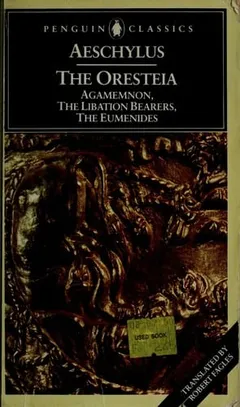
We recommendThe Oresteia, translated by Robert FaglesPenguin Classics, 1984Vivid and readable, with a long introduction and notes; contains all three plays of the trilogy.
Also goodcompare
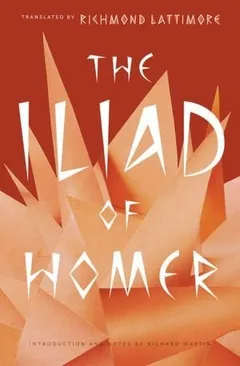
- Richmond Lattimore. Closer to the Greek word order and harder going, which is the point if you want to see how strange the language actually is.
- Anne Carson. Carson's Agamemnon beside Sophocles' Elektra and Euripides' Orestes, which shows three poets handling the same house.
As an Amazon Associate, The Great Books earns from qualifying purchases. Bookshop.org links also support this site. How this works.
- Written
- 458 BCE
- Form
- Tragedy
- Language
- Greek
- Length
- Short · 100 ppunder 120 pages
- Difficulty
- Demanding3 of 5 for a first-year reader
Robert Fagles translation
Buy on Amazon: Agamemnon, opens in a new tabBookshop.org: Agamemnon, opens in a new tab
Why it's on the list
Agamemnon is the oldest surviving play about a problem that never resolved: every act of justice in it is also a crime, and every avenger inherits the guilt of the person avenged. Aeschylus does not present a villain and a victim. He gives Clytemnestra the best argument in the play and then shows what she becomes by acting on it. Programs assign it as the opening of the only complete Greek trilogy we have, so you can watch a single question worked through three plays instead of one, but it also stands alone as the most linguistically extraordinary text in Greek drama: the choral odes are so dense that translators disagree about whole sentences, and the scene of the crimson cloth is the finest piece of persuasion anyone has written for the stage.
Key themes
- Justice
- Every killing in the play is a payment for an earlier one, and everyone can cite a reason. Aeschylus' word is dike, which means both justice and the settlement of a claim, and the trilogy exists because that arithmetic never balances.
- Family and inheritance
- The house of Atreus is the subject, not Agamemnon. Cassandra sees children murdered and served at a table generations before the play opens, and the present killing is one instalment.
- Fate and freedom
- Agamemnon at Aulis is offered a choice between abandoning the expedition and killing his daughter, and the chorus describes the moment he puts on the harness of necessity, which is a decision and a trap at once.
- Power and authority
- Clytemnestra has governed Argos for ten years and is repeatedly told she thinks like a man. The crimson cloth is about who gives way to whom, in public, with the whole city watching.
Which translation to read
For Agamemnon the translation is most of the decision. Our pick is the Robert Fagles translation; the others are good for different reasons.
Our pick
The Oresteia, translated by Robert Fagles
Penguin Classics, 1984
Vivid and readable, with a long introduction and notes; contains all three plays of the trilogy.
Amazon: the Robert Fagles translation, opens in a new tabBookshop.org: the Robert Fagles translation, opens in a new tab
Also good
Aeschylus I (The Complete Greek Tragedies), translated by Richmond Lattimore
University of Chicago Press, 2013
Closer to the Greek word order and harder going, which is the point if you want to see how strange the language actually is.
Amazon: the Richmond Lattimore translation, opens in a new tabBookshop.org: the Richmond Lattimore translation, opens in a new tab
Also good
An Oresteia, translated by Anne Carson
Faber and Faber, 2009
Carson's Agamemnon beside Sophocles' Elektra and Euripides' Orestes, which shows three poets handling the same house.
Amazon: the Anne Carson translation, opens in a new tabBookshop.org: the Anne Carson translation, opens in a new tab
Overview
Agamemnon is the longest Greek tragedy that survives and the first part of the only complete trilogy. It was produced in 458 BCE, two years before Aeschylus died, and it took first prize.
The first thing to know is how little happens. A man comes home and is killed indoors. That is the plot, and it arrives two thirds of the way through. Everything before it is choral: the elders of Argos singing about things that happened ten years ago and more, circling the same events, refusing to say some of them outright. If you read this play looking for action you will think nothing is going on. What is going on is that the past is being assembled, piece by piece, until the murder is the only possible next event.
The second thing is the language. Aeschylus writes a Greek nobody else wrote, compressed to the point of obscurity, stacking compound words he seems to have invented for the occasion. Translators genuinely disagree about what some lines mean. This is why the choice of translation matters more here than almost anywhere else on the shelf, and why reading two versions side by side is unusually rewarding.
The house has a history the play assumes. Atreus, Agamemnon’s father, quarrelled with his brother Thyestes, killed Thyestes’ children and served them to him at a banquet. Aegisthus is the surviving son of Thyestes. None of this is explained until very late, and it is meant to arrive as a revelation.
What happens
A watchman has been lying on the palace roof for a year, waiting for a signal, and he opens the play exhausted and afraid. The beacon fires; he shouts; and then he stops himself, because there is something in the house he will not name.
The chorus of old men, too old to have sailed for Troy, begin the longest entrance song in tragedy. They tell of the two eagles that tore a pregnant hare, of Artemis’ anger at the sign, and of the windless days at Aulis when the fleet could not sail. Agamemnon was given a choice: give up the expedition or kill his daughter. The chorus describe him putting on the yoke of necessity, and then they describe the girl, gagged so she cannot curse the ship, her robe falling, her eyes appealing to the men she had sung for at her father’s table. They break off. In the middle of it comes the Hymn to Zeus, which does not defend any of this and instead states the law it illustrates: that understanding is given through suffering, violently, by a grace that comes whether we want it or not.
Clytemnestra announces the fall of Troy and describes the chain of beacons that brought the news from Mount Ida to Argos in a night, fire handed to fire across the sea, and it is a magnificent speech about a system she alone had the authority to build. A herald arrives and confirms it, with a long, wretched account of the army’s ten years and the storm that scattered the fleet on the way home.
Then Agamemnon, in a chariot, with Cassandra beside him as a prize. Clytemnestra welcomes him with an extravagant speech and has crimson cloths spread from the chariot to the door. He refuses: this is what you do for a god, not a man, and the Greeks will talk. She argues. He gives way, takes off his shoes so as to do it humbly, and walks in on the fabric. It is the most famous scene in the trilogy because nothing is stated in it. Both of them know what the argument is about, neither says, and the loser walks inside to die.
Cassandra has said nothing this whole time. Clytemnestra orders her in; she does not move. Left alone with the chorus, she begins to see: children slaughtered in this house, a woman killing a man, and her own body on the floor. Apollo gave her true prophecy and the curse that nobody would believe her, and the chorus tell her, with complete courtesy, that they do not follow. She predicts the avenger who will come, drops her prophet’s staff and wreaths, and goes in.
The cries come from inside. The elders argue about what to do, and the doors open on Clytemnestra standing over her husband and Cassandra, still holding the robe she trapped him in. She does not deny it. She is exultant, and she names Iphigenia. The chorus can only invoke the curse of the house, which she agrees with, and offers to settle with. Aegisthus then arrives with bodyguards to explain at last who he is and what Atreus did to his father. He and the chorus nearly come to blows, and Clytemnestra stops it. Orestes is not mentioned by either of them, only by the old men.
How to read it
Read the whole Oresteia rather than this play alone if you can. It is three short plays and the argument is not finished until the third.
Slow down in the parodos, lines 40 to 257. It is hard, it is long, and it contains Iphigenia, the eagles and the Hymn to Zeus, which between them supply the motive for everything that follows.
Read the crimson cloth scene twice, once for what is said and once for what is being decided. Count the exchanges. She wins it in about twelve lines by asking what Priam would have done.
Keep track of the images, because Aeschylus repeats them with intent: the net, the yoke, the lion cub reared in the house, blood that cannot be washed out, light that turns out not to be good news.
Notice who is allowed to be right. Clytemnestra’s case, that a man who killed his own child was executed by the child’s mother, is never refuted in this play. What the trilogy does with it is the whole point of the next two.
If you have read the Odyssey, notice that Homer tells this story differently: there Aegisthus is the killer and Clytemnestra an accomplice. Aeschylus makes her the agent, and that decision is the play.
Questions it raises
- Was there a right choice at Aulis? The chorus say Agamemnon put on the harness of necessity, which suggests he was both compelled and responsible. Can both be true?
- Clytemnestra gives reasons and the play never answers them. Does it consider her justified, or only understandable?
- Why does Agamemnon give way over the crimson cloth? He knows what it looks like and does it anyway.
- Cassandra knows exactly what is about to happen to her and walks in. What is the play saying about knowledge that cannot be acted on?
- Learning comes through suffering, says the Hymn to Zeus. Who in this play has learned anything?
- The chorus of old men see everything clearly and do nothing at any point. Is that cowardice, age, or the ordinary condition of people watching a state crime?
Highlights
A great ox stands upon my tongue.
Paraphrase of the watchman's last words in the prologue. He would speak, he says, to anyone who already knows, and to anyone who does not he remembers nothing.
Zeus, who sets mortals on the road to understanding, who made it law that by suffering they shall learn.
Paraphrase of the Hymn to Zeus, the source of the phrase pathei mathos, learning through suffering.
Justice shines in the smoke of mean houses, and turns her eyes from the gold-encrusted halls where hands are foul.
I stand where I struck, over the work I have done, and I did it so that he could neither escape nor defend himself.
Paraphrase of Clytemnestra's first words over the bodies, describing the robe she threw round him in the bath as a net for fish.