Job
by Anonymous · אִיּוֹב
Assigned by 3 of the 9 reading lists
A prose frame tells how God, prompted by the Adversary, permits the ruin of Job, a blameless and prosperous man, who loses his children, his wealth and his health. The long central poem is a debate between Job, who insists on his innocence and demands a hearing, and three friends who argue that suffering must be deserved. A fourth speaker, Elihu, intervenes; then God answers Job out of the whirlwind with questions about the creation that do not explain his suffering. Job submits, and the frame closes with his fortunes restored.
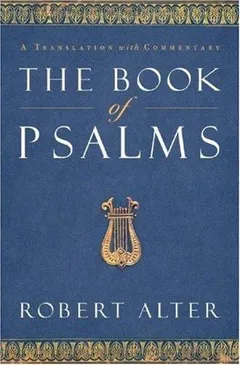
We recommendThe Wisdom Books, Job, Proverbs, and Ecclesiastes, translated by Robert AlterW. W. Norton, 2010Alter's verse translation restores the poetry of the speeches; the notes explain the difficult Hebrew.
Also goodcompare
- Stephen Mitchell. A poet's version, freer than Alter and very strong on the voice from the whirlwind, though it cuts Elihu entirely.
- The King James Version. The source of nearly every phrase from Job that is still in English, and one of the high points of the 1611 translators' work.
As an Amazon Associate, The Great Books earns from qualifying purchases. Bookshop.org links also support this site. How this works.
- Written
- c. 6th-4th century BCE
- Form
- Scripture
- Language
- Hebrew
- Length
- Short · 60 ppunder 120 pages
- Difficulty
- Demanding3 of 5 for a first-year reader
Robert Alter translation
Find this edition: Job, opens in a new tabBookshop.org: Job, opens in a new tab
Why it's on the list
Job is the book that refuses the answer everyone else gives. The conventional theology of the ancient Near East, and of most of the rest of the Bible, is that the righteous prosper and the wicked suffer; Job's three friends argue exactly that for twenty-five chapters, and the book says at the end that they were wrong and Job was right. What it does not do is explain why he suffered. The reader knows about the wager in heaven and Job never does, and God's answer from the storm is not an answer but a tour of a creation that has nothing to do with human deserving. Every later attempt to square an all-powerful and good God with an ordinary child's death is working in this book's shadow, and so is every argument that the attempt is the wrong move.
Key themes
- Evil and suffering
- The suffering is specified and undeserved, and the book knows it, which is why the friends' explanations get more strained as they go. Job does not want comfort or even relief; he wants a hearing.
- Justice
- Job's demand is legal. He wants to bring a case, he asks for an arbiter between him and God, and his final speech is an oath of innocence laid out clause by clause as a challenge.
- God and faith
- The friends defend God by accusing Job, and the epilogue says God is angry with them for it. Whatever counts as faith in this book, it is not the thing that makes excuses for heaven.
- Nature and the cosmos
- The voice from the whirlwind talks about ostriches, wild asses, the war horse and two monsters, and never mentions Job's children. The universe it describes is magnificent and not arranged around people.
Which translation to read
For Job the translation is most of the decision. Our pick is the Robert Alter translation; the other is good for different reasons.
Our pick
The Wisdom Books, Job, Proverbs, and Ecclesiastes, translated by Robert Alter
W. W. Norton, 2010
Alter's verse translation restores the poetry of the speeches; the notes explain the difficult Hebrew.
Amazon: the Robert Alter translation, opens in a new tabBookshop.org: the Robert Alter translation, opens in a new tab
Also good
The Book of Job, translated by Stephen Mitchell
HarperPerennial, 1992
A poet's version, freer than Alter and very strong on the voice from the whirlwind, though it cuts Elihu entirely.
Amazon: the Stephen Mitchell translation, opens in a new tabBookshop.org: the Stephen Mitchell translation, opens in a new tab
Overview
Job is sixty pages and it is two books welded together, on purpose, with the weld showing.
The outer frame, chapters 1 and 2 and the last eleven verses, is prose. It is a folk tale: a very good man, a wager in heaven, disaster, patience, restoration. This is the Job of the proverb, the patient sufferer who blesses the name of the Lord while his house burns.
Everything between is poetry, and the man in it is not patient at all. He is furious, sarcastic, legally minded and relentless. He accuses God of attacking him without cause, demands a trial, and tells his friends that their consolations are worthless and that they would make better company if they kept quiet. The two Jobs do not match, and most scholars take the poet to have set an old story as a frame for something much harder.
The Hebrew is the most difficult in the Bible. It has more words that appear nowhere else than any other book, and there are lines nobody can translate with confidence. If two translations of Job seem to disagree about what a verse says, it is often because they do.
One more thing to know before starting. The figure in the heavenly council is ha-satan, with the definite article, which makes it a title rather than a name: the adversary, the accuser, a member of the court whose job is to test claims. He is not the Devil of later Christianity, he does nothing without permission, and he disappears from the book after chapter 2 and is never mentioned again.
What happens
Job of Uz is blameless, upright, rich and careful, sacrificing on behalf of his children in case they have sinned inadvertently. In the heavenly court the adversary asks the only question the book cares about: does Job fear God for nothing? Take away the rewards and see. Permission is given, and in a single day raiders and fire and wind destroy his livestock, his servants and all ten children. Job tears his robe, shaves his head, and blesses God. A second wager follows, and he is struck with sores from head to foot. His wife tells him to curse God and die. Three friends come from far away, and when they see him they do not recognise him, and they sit with him on the ground for seven days and seven nights without saying a word, because they see that his suffering is very great.
Then Job opens his mouth, and the poetry begins, and he curses the day he was born.
What follows is three cycles of speeches. Eliphaz, Bildad and Zophar each speak and Job answers each, and the same argument is made with increasing heat. Their position is the standard one: God is just, God punishes the wicked, therefore Job has sinned, and the sooner he admits it the sooner this ends. They move from gentle hints to open accusation, with Eliphaz eventually inventing specific crimes. Job’s position never changes. He has not done these things, they know he has not, and he wants to argue the case in front of whoever is responsible. He asks repeatedly for an umpire, someone who could lay a hand on both parties, and knows there is not one.
Chapter 28 is a poem on where wisdom can be found, surveying the mines where men dig out sapphires and gold and pointing out that the one thing nobody has located a seam of is understanding. It sits oddly where it is and many readers think it a separate composition.
Chapters 29 to 31 are Job’s summation. He remembers what he was, when the young men stepped aside for him and he rescued the poor and broke the jaws of the wicked; he describes what he has become, mocked by the sons of men he would not have set with his dogs; and he ends with a long oath of innocence, taken clause by clause. If I have walked with vanity, if I have withheld anything from the poor, if my land cry out against me, then let thistles grow instead of wheat. It is a formal challenge, and it ends: let the Almighty answer me.
Instead Elihu answers, for six chapters. He is young, angry, not mentioned in the prologue or the epilogue, and argues that suffering can be instructive rather than punitive. Most scholars think these chapters were inserted later. Nobody in the book responds to him.
Then God answers Job out of the whirlwind, and does not address the question at all. Where were you when I laid the foundations of the earth? Have you entered the springs of the sea? Who provides for the raven? Do you know when the mountain goats give birth? Can you bind the Pleiades? The speech is a tour of the world’s wildness, full of creatures that are useless to humans and splendid anyway: the wild ass that laughs at the city, the ostrich that leaves her eggs in the dust, the war horse that smells the battle from far off. Then Behemoth and Leviathan, described at enormous length, uncontrollable and beloved.
Job answers twice and briefly. The second answer is six verses and the most argued-over passage in the book.
The prose returns. God tells Eliphaz that he is angry with the three friends, because they have not spoken of him what is right, as his servant Job has, and instructs them to have Job pray for them. Job’s fortunes are restored twofold. He has ten more children, and the three daughters are named, Jemimah, Keziah and Keren-happuch, the only children named in the book, and he gives them an inheritance among their brothers.
How to read it
Read chapters 1 to 3, then 38 to 42, then go back and fill in the middle. The speeches of the friends are repetitive by design, and knowing where the book is going makes it much easier to see what Job is doing in them.
Do not skim the whirlwind. It is the best poetry in the Hebrew Bible and it is the whole of God’s answer, so what you make of the book depends on what you make of it.
Read the friends charitably at least once. They are saying what almost every other book in the Bible says, and they are saying it to comfort someone. The book’s judgement on them is severe, and it is worth working out exactly what they got wrong, since it is not obviously their theology.
Notice what God does not say. There is no mention of the wager, no explanation, no promise of restoration, and no reference to an afterlife where accounts are settled. Any reading that supplies one of those is supplying it.
The common misreading is patience. The proverbial patience of Job comes from the prose frame and from a single verse in the letter of James. The man in the poem is not patient, and the epilogue says he was the one who spoke rightly.
Questions it raises
- God permits the test to answer the adversary’s question. Does the book think that was justified?
- Job wants a trial. When God finally speaks, he changes the subject entirely. Is that an answer, a refusal, or a demonstration that the question was badly formed?
- The friends defend God and are condemned for it. What exactly did they do wrong?
- Job is given new children. Does that restore anything, and what does the book expect a reader to feel about the first ten?
- If the whirlwind speech is the answer, is the message that human categories of justice simply do not apply, and can anyone live that way?
- Does it matter that the reader knows about the wager and Job never does?
Highlights
Naked came I out of my mother's womb, and naked shall I return thither: the LORD gave, and the LORD hath taken away; blessed be the name of the LORD.
But where shall wisdom be found? and where is the place of understanding?
Where wast thou when I laid the foundations of the earth? declare, if thou hast understanding.
The opening of God's reply, which goes on for four chapters and consists almost entirely of questions.
I have heard of thee by the hearing of the ear: but now mine eye seeth thee. Wherefore I abhor myself, and repent in dust and ashes.
The most disputed sentence in the book. The Hebrew of the second verse is obscure enough that translators have rendered it as repentance, as retraction, and as consolation for mortals who are dust.