Genesis
by Anonymous · בְּרֵאשִׁית
Assigned by 4 of the 9 reading lists
The first book of the Bible begins with two accounts of creation, the garden of Eden, Cain's murder of Abel, the flood and the tower of Babel. It then narrows to one family. God calls Abraham out of Mesopotamia with a promise of land and descendants; the promise passes through Isaac to Jacob, who wrestles with a stranger at a river and is renamed Israel. The last quarter follows Jacob's son Joseph, sold into Egypt by his brothers, who rises to govern the country and eventually saves and forgives the family that betrayed him.
We recommendGenesis, Translation and Commentary, translated by Robert AlterW. W. Norton, 1996A literary translation that keeps the Hebrew rhythm, with commentary on nearly every verse.
Also goodcompare
- Everett Fox. Follows the sound of the Hebrew even further than Alter, laid out for reading aloud.
- The King James Version. The wording four centuries of English literature quotes and alludes to, which is a reason to have read it in this form at least once.
As an Amazon Associate, The Great Books earns from qualifying purchases. Bookshop.org links also support this site. How this works.
- Written
- c. 10th-6th century BCE
- Form
- Scripture
- Language
- Hebrew
- Length
- Short · 110 ppunder 120 pages
- Difficulty
- Moderate2 of 5 for a first-year reader
Robert Alter translation
Buy on Amazon: Genesis, opens in a new tabBookshop.org: Genesis, opens in a new tab
Why it's on the list
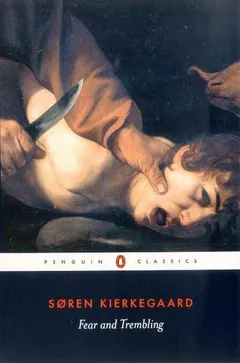
Genesis supplies the furniture of Western thought: a world that is made rather than eternal, a God who speaks rather than struggles, human beings in his image, a fall, a promise, a covenant, and a history going somewhere. Philosophers who never open it still argue inside its frame, because the questions of whether the world had a beginning, whether creation is good, and whether suffering can be deserved were put in these terms first. It is also, simply, extraordinary narrative. The Hebrew is spare to the point of withholding, telling you what people do and almost never what they feel, and it is that reticence that has made Abraham on the mountain and Jacob at the river inexhaustible. Kierkegaard wrote a whole book about four verses of chapter 22 and did not finish with it.
Key themes
- God and faith
- God speaks and things exist, then he keeps making promises to people who are in no position to secure them. Faith in Genesis is mostly a matter of waiting a very long time.
- Family and inheritance
- Every generation repeats the same fracture: brothers who cannot both be chosen, a mother who prefers one son, an inheritance that has to be stolen. The covenant travels through a family that keeps nearly destroying itself.
- Guilt and redemption
- Cain is marked so that nobody may kill him. Jacob cheats and is cheated. Joseph forgives without pretending nothing happened, saying his brothers meant harm and God meant good.
- Home and exile
- The book begins with an expulsion from a garden and ends with the chosen family settled in Egypt, which the next book will make a house of slavery. Nobody in Genesis dies where they were born.
Which translation to read
For Genesis the translation is most of the decision. Our pick is the Robert Alter translation; the other is good for different reasons.
Our pick
Genesis, Translation and Commentary, translated by Robert Alter
W. W. Norton, 1996
A literary translation that keeps the Hebrew rhythm, with commentary on nearly every verse.
Amazon: the Robert Alter translation, opens in a new tabBookshop.org: the Robert Alter translation, opens in a new tab
Also good
The Five Books of Moses, translated by Everett Fox
Schocken, 1995
Follows the sound of the Hebrew even further than Alter, laid out for reading aloud.
Amazon: the Everett Fox translation, opens in a new tabBookshop.org: the Everett Fox translation, opens in a new tab
Overview
Genesis is about a hundred and ten pages and it is two books joined at chapter 12. Chapters 1 to 11 are primeval history: creation, the garden, the first murder, the flood, the scattering of languages. They deal in origins, they move through whole generations in a verse, and their characters are humanity rather than individuals. From chapter 12 the lens narrows to one man and stays narrow for thirty-nine chapters, following four generations of a single family in real time, with names, quarrels, marriages and burials.
The prose is unlike anything in Greek. It is terse, paratactic, built on “and,” and it almost never tells you what anyone is thinking. When Abraham is told to sacrifice his son, the text says he rose early in the morning and saddled his ass. That is the whole of his inner life. Readers have been filling the silence ever since, which is why Genesis has generated more commentary than any other narrative in existence.
It is also visibly composed from more than one source. Chapter 1 and chapter 2 give different accounts of creation, in different orders, with different names for God and different styles. The flood story runs two versions through each other, which is why the number of animals changes partway. Scholarship calls these strands J, E and P. Noticing the seams is not a way of discrediting the book; the editors clearly saw them too and kept both.
What happens
Creation and after (1 to 11). God speaks for seven days and the world comes into being, ordered, separated, and repeatedly called good, with humankind made in his image and given the seventh day as rest. Then a second account, closer to the ground: a man formed from dust in a garden, a woman built from his side, a tree, a serpent, and an expulsion. Their son Cain kills his brother Abel and is sent east, marked so that no one will kill him in turn. Ten generations later the world is so corrupt that God resolves to drown it and preserves Noah, his family and the animals; afterwards he sets a bow in the cloud and promises never again. At Babel, people build a tower to make a name for themselves and are scattered into languages.
Abraham (12 to 25). God tells Abram to leave his country and his father’s house for a land he will be shown, and promises to make of him a great nation. Abram is seventy-five and childless, and the promise takes twenty-five years. In between: a famine and a lie in Egypt, a split with his nephew Lot, a covenant cut between divided animals in chapter 15, the slave Hagar and her son Ishmael, circumcision as the covenant’s sign, three visitors and Sarah laughing behind the tent, Abraham bargaining God down over Sodom, and at last Isaac. Then chapter 22, where God tells him to offer that son on a mountain, and Abraham says nothing and goes.
Isaac and Jacob (25 to 36). Twins fight in Rebekah’s womb. Jacob buys Esau’s birthright with soup, steals the blessing with a goatskin, and runs. At Bethel he sees a ladder with angels going up and down. He serves Laban seven years for Rachel, is given Leah instead, serves seven more, and builds an enormous family in a household of rivalry between two sisters and their slaves. Returning home in terror of the brother he cheated, he is left alone at the ford of the Jabbok and wrestles until dawn with someone who will not give a name, who cripples him and renames him Israel.
Joseph (37 to 50). The longest continuous narrative in the book, and the most novelistic. Jacob’s favourite son, given a coat and prone to describing his dreams, is thrown in a pit by his brothers and sold into Egypt. He is enslaved, falsely accused, imprisoned, and rises by interpreting Pharaoh’s dreams to govern the country through seven years of famine. His brothers come to buy grain and do not recognise him. He tests them, conceals himself, and finally breaks. The family settles in Egypt, Jacob blesses his sons in a long archaic poem, and Joseph tells his frightened brothers that they meant harm and God meant good.
How to read it
Read it as narrative, straight through, in one translation, before reading anything about it. It is short enough for a weekend and it depends on momentum.
Use Alter if you can. The commentary sits under the text on every page, it is literary rather than devotional, and it explains the wordplay that carries much of the meaning: Adam and the ground, Jacob and the heel, Isaac and laughter.
Watch for repetition with variation. The same scene recurs deliberately: a wife passed off as a sister three times, a younger brother displacing an elder in every generation, a meeting at a well before a marriage. When the pattern changes, that is the text raising its voice.
Notice who speaks and who does not. God’s first words to Abraham get no reply. Isaac says almost nothing his whole life. Sarah laughs and then denies laughing. The narrator’s refusals are as deliberate as the speeches.
Two common misreadings. The first is to treat chapters 1 to 11 as a bad attempt at science, which reads a genre question backwards; the ancient Near East had other creation stories, and the interesting thing is what this one changes about them, above all that the sea is not a rival god and that people are not an afterthought made to do the gods’ work. The second is to expect the patriarchs to be admirable. They lie, cheat, panic and play favourites, and the book is not embarrassed about it.
Questions it raises
- Chapter 1 and chapter 2 tell the story twice, differently. What did the editors think they were doing by keeping both?
- The expulsion from the garden follows eating from the tree of the knowledge of good and evil. Is what goes wrong disobedience, knowledge, or something else?
- Abraham argues God down over Sodom and says nothing at all about Isaac. Why is he permitted to bargain about strangers and not about his son?
- Jacob gets the blessing by deception and the text never condemns him. Does the story approve, or is approval simply not what it deals in?
- Joseph says his brothers meant harm and God meant good. Does that reconcile what they did with what came of it, or excuse it?
- The covenant runs through one family. What is the rest of the world doing in a book that opens by making all of it?
Highlights
In the beginning God created the heaven and the earth.
Am I my brother's keeper?
Cain's answer when God asks where Abel is, and the first time anyone in the Bible answers God with a question.
Take now thy son, thine only son Isaac, whom thou lovest, and get thee into the land of Moriah.
I will not let thee go, except thou bless me.
Jacob to the stranger he has wrestled all night, who has already dislocated his hip and wants to leave before daybreak.
But as for you, ye thought evil against me; but God meant it unto good.