The Waste Land
by T. S. Eliot
Assigned by 2 of the 9 reading lists
A poem of about four hundred and thirty lines in five parts, cut to its present shape with Ezra Pound's help. Fragments of speech, quotation and scene follow one another without connecting narrative: a woman remembering a sled ride in the mountains, a fortune teller's cards, crowds flowing over London Bridge, a nervous conversation in a rich room, a pub monologue about false teeth, a typist and a clerk, the burning of Carthage and the Buddha's fire sermon, drowned Phlebas the Phoenician, and a waterless journey to a chapel. Eliot's notes point to the Grail legend, Dante, Shakespeare and the Upanishads.
We recommendThe Waste Land and Other PoemsFaber and Faber, 2002Prints the poem with Eliot's own notes; Lawrence Rainey's annotated edition is the one to use if you want the allusions tracked line by line.
As an Amazon Associate, The Great Books earns from qualifying purchases. Bookshop.org links also support this site. How this works.
- Written
- 1922
- Form
- Lyric poetry
- Language
- English
- Length
- Short · 25 ppunder 120 pages
- Difficulty
- Formidable5 of 5 for a first-year reader
Why it's on the list
Four hundred and thirty-three lines published in 1922 that changed what a poem was allowed to be. Eliot removed the connective tissue: no speaker you can identify, no argument, no scene that lasts, just fragments of overheard talk, half-quotations in six languages, and images that rhyme with each other rather than following one another. Readers were told it expressed the disillusion of a generation after the war, which Eliot denied, calling it a piece of rhythmical grumbling and a personal grouse. Both accounts are probably true. What is certain is that a century of poets learned from it that you could build a poem out of juxtaposition alone, and that the difficulty is not an obstacle to the feeling but the way the feeling is delivered.
Key themes
- Death and mortality
- Death without renewal is the governing image. The Grail legend's wounded king and sterile land supply the frame, and the poem keeps returning to corpses that will not sprout, bones in a garret, and a drowned man picked over by currents.
- Love and desire
- Every sexual encounter in the poem is joyless or violent: Philomel raped and turned into a bird, the typist indifferent after the clerk leaves, Lil's abortion, the woman in the hyacinth garden who cannot speak.
- God and faith
- The last section walks a waterless road to an empty chapel and ends with three Sanskrit imperatives from the Upanishads, give, sympathise, control, followed by shantih. Whether this is a resolution or another fragment is the standard argument about the poem.
- History and progress
- Past and present are laid over each other continuously: London Bridge crowds are Dante's damned, a pub closing time is Ophelia's farewell, Elizabeth and Leicester on the Thames become a modern seduction in a canoe.
Which edition to read
Our pick
The Waste Land and Other Poems
Faber and Faber, 2002
Prints the poem with Eliot's own notes; Lawrence Rainey's annotated edition is the one to use if you want the allusions tracked line by line.
Amazon: the Faber and Faber edition, opens in a new tabBookshop.org: the Faber and Faber edition, opens in a new tab
Overview
Published in October 1922 in The Criterion, the magazine Eliot edited, then in the Dial in New York, then as a book with the notes he added to pad it to a publishable length. He was thirty-four, working at Lloyds Bank in the City, in a wretched marriage, and had recently spent three months on sick leave at Lausanne after a breakdown, where he wrote much of it.
The manuscript went to Ezra Pound, who cut it roughly in half. He removed a long comic opening set in a Boston bar, a passage imitating The Rape of the Lock, a sailor’s monologue, and much else, and he left the shape we have. Eliot dedicated it to him as il miglior fabbro, the better craftsman, which is Dante’s phrase for the poet Arnaut Daniel. The annotated drafts were published in 1971 and are worth seeing: whole pages struck out with a line and the word too loose.
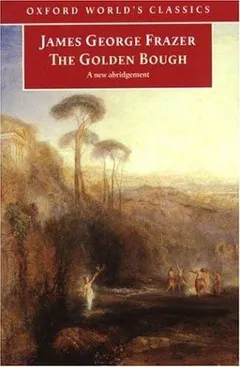
Twenty-five pages including the notes. The notes themselves are a problem Eliot created and then regretted, calling them in later life a remarkable exposition of bogus scholarship and blaming his own wish to avoid accusations of plagiarism. They point to Jessie Weston’s From Ritual to Romance on the Grail legend and to Frazer’s Golden Bough on vegetation rituals, and they are useful, but treating them as a key to a code makes the poem smaller than it is.
The argument
I. The Burial of the Dead. The title is from the Anglican funeral service. It opens by inverting the opening of the Canterbury Tales: April is cruel because it forces life on ground that would rather stay frozen, and winter is kind because it keeps things numb.
An aristocratic voice remembers a childhood sledge ride and says she reads much of the night and goes south in the winter. Then a desert landscape, a heap of broken images, a shadow under a red rock, fear in a handful of dust. A snatch of Wagner’s Tristan in German, a sailor’s song about wind blowing toward home. The hyacinth girl, and a moment in which the speaker could not speak and his eyes failed and he knew nothing, looking into the heart of light, the silence.
Madame Sosostris, famous clairvoyante, has a bad cold and reads the Tarot: the drowned Phoenician sailor, Belladonna the Lady of the Rocks, the man with three staves, the wheel, the one-eyed merchant, and a blank card she is forbidden to see. She does not find the Hanged Man, and warns against death by water.
Then the Unreal City. Crowds flow over London Bridge in winter fog, and the lines come from Dante’s hell and from Baudelaire. The speaker recognises a man he fought with, not at Ypres but at Mylae, a battle of the First Punic War, and asks whether the corpse he planted last year has begun to sprout. The section closes by addressing the reader directly in Baudelaire’s words: hypocrite reader, my likeness, my brother.
II. A Game of Chess. Two scenes of sexual misery, in different classes and registers.
The first is a rich woman’s room, described in an elaborate Shakespearean pastiche that starts from Cleopatra’s barge and turns claustrophobic: carved dolphins, synthetic perfumes, a depiction of Philomel, raped by the king and turned into a nightingale whose song the poem renders as jug jug to dirty ears. Then a conversation, or a woman’s questions and a man’s unspoken answers: my nerves are bad tonight, why do you never speak, what are you thinking of. The answer is rats’ alley where the dead men lost their bones.
The second is a London pub at closing time. A woman recounts what she told her friend Lil about her husband coming back from the army, about Lil’s teeth, about the pills she took to bring on the abortion, about how she will lose Albert if she does not smarten up. The publican’s HURRY UP PLEASE ITS TIME cuts through it five times. It ends with the woman saying goodnight, and Ophelia’s last words in Hamlet, good night ladies, good night sweet ladies.
III. The Fire Sermon. The longest section. The Thames in autumn, empty of the nymphs and litter of a summer party, with the refrain from Spenser’s marriage poem, sweet Thames run softly till I end my song, now sounding like an elegy.
Rats, bones, fishing in the dull canal. Mrs Porter and her daughter, from an obscene soldiers’ song. Mr Eugenides, the Smyrna merchant, propositions the speaker in demotic French over lunch.
Then the centre of the poem. Tiresias, the blind prophet who lived as both man and woman, watches a scene he says he has foresuffered: a typist comes home, clears her breakfast from the divan, and receives the young man carbuncular, a clerk, small house agent’s assistant, who assaults her with caresses that are undesired and unopposed. He leaves; she is glad it is over; she smooths her hair with an automatic hand and puts a record on the gramophone. Eliot’s note says that what Tiresias sees is the substance of the poem.
The section closes with three Thames-daughters’ songs of degradation, then the burning of Carthage from Augustine’s Confessions and the Buddha’s Fire Sermon set against each other, and the single word burning repeated.
IV. Death by Water. Ten lines. Phlebas the Phoenician, a fortnight dead, forgets the cry of gulls and the profit and loss; a current picks his bones in whispers; he passes the stages of his age and youth. Consider Phlebas, who was once handsome and tall as you. Pound cut this section from about ninety lines to these ten, and it is the still point of the poem.
V. What the Thunder Said. Three things are running together here: the journey to Emmaus after the crucifixion, the approach to the Chapel Perilous in the Grail romances, and the collapse of eastern Europe.
A waterless rock landscape, red sullen faces, and the obsessive repetition of what there is not: here is no water but only rock, if there were water we should stop and drink. Who is the third who walks always beside you, counted and uncounted, hooded, and you do not know whether man or woman.
Then hooded hordes swarming over endless plains, cracks in the earth, and falling towers: Jerusalem Athens Alexandria Vienna London, unreal. A woman draws out her long black hair and fiddles whisper music on it; bats with baby faces crawl down a blackened wall.
The chapel is empty, only the wind’s home, with no windows and the door swinging. A cock crows on the rooftree. A damp gust brings rain.
The Ganges is sunken, the thunder speaks: DA. The Upanishads gloss the syllable three ways, and Eliot takes all three. Datta, give: what have we given, the awful daring of a moment’s surrender which an age of prudence can never retract. Dayadhvam, sympathise: each in his prison thinking of the key. Damyata, control: the boat responded gaily to the hand expert with sail and oar.
Then the last lines: the speaker fishing, the arid plain behind him, shall I at least set my lands in order, and then a burst of quotations, London Bridge is falling down, Dante’s Arnaut leaping into the refining fire, a line from a Latin poem about the swallow, Nerval’s disinherited prince, these fragments I have shored against my ruins, Hieronymo’s mad againe from a Jacobean revenge play, and then Datta Dayadhvam Damyata, and shantih shantih shantih, which Eliot’s note translates as the peace which passeth understanding.
How to read it
Read it straight through, aloud, without notes, twice. The first thing to get is the sound, the shifts of register from liturgical to demotic to song, and the way images repeat. If you start by chasing allusions you will never hear it.
Then read it once with an annotated edition. Rainey’s or North’s Norton edition tracks the sources, and knowing that the London Bridge line is Dante and the pub scene ends in Hamlet genuinely deepens it.
Then put the notes away. The allusions are not a cipher to be decoded into a hidden message; they are more like chords, bringing a second sound under the first.
Do not look for a plot or a consistent speaker. There isn’t one. The voices shift mid-line, and Eliot’s note that Tiresias unites all the characters is best read as a hint about the poem’s tone rather than a description of its mechanics.
Track the water instead. Drought, rain that does not come, a river with no nymphs, death by drowning, the sunken Ganges, and the damp gust at the end. The poem’s structure is more musical than narrative and water is its main theme.
Look at the Pound facsimile if you can. Seeing what was cut, particularly the long narrative openings, shows how much of the poem’s effect comes from removal.
And resist both grand readings. It is not simply the voice of a shattered generation, and it is not simply a private breakdown. Eliot’s own two accounts contradict each other, and the poem is large enough to hold both.
Questions it raises
- If a poem has no continuous speaker and no argument, what holds it together?
- Eliot called it rhythmical grumbling and a personal grouse. Does an author’s account of his own poem settle anything?
- The allusions are dense enough that the notes were needed. Is difficulty a fault, a filter, or part of the meaning?
- Every intimate encounter in the poem is loveless. Why?
- Does the ending resolve anything, or is shantih just the last fragment?
- What did Pound’s cutting do to the poem, and what does it mean that we cannot separate the two poets’ contributions?
Highlights
April is the cruellest month, breeding / Lilacs out of the dead land, mixing / Memory and desire, stirring / Dull roots with spring rain.
Unreal City, / Under the brown fog of a winter dawn, / A crowd flowed over London Bridge, so many, / I had not thought death had undone so many.
The last line translates Dante, Inferno III, on the souls in the vestibule of hell who lived without blame and without praise.
I will show you fear in a handful of dust.
HURRY UP PLEASE ITS TIME
The publican's call at closing time, repeated through the pub monologue and followed immediately by Ophelia's mad farewell from Hamlet.
These fragments I have shored against my ruins.