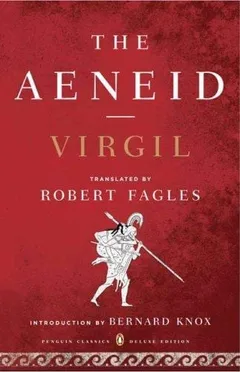
Inferno
by Dante Alighieri · Inferno
Assigned by 3 of the 9 reading lists
The first canticle of the Divine Comedy. Dante, lost in a dark wood at the age of thirty-five, is rescued by the shade of Virgil and led down through the nine circles of Hell, from the neutral souls at the gate and the virtuous pagans in Limbo, past the lustful, gluttonous, wrathful and heretical, into the deeper regions of violence, fraud and treachery. Each punishment answers the sin. Among the damned are Francesca da Rimini, Farinata, Ulysses and Count Ugolino, and at the bottom Satan frozen in ice chews the three great traitors.
We recommendInferno, translated by Robert Hollander and Jean HollanderAnchor, 2002Verse translation with the Italian facing and the fullest notes of any paperback.
Also goodcompare
- John Ciardi. The most speakable American verse version, loose with the literal sense and very strong on pace.
- Mary Jo Bang. A deliberately anachronistic rendering full of modern references, which is either a betrayal or the closest anyone gets to how strange Dante's contemporary jokes once felt.
As an Amazon Associate, The Great Books earns from qualifying purchases. Bookshop.org links also support this site. How this works.
- Written
- c. 1308-1314
- Era
- Medieval
- Form
- Epic poetry
- Language
- Italian
- Length
- Medium · 300 pp120 to 300 pages
- Difficulty
- Demanding3 of 5 for a first-year reader
Robert Hollander and Jean Hollander translation
Buy on Amazon: Inferno, opens in a new tabBookshop.org: Inferno, opens in a new tab
Why it's on the list
Dante did three things here that nobody had done. He wrote a major poem in the spoken language of his own city rather than in Latin, and in doing so more or less created literary Italian. He populated the afterlife with people he had met, including several still alive when he wrote, which turned a theological subject into journalism with eternal stakes. And he built a moral universe in which every punishment is the sin itself, seen clearly: the lustful are blown about by wind, the sowers of discord are cut apart, the flatterers stand in filth. That principle, which he called contrapasso, is the most influential single idea about justice in European literature. The Inferno is also the part everyone actually reads, which is a problem the poem itself would have something to say about.
Key themes
- Justice
- Hell is not arbitrary cruelty but a legal system, ordered by an Aristotelian scheme in which fraud is worse than violence because it misuses the faculty that makes us human.
- Evil and suffering
- Contrapasso means the punishment states the sin. Nothing is added; the condition the sinner chose is simply made permanent and visible, which is why the early circles are so much gentler than the last.
- Home and exile
- Dante wrote this under sentence of death from Florence, and the poem is full of Florentines being asked about home. The bitterness is personal and the poem does not pretend otherwise.
- Power and authority
- Popes are in hell head-downwards in holes, and Dante is quite specific about which ones. His argument is that the church's grasp at temporal power is what corrupted both it and Italy.
Which translation to read
For Inferno the translation is most of the decision. Our pick is the Robert Hollander and Jean Hollander translation; the others are good for different reasons.
Our pick
Inferno, translated by Robert Hollander and Jean Hollander
Anchor, 2002
Verse translation with the Italian facing and the fullest notes of any paperback.
Amazon: the Robert Hollander and Jean Hollander translation, opens in a new tabBookshop.org: the Robert Hollander and Jean Hollander translation, opens in a new tab
Also good
The Inferno, translated by John Ciardi
New American Library, 2009
The most speakable American verse version, loose with the literal sense and very strong on pace.
Amazon: the John Ciardi translation, opens in a new tabBookshop.org: the John Ciardi translation, opens in a new tab
Also good
Inferno, translated by Mary Jo Bang
Graywolf Press, 2012
A deliberately anachronistic rendering full of modern references, which is either a betrayal or the closest anyone gets to how strange Dante's contemporary jokes once felt.
Amazon: the Mary Jo Bang translation, opens in a new tabBookshop.org: the Mary Jo Bang translation, opens in a new tab
Overview
The Inferno is the first third of a poem, and reading it alone is like reading the first act of a play. Dante called the whole thing the Comedy because it ends well, and the Inferno is the part where nothing does. Keep in mind while you read it that the man guiding you is going to be left behind, and that the point of the journey is somewhere else.
Three hundred pages, thirty-four cantos, written in exile between about 1308 and 1314. The form is terza rima, an interlocking three-line rhyme Dante invented for the purpose, in which the middle rhyme of each stanza becomes the outer rhyme of the next, so that the verse pulls constantly forward and cannot be stopped cleanly. No English translation reproduces it without damage, which is why there are so many attempts.
The fiction is precise. It is Good Friday of the year 1300. Dante is thirty-five, half of the biblical seventy. He is lost in a wood, three beasts block his way, and the shade of the poet Virgil arrives to take him through hell and up the mountain beyond, sent by a woman in heaven.
The politics are personal and hot. Dante had been a prior of Florence, was exiled in 1302 by the faction that took the city, sentenced to be burned if he returned, and never went back. He sets the poem two years before his exile, which lets characters prophesy his ruin to his face.
What happens
Virgil leads him through the gate with the inscription that ends by telling everyone entering to abandon hope. Just inside are the neutrals, who took no side in anything, running after a blank banner and stung by insects. Dante does not even give them a circle; they are refused by heaven and hell alike.
Across the Acheron, the first circle is Limbo, where the virtuous pagans live in a castle with no torment except a sigh, because they lacked baptism. Homer, Horace, Ovid and Lucan receive Dante as a sixth among them, which is not a modest gesture.
The upper circles punish incontinence, the sins of wanting too much of something permissible. The lustful are blown endlessly on a wind, and here Dante meets Francesca da Rimini, who tells how she and her husband’s brother were reading a romance together and read no further that day. Dante faints. The gluttons lie in freezing filth. The hoarders and wasters shove great weights against each other. The wrathful fight in the Styx while the sullen gurgle beneath it.
Inside the walls of Dis the sins get colder and more deliberate. Heretics lie in open tombs of fire, among them Farinata, who rises to his waist and talks to Dante about Florentine politics as if they were still at a table. The violent occupy the seventh circle, divided by object: violence against others in a river of boiling blood, against self in a wood of thorn trees that bleed and speak when broken, against God and nature in a desert of falling fire.
Then the descent on the back of Geryon to the Malebolge, ten stone ditches for the fraudulent. Panders and seducers driven by demons with whips. Flatterers sunk in excrement. Simoniac popes jammed head-first in rock with their feet on fire, and Dante, told to speak, delivers an accusation at full volume. Diviners with their heads turned backwards so they can only look behind them. Corrupt officials boiled in pitch and guarded by a squad of comic devils who get the longest sustained joke in the poem. Hypocrites in gilded cloaks of lead. Thieves who exchange bodies with serpents in front of him. Counsellors of fraud burning in individual flames, where Ulysses describes his last voyage past Gibraltar, urging his old crew to follow virtue and knowledge, and sailing until a whirlwind took them. Sowers of discord split open and healed and split again. Falsifiers, diseased and scabbed.
The last circle is ice, and it is for treachery against those who trusted you. Here Dante meets Count Ugolino, chewing the skull of the archbishop who sealed him and his children in a tower to starve, and his account of the days in that tower is the most terrible passage in the poem.
At the centre Satan is frozen to the chest, three-faced, weeping, beating six wings that make the wind that keeps the ice frozen, and chewing Judas, Brutus and Cassius in his three mouths. He is not a rebel or a tempter. He is an enormous, weeping, mechanical thing. Virgil and Dante climb down his flank, pass the centre of the earth, and come out to see the stars.
How to read it
Read a translation with facing text or good notes, and read the notes. Dante wrote for readers who knew who these Florentines were, and without help a third of the poem is strangers being punished.
Read it aloud where you can. Even in English the terza rima moves, and the poem was built for the ear.
Then go on to Purgatorio. It is the best of the three and the one almost nobody reads, and the Inferno looks different once you have seen what the same sins look like when they can be worked off.
Watch what Dante the character does, and notice it is not always what Dante the poet endorses. He faints over Francesca, weeps for the diviners and is sharply told off for it, and pulls the hair of a traitor in the ice. His pity is tested constantly, and the poem is at least partly about learning when it is misplaced.
Track the structure. Incontinence, then violence, then fraud, then treachery, with fraud worse than violence because it abuses reason. The scheme is Aristotle by way of Aquinas, and knowing it in advance makes the descent legible.
The common misreading is that this is a book about the afterlife. It is a book about Italy in 1300, with the afterlife as the vantage point.
Questions it raises
- Is contrapasso justice, or a poet’s pattern-making? Some punishments fit exactly and some look like invention.
- Virgil is damned for being born too early, and is the wisest character in the poem. What does Dante want us to feel about that?
- Francesca tells her story beautifully and Dante faints. Is he condemning her, pitying her, or admitting he does not know how to do both?
- Ulysses is punished for fraud but his speech about pursuing knowledge is thrilling. Does the poem endorse the voyage or the sentence?
- Dante puts named contemporaries, including living ones, into hell. What gives a poet the standing to do that?
- Satan at the bottom is passive, stupid and crying. Why is the worst thing in the universe so unimpressive?
Highlights
Midway upon the journey of our life I found myself within a forest dark, for the straightforward pathway had been lost.
All hope abandon, ye who enter in.
The last line of the inscription over the gate, which begins by saying the gate was made by divine power, highest wisdom and primal love.
There is no greater sorrow than to recall a happy time in wretchedness.
Paraphrase of Francesca's answer when Dante asks her to tell her story.
Consider well the seed that gave you birth: you were not made to live as brutes, but to follow virtue and knowledge.
Paraphrase of Ulysses' speech to his crew, urging them past the limits of the known world on the voyage that drowned them all.