The Mysterious Stranger
by Mark Twain
Assigned by 1 of the 9 reading lists
In an Austrian village in 1590 three boys meet a beautiful youth who calls himself Satan, nephew of the fallen angel, and can create and destroy living creatures at will. He shows them the wretchedness of human life, the cruelty of the moral sense, and the meaninglessness of any human choice, and ends by declaring that nothing exists but a vagrant thought. Twain worked on the story in three manuscripts over the last decade of his life and finished none; the book published in 1916 was assembled and altered by his literary executor, and the version most readers know is partly his invention.
We recommendThe Mysterious Stranger ManuscriptsUniversity of California Press, 2005Prints all three of Twain's unfinished versions; the 1916 text edited by Paine is a patchwork and is not what Twain wrote.
As an Amazon Associate, The Great Books earns from qualifying purchases. Bookshop.org links also support this site. How this works.
- Written
- written 1897-1908, published 1916
- Form
- Novel
- Language
- English
- Length
- Short · 150 ppunder 120 pages
- Difficulty
- Moderate2 of 5 for a first-year reader
University of California Press edition
Buy this edition: The Mysterious Stranger, opens in a new tabBookshop.org: The Mysterious Stranger, opens in a new tab
Why it's on the list
Giving the last word of Twain's fiction to a Satan who declares that nothing exists but a vagrant thought wandering among the empty eternities turned the humorist of Huckleberry Finn into the bleakest American writer of his generation, and the story is where readers go to find what lay under the jokes. Making the moral sense the source of human cruelty, since only a creature that knows right from wrong can choose wrong, inverts the whole tradition that made conscience humanity's glory, and does it in a boy's narration that never argues back. Setting the tale in an Austrian village in 1590, with its witch-burnings and its priest, lets Twain attack the Christianity of his own day at a distance that the Missouri of Huck Finn would not have allowed. Surviving in three unfinished manuscripts, patched together and altered by his executor into the book of 1916, the story is also a lesson in how a text can be made after its author's death, and the version most readers know ends with a passage taken from a different draft.
Key themes
- Evil and suffering
- Satan shows the boys the wretchedness of human life, the burnings and wars and small cruelties, with the indifference of a being who cannot tell the difference between a man and a brick.
- God and faith
- Setting the tale in an Austrian village in 1590, with its witch-burnings and its priest, lets Twain attack the Christianity of his own day at a distance.
- Fate and freedom
- Every human life, Satan says, is a chain of acts in which the first link fixes all the rest, so that no choice was ever free.
- Madness and the irrational
- The moral sense is the source of human cruelty, since only a creature that knows right from wrong can choose wrong, an inversion that the boy narrator never argues back against.
- The self and identity
- The ending declares that nothing exists but a vagrant thought, and that the narrator himself is the dream, the self dissolved along with the world.
Which edition to read
Our pick
The Mysterious Stranger Manuscripts
University of California Press, 2005
Prints all three of Twain's unfinished versions; the 1916 text edited by Paine is a patchwork and is not what Twain wrote.
Amazon: the University of California Press edition, opens in a new tabBookshop.org: the University of California Press edition, opens in a new tab
Overview
About one hundred and fifty pages, written between 1897 and 1908 and published in 1916, in an Austrian village in 1590 three boys meet a beautiful youth who calls himself Satan, nephew of the fallen angel, and can create and destroy living creatures at will. He shows them the wretchedness of human life, the cruelty of the moral sense, and the meaninglessness of any human choice, and ends by declaring that nothing exists but a vagrant thought.
Twain worked on the story in three manuscripts over the last decade of his life and finished none; the book published in 1916 was assembled and altered by his literary executor.
What happens
Eseldorf. Theodor, the narrator, describes his village, asleep in the Middle Ages with its castle, its two priests and its faith, and the day he and two friends met a handsome stranger in the woods who lit a pipe with a breath.
The clay people. The stranger, who says his name is Satan and that his uncle is the famous one, makes a castle and five hundred tiny people out of clay, brings them to life, and crushes two of them for quarrelling, then wipes out the rest with a storm and an earthquake while he goes on talking.
The moral sense. Satan explains that he cannot do wrong because he has no moral sense, which is the thing that makes men able to choose evil and makes them lower than the beasts, and shows the boys how the village’s kindness turns to cruelty when Father Peter is accused of theft.
The chain of acts. He tells them that every life is a chain in which the first act fixes all the rest, and demonstrates by altering one small act in a villager’s life and showing how it changes his death; the changes he makes as favours are all deaths or madness.
The pageant of history. Satan shows the boys the history of the human race, its wars and burnings from Cain to the present and into the future, and laughs at the human race’s one effective weapon, laughter, which it never uses.
The dream. In the ending Paine took from a different manuscript, Satan tells Theodor that there is no God, no universe, no heaven or hell, that it is all a dream, and that Theodor himself is a thought, a vagrant thought wandering among the empty eternities.
How to read it
Read the story as the place where readers go to find what lay under the jokes, the last word of Twain’s fiction given to a Satan who declares that nothing exists.
Pay close attention to the argument about the moral sense, that only a creature that knows right from wrong can choose wrong, and notice that the boy narrator never argues back.
Notice the Austrian setting in 1590, the witch-burnings and the priest, and ask what Twain could say there about his own America that Huck’s Missouri would not have let him say.
Consider the textual history, three unfinished drafts patched together by an executor and an ending borrowed from another manuscript, and read the recommended edition to see what Twain actually wrote.
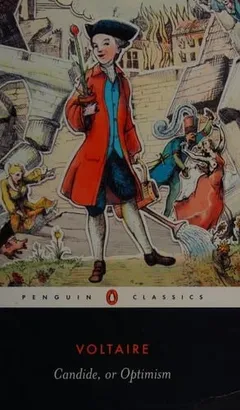
Read this story alongside Candide to compare two attacks on the belief that the world is well made, one that ends with a garden and one that ends with nothing at all.
Questions it raises
- Is Satan’s argument about the moral sense a serious philosophical claim, and why does Twain give no one in the story the means to answer it?
- Does the dream ending, borrowed by Paine from a different draft, complete the story or falsify it, and what did Twain’s own unfinished versions point toward?
- How does the Austrian village of 1590 stand for the America of 1900, and what does the distance permit?
- Is the story a work of despair, or is Satan’s contempt for humanity itself the target of an irony Twain did not live to finish?
- What is the role of laughter, the one weapon Satan says the race never uses, in a story by the greatest American humorist that contains no jokes?
- Can a book assembled after its author’s death from drafts he abandoned be his work at all, and what should a reader do with the version that made it famous?
Highlights
In an Austrian village in 1590 three boys meet a beautiful youth who calls himself Satan, nephew of the fallen angel, who makes a tiny castle and its people out of clay and then crushes them when they annoy him.
Paraphrase of the story's premise and its first demonstration of Satan's indifference.
Satan shows the boys the wretchedness of human life, the cruelty of the moral sense, which alone makes it possible to choose wrong, and the meaninglessness of any human choice, each life a chain fixed by its first link.
Paraphrase of the story's philosophical argument, delivered without rebuttal.
The tale ends with Satan declaring that nothing exists, that life is a vision and a dream, and that the narrator is but a thought, a vagrant thought wandering forlorn among the empty eternities.
Close paraphrase of the famous conclusion, which the 1916 editor attached to a different draft.