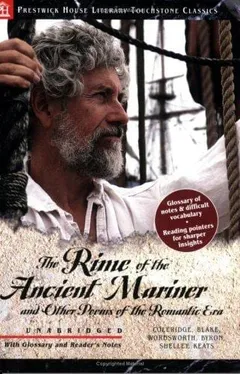
Romantic Poetry Reader
Assigned by 1 of the 9 reading lists
Not a single book but a course reader of English Romantic poems, roughly the generation between the French Revolution and the Reform Act. A typical selection includes Blake's Songs of Innocence and of Experience, Wordsworth's Tintern Abbey and the Immortality Ode, Coleridge's Rime of the Ancient Mariner and Kubla Khan, Byron, Shelley's Mont Blanc and Ode to the West Wind, and Keats's odes. Common threads are nature, the imagination, childhood, revolution and the poet's own mind, and instructors typically assign the poems roughly by chronology, letting students trace how a shared vocabulary of feeling and vision shifted from Blake's prophetic mode to Keats's sensuous late odes.
We recommendRomanticism: An AnthologyWiley-Blackwell, 2012Duncan Wu's fourth edition covers the six major poets and many others with reliable texts and notes; any good Romantic anthology will do.
As an Amazon Associate, The Great Books earns from qualifying purchases. Bookshop.org links also support this site. How this works.
- Written
- c. 1789-1832
- Form
- Lyric poetry
- Language
- English
- Length
- Medium · 200 pp120 to 300 pages
- Difficulty
- Demanding3 of 5 for a first-year reader
Why it's on the list
Gathering Blake, Wordsworth, Coleridge, Byron, Shelley and Keats within a single course reader lets students trace shared preoccupations, nature, imagination, childhood, revolution, the poet's own mind, across genuinely distinct voices rather than encountering Romanticism only through isolated single-author study disconnected from its broader generational context. Spanning roughly the generation between the French Revolution and the Reform Act situates these poems within a specific political framework, treating Romantic poetry's innovations as responses to genuinely revolutionary circumstance rather than purely aesthetic developments. Placing Wordsworth's Tintern Abbey alongside Coleridge's Rime of the Ancient Mariner reveals how differently these close collaborators pursued shared Romantic concerns, supernatural strangeness against meditative autobiography, complicating any single unified definition of the movement. Including Shelley's Mont Blanc and Ode to the West Wind alongside Keats's odes extends the anthology's scope into the movement's second generation, tracing how these concerns evolved across roughly four decades of sustained poetic development.
Key themes
- Nature and the cosmos
- Gathering Blake, Wordsworth, Coleridge, Byron, Shelley and Keats within a single course reader lets students trace shared preoccupations with nature across genuinely distinct individual voices rather than encountering Romanticism only through isolated single-author study.
- The self and identity
- Placing Wordsworth's Tintern Abbey and Immortality Ode alongside Coleridge's Rime of the Ancient Mariner reveals how differently these close collaborators pursued shared Romantic concerns with the poet's own mind and consciousness.
- Liberty and rights
- Spanning roughly the generation between the French Revolution and the Reform Act situates these poems within a specific political framework, treating Romantic poetry's innovations as responses to genuinely revolutionary historical circumstance.
- Reason and passion
- Including Shelley's Mont Blanc and Ode to the West Wind alongside Keats's odes extends the anthology's scope into the movement's second generation, tracing how Romantic concerns with imagination and feeling evolved across decades of development.
Which edition to read
Our pick
Romanticism: An Anthology
Wiley-Blackwell, 2012
Duncan Wu's fourth edition covers the six major poets and many others with reliable texts and notes; any good Romantic anthology will do.
Amazon: the Wiley-Blackwell edition, opens in a new tabBookshop.org: the Wiley-Blackwell edition, opens in a new tab
Overview
About two hundred pages, not a single book but a course reader of English Romantic poems, roughly the generation between the French Revolution and the Reform Act, from around 1789 to 1832. A typical selection includes Blake’s Songs of Innocence and of Experience, Wordsworth’s Tintern Abbey and the Immortality Ode, Coleridge’s Rime of the Ancient Mariner and Kubla Khan.
The reader also typically includes Byron, Shelley’s Mont Blanc and Ode to the West Wind, and Keats’s odes. Common threads are nature, the imagination, childhood, revolution and the poet’s own mind.
What happens
Blake’s Songs. A typical selection opens with Blake’s Songs of Innocence and of Experience, contrasting states poems tracing childhood’s transformation from unguarded openness toward experience’s more complicated and compromised knowledge.
Wordsworth’s meditative poems. The selection includes Wordsworth’s Tintern Abbey and the Immortality Ode, meditative autobiographical poems tracing memory, nature and the developing relationship between mature consciousness and childhood perception.
Coleridge’s supernatural poems. Coleridge’s Rime of the Ancient Mariner and Kubla Khan bring supernatural strangeness and visionary intensity into the anthology, contrasting notably with Wordsworth’s more grounded meditative approach despite their close collaboration.
Byron’s poetry. Byron’s inclusion extends the anthology beyond the Lake poets’ more meditative concerns toward his own distinctive combination of satirical wit, romantic self-dramatization and considerable formal range.
Shelley’s odes. Shelley’s Mont Blanc and Ode to the West Wind bring the movement’s second generation into the anthology, extending Romantic concerns with nature and imagination into more explicitly political and philosophical territory.
Keats’s odes. Keats’s odes conclude a typical selection, bringing sensuous intensity and sustained meditation on beauty, mortality and art to complete the anthology’s representative range across major Romantic voices.
How to read it
Read gathering Blake, Wordsworth, Coleridge, Byron, Shelley and Keats within a single course reader as letting students trace shared preoccupations, nature, imagination, childhood, revolution, across genuinely distinct individual voices rather than isolated single-author study.
Pay close attention to how spanning roughly the generation between the French Revolution and the Reform Act situates these poems within a specific political framework, treating Romantic poetry’s formal innovations as responses to genuinely revolutionary historical circumstance.
Notice how placing Wordsworth’s Tintern Abbey alongside Coleridge’s Rime of the Ancient Mariner reveals how differently these close collaborators and friends pursued shared Romantic concerns, supernatural strangeness against meditative autobiography, complicating any single unified definition.
Consider how including Shelley’s Mont Blanc and Ode to the West Wind alongside Keats’s odes extends the anthology’s scope into the movement’s second generation, tracing how Romantic concerns evolved and intensified across roughly four decades of development.
Read this anthology’s selections alongside Coleridge’s own Biographia Literaria to see how his critical and theoretical account of imagination and poetic composition illuminates the actual poems, his own and Wordsworth’s, that the anthology gathers for direct comparative study.
Questions it raises
- Does gathering these six major poets within a single course reader successfully convey Romanticism’s genuine internal diversity, or does anthologizing risk flattening genuinely distinct individual voices into a single homogenized movement defined by shared surface themes alone?
- How does placing Wordsworth’s more grounded, meditative poems alongside Coleridge’s supernatural and visionary work shape a reader’s understanding of what unified their close collaboration despite these apparently divergent poetic approaches and sensibilities?
- What does organizing this anthology around the specific historical span between the French Revolution and the Reform Act suggest about how political context should shape literary interpretation? Does this framing illuminate the poems, or impose external historical weight on primarily aesthetic works?
- How do the second-generation Romantics, Byron, Shelley and Keats, extend or complicate the concerns established by Blake, Wordsworth and Coleridge in the earlier selections? Does the movement show clear development, or genuinely distinct approaches across its two generations?
- Given that this is compiled course material rather than a single authored anthology, how might different instructors’ selections shape students’ understanding of Romanticism differently depending on which specific poems from each poet get included in any particular reader?
- What does this anthology’s continued use in teaching Romantic poetry suggest about the enduring pedagogical value of comparative, multi-author study for understanding a literary movement’s actual range and internal variation across individual practitioners?
Highlights
A typical selection includes Blake's Songs of Innocence and of Experience, Wordsworth's Tintern Abbey and the Immortality Ode, Coleridge's Rime of the Ancient Mariner and Kubla Khan, Byron, Shelley's Mont Blanc and Ode to the West Wind, and Keats's odes.
Paraphrase of the anthology's characteristic contents, representative selections from six major English Romantic poets.
Common threads across the selection are nature, the imagination, childhood, revolution and the poet's own mind, themes recurring across genuinely distinct individual voices spanning roughly the generation between the French Revolution and the Reform Act.
Paraphrase of the anthology's unifying thematic concerns, shared preoccupations across otherwise distinct poetic voices.
This is not a single book but a course reader of English Romantic poems, roughly the generation between the French Revolution and the Reform Act, assembled to introduce students to the movement's range across its major individual practitioners.
Paraphrase of the anthology's distinctive status as compiled teaching material rather than a single authored or edited volume.