The Trial
by Franz Kafka · Der Process
Assigned by 1 of the 9 reading lists
Josef K., a bank official, is arrested on the morning of his thirtieth birthday without being told what he is accused of. He is left free to go about his life while his case proceeds in a court that sits in tenement attics and whose law no one has read. He hires a lawyer, seeks help from a painter and a priest, and hears the parable Before the Law, but never learns the charge. A year later two men in frock coats lead him to a quarry and kill him. Kafka left the novel unfinished; Max Brod published it.
We recommendThe Trial, translated by Breon MitchellSchocken, 1999Translated from the restored critical text, with Kafka's chapter order and unfinished fragments.
As an Amazon Associate, The Great Books earns from qualifying purchases. Bookshop.org links also support this site. How this works.
- Written
- 1925 (written 1914-1915)
- Form
- Novel
- Language
- German
- Length
- Medium · 280 pp120 to 300 pages
- Difficulty
- Moderate2 of 5 for a first-year reader
Breon Mitchell translation
Buy on Amazon: The Trial, opens in a new tabBookshop.org: The Trial, opens in a new tab
Why it's on the list
Kafka opens with an arrest that changes nothing practically, Josef K. remains free to go about his ordinary banking career throughout the novel, and this strange premise, guilt proceeding independent of visible consequence, is what makes the novel's portrait of institutional power so unsettling: a legal system that never states its charge, convenes in tenement attics rather than proper courtrooms, and operates according to law no one, including K.'s own lawyer, has actually read. K.'s attempts to fight back, hiring legal counsel, seeking the painter Titorelli's supposed inside knowledge, consulting a prison chaplain, each prove equally ineffective against a system offering no surface for direct challenge. The parable Before the Law, recounted by the priest, distills the novel's logic into one devastating image, a man who spends his life waiting for permission to enter a law built specifically for him, permission he never needed to request. K.'s final execution, led away by two anonymous men and killed like a dog, delivers judgment's consequence while the actual charge remains permanently unexplained.
Key themes
- Justice
- The court that pursues K. never states its charge, convenes in tenement attics rather than proper courtrooms, and operates according to law no one, including K.'s own lawyer, has actually read, dramatizing justice as an institutional process entirely detached from any legible standard of guilt or evidence.
- Guilt and redemption
- K.'s arrest changes nothing practically, yet a presumption of guilt structures the entire novel regardless of any stated charge, suggesting guilt itself can function as an inescapable social and institutional condition independent of any specific accusation K. could actually answer or refute.
- Power and authority
- K.'s attempts to fight back through a lawyer, a painter with supposed inside knowledge, and a prison chaplain each prove equally ineffective, dramatizing power that offers no visible surface for direct challenge and no identifiable authority to appeal to.
- Fate and freedom
- The parable Before the Law distills the novel's logic into a single image, a man who spends his life waiting for permission to enter a law built specifically for him, permission he never actually needed to request, exposing self-imposed passivity as much as external constraint.
Which translation to read
Our pick
The Trial, translated by Breon Mitchell
Schocken, 1999
Translated from the restored critical text, with Kafka's chapter order and unfinished fragments.
Amazon: the Breon Mitchell translation, opens in a new tabBookshop.org: the Breon Mitchell translation, opens in a new tab
Overview
About two hundred and eighty pages, Franz Kafka’s novel, written between 1914 and 1915 and published in 1925, the year after Kafka’s death, by Max Brod. Josef K., a bank official, is arrested on the morning of his thirtieth birthday without being told what he is accused of, yet remains free to continue his ordinary work and daily life while his case proceeds separately through a court that sits in tenement attics and whose law no one, including his own hired lawyer, has actually read.
K. hires a lawyer, seeks help from the painter Titorelli, who has some informal connection to the court, and consults a prison chaplain, but never learns the actual charge against him. He hears the priest’s parable Before the Law, and a year later, two men in frock coats lead him without resistance to a quarry and kill him. Kafka left the novel unfinished; Max Brod published it.
What happens
The arrest. K. is arrested on the morning of his thirtieth birthday by officials who never state what he is accused of, yet leave him free to continue his ordinary work and daily life as a bank official, establishing from the novel’s opening the strange disconnect between his arrest and any immediate visible consequence.
The court in the attics. K. discovers that the court pursuing his case convenes not in any proper courtroom but in cramped tenement attics scattered across the city, operating according to law that no one, including K.’s own lawyer, has actually read or can produce for examination.
Seeking help through a lawyer. K. hires a lawyer to help fight his case, but the lawyer’s efforts prove genuinely ineffective against a system that offers no clear charge to answer, no specific evidence to rebut, and no identifiable authority to directly appeal to for resolution.
Titorelli and the painter’s advice. K. seeks additional help from Titorelli, a painter with some informal connection to the court’s inner workings, hoping for practical insider knowledge, but Titorelli’s advice similarly fails to provide K. with any genuine path toward resolving his case.
The parable Before the Law. A prison chaplain recounts to K. the parable Before the Law, in which a man spends his entire life waiting outside an open door for permission to enter, only learning as he dies that the door was built specifically for him and could have been entered at any time.
K.’s execution. A year after his initial arrest, two men in frock coats lead K. without resistance to a quarry and kill him like a dog, delivering the ultimate consequence of judgment while the actual charge against him, the specific nature of his guilt, remains permanently and deliberately unexplained.
How to read it
Read the strange disconnect between K.’s arrest and its immediate lack of practical consequence as the novel’s central structural device; this arrangement lets Kafka examine how guilt and institutional judgment can operate as pervasive psychological and social conditions independent of any visible, enforceable punishment.
Pay close attention to how each of K.’s attempts to fight his case, through a lawyer, through Titorelli, through the chaplain, proves equally ineffective; the novel’s repetition of this pattern across different approaches suggests the court’s opacity is systemic rather than simply a failure of K.’s particular strategy.
Notice how the parable Before the Law distills the novel’s broader logic into a single devastating image; the man’s lifelong passive waiting for permission he never actually needed to request mirrors K.’s own extended, ultimately futile engagement with a system that may have required less resistance than acknowledgment.
Consider K.’s final execution, arriving without ever resolving the actual charge against him, as the novel’s deliberate refusal of narrative closure on the question that has driven the entire plot; Kafka withholds this resolution permanently rather than eventually revealing it, making the absence itself the novel’s central statement.
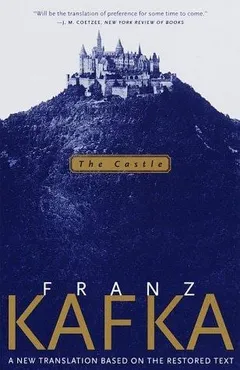
Read this novel alongside Kafka’s own The Castle, where the surveyor K. spends an entire unfinished novel trying merely to gain recognition from an equally unreachable authority, a more passive, prolonged pursuit against Josef K.’s active, involuntary prosecution here.
Questions it raises
- Does the novel ultimately suggest that K. is genuinely guilty of something, even if the court never specifies what, or does it insist that guilt itself is an arbitrary institutional construction entirely independent of any actual wrongdoing on K.’s part?
- How does the parable Before the Law function relative to K.’s own situation? Does K.’s active, persistent attempt to fight his case represent a meaningfully different response than the parable’s man’s passive waiting, or does the novel suggest both approaches ultimately fail for the same underlying reason?
- What does the court’s genuinely strange physical location, tenement attics rather than proper courtrooms, contribute to the novel’s portrait of institutional power? Does this displaced, informal setting make the court’s authority feel more or less legitimate and threatening than a conventional courtroom might?
- How should a reader weigh K.’s own conduct and choices throughout the novel? Does he handle his situation reasonably given the circumstances, or does the novel suggest his specific strategies, hiring a lawyer, seeking Titorelli’s help, actually worsen his position rather than genuinely attempting to improve it?
- Given that Kafka left this novel unfinished and Max Brod arranged and published the existing chapters, how might different possible chapter orderings or the novel’s fundamentally incomplete state affect its overall meaning and the specific weight of its ending?
- What does K.’s final resigned, non-resistant acceptance of his execution suggest about the novel’s ultimate view of individual agency against institutional power? Does this ending represent tragic defeat, a kind of dark acceptance, or does it leave open other possible interpretations of K.’s final state of mind?
Highlights
Josef K. is arrested on the morning of his thirtieth birthday without being told what he is accused of, yet remains free to continue his ordinary work and daily life as a bank official while his case proceeds separately through a court whose proceedings he cannot fully observe or control.
Paraphrase of the novel's opening premise, establishing the strange disconnect between K.'s arrest and any visible practical consequence.
K. hires a lawyer, seeks supposed inside knowledge from the painter Titorelli, who has some informal connection to the court, and consults a prison chaplain, each avenue proving equally ineffective against a system that offers no clear charge to answer and no identifiable authority to directly appeal to.
Paraphrase of K.'s various failed strategies for confronting his case, each proving unable to penetrate the court's opaque structure.
The priest recounts to K. the parable Before the Law, in which a man spends his entire life waiting outside an open door for permission to enter, only learning as he dies that the door was built specifically for him and could have been entered at any time without needing permission at all.
Paraphrase of the novel's central embedded parable, distilling its broader themes about self-imposed passivity before institutional authority.
A year after his arrest, two men in frock coats lead K. without resistance to a quarry and kill him like a dog, delivering the ultimate consequence of judgment while the actual charge against him, the specific nature of his guilt, remains permanently and deliberately unexplained throughout the entire novel.
Paraphrase of the novel's final scene, K.'s execution arriving without ever resolving the underlying question of his actual guilt or the specific charge against him.