Manfred
by Lord Byron
Assigned by 1 of the 9 reading lists
A dramatic poem in three acts set in the Alps. Manfred, a nobleman and magician tormented by guilt over the death of his beloved Astarte, summons spirits and asks only for forgetfulness, which they cannot give. He refuses to throw himself from a cliff, defies the spirit Arimanes in his hall, sees Astarte's phantom, who tells him he will die the next day, and rejects a chaplain's offer of repentance. When demons come for his soul, he sends them away and dies on his own terms.
We recommendLord Byron, The Major WorksOxford World's Classics, 2008Jerome McGann's one-volume selection includes Manfred, The Prisoner of Chillon and most of what students need.
As an Amazon Associate, The Great Books earns from qualifying purchases. Bookshop.org links also support this site. How this works.
- Written
- 1817
- Form
- Drama
- Language
- English
- Length
- Short · 60 ppunder 120 pages
- Difficulty
- Moderate2 of 5 for a first-year reader
Oxford World's Classics edition
Buy this edition: Manfred, opens in a new tabBookshop.org: Manfred, opens in a new tab
Why it's on the list
Byron wrote Manfred after the scandal that ended his marriage and drove him from England for good, and the play reads like a man working out, at full theatrical scale, what it feels like to be guilty of something so private that neither confession nor forgiveness can touch it. Manfred, alone in an Alpine tower with power over spirits he has summoned, wants only forgetfulness, and they cannot give it, because what he did to Astarte, the woman he loved and, the play implies without saying, may have destroyed, exists in a part of the self magic cannot reach. What makes the play more than confession is its ending: Manfred refuses every escape, will not bow to the demon Arimanes, will not accept a chaplain's absolution, and dies on his own terms, guilty, unrepentant, and free precisely because he answers to no power outside himself. The Byronic hero gets its purest statement here.
Key themes
- Guilt and redemption
- Manfred's guilt over Astarte is never fully explained, only gestured at, and the play's refusal to specify the exact nature of his offense makes the guilt itself, rather than any particular act, the play's real subject.
- The self and identity
- Manfred commands spirits, defies a demon lord and refuses a chaplain's absolution, and the play consistently presents self-sufficiency, answering to no power outside oneself, as both Manfred's tragedy and his only remaining form of freedom.
- Death and mortality
- Manfred dies on his own terms, sending away the demons who come to claim him and refusing the chaplain's last offer of repentance, insisting that the mind which sinned alone must also suffer and die alone.
- Nature and the cosmos
- The Alpine setting, glaciers, waterfalls and mountain solitude, is not mere backdrop but an active presence Manfred addresses directly, sublime and indifferent, offering neither comfort nor judgment for what he has done.
Which edition to read
Our pick
Lord Byron, The Major Works
Oxford World's Classics, 2008
Jerome McGann's one-volume selection includes Manfred, The Prisoner of Chillon and most of what students need.
Amazon: the Oxford World's Classics edition, opens in a new tabBookshop.org: the Oxford World's Classics edition, opens in a new tab
Overview
About sixty pages, a dramatic poem in three acts, written by Lord Byron in 1816 and 1817, in the period immediately following the collapse of his marriage, the public scandal surrounding rumors of an affair with his half-sister Augusta Leigh, and his permanent departure from England. Byron composed it during and after a tour through the Bernese Alps, and the mountain setting, glaciers, waterfalls, isolated peaks, is not incidental scenery but an active presence throughout, addressed directly by the play’s protagonist and standing as a kind of sublime, indifferent witness to his private torment.
Manfred was not written for conventional theatrical performance and belongs to the genre sometimes called closet drama, dramatic poetry meant primarily to be read rather than staged, which freed Byron to write scenes of pure interior monologue, spirit summoning and cosmic confrontation without the practical constraints a working nineteenth-century stage would have imposed. The play became one of the most influential single works in establishing what later criticism would call the Byronic hero, an isolated, guilt-ridden, defiantly self-sufficient figure who answers to no external authority, whose direct influence runs through Gothic fiction, later Romantic poetry and well beyond into nineteenth-century fiction generally.
What happens
Summoning the spirits. The play opens with Manfred, a nobleman and magician alone at midnight in his Alpine tower, tormented by a guilt the play never fully specifies, connected somehow to the death of Astarte, a woman he loved, possibly a sister, whom he addresses with a devotion and horror that together suggest, without the play ever stating it directly, that his love for her crossed into something forbidden and that he bears direct responsibility for her death. Unable to find rest, Manfred summons seven spirits of the elements through his mastery of forbidden knowledge, and asks them for a single thing: forgetfulness, oblivion from what he knows and remembers. The spirits, who can offer him power over kingdoms, over the elements themselves, tell him plainly that this alone is not within their power to grant.
Refusing the easy escapes. Manfred, still tormented, climbs to a precipice in the Jungfrau intending to throw himself from it, and is stopped by a chamois hunter who happens upon him, an ordinary man whose simple, uncomprehending decency contrasts sharply with Manfred’s own isolated, cosmic despair. Manfred does not, in the end, throw himself from the cliff, though the play leaves ambiguous exactly why, whether from the hunter’s intervention, from some remaining will to live, or from a refusal to end his suffering on terms other than his own.
Arimanes, and Astarte’s phantom. Manfred descends into the hall of Arimanes, a demon lord ruling over spirits and destiny, and refuses to bow before him, insisting on his own dignity even in the presence of a power that could, presumably, destroy him. At his request, the spirit of Astarte is summoned and appears to him, and in the play’s most emotionally charged scene, Manfred begs her to speak, to tell him whether she forgives him or condemns him. She tells him only that he will die the next day, and vanishes without answering the question that has driven the entire play, leaving Manfred’s guilt permanently unresolved rather than either forgiven or fully explained.
Death on his own terms. In the play’s final act, an abbot arrives at Manfred’s tower and offers him the consolation and absolution of religious repentance, urging him to make peace with heaven before he dies. Manfred refuses, not from defiance of religion as such but from a settled conviction that his suffering and his guilt belong entirely to himself, that the mind which sinned alone must also answer for itself alone, owing nothing to and accepting nothing from any external authority, human or demonic. When demons arrive at the appointed hour to claim him, Manfred sends them away, insisting that his crimes and his punishment are his own, not theirs to collect, and dies in the abbot’s presence, unrepentant, unabsolved, but entirely, deliberately in command of his own end.
How to read it
Read the play as an extended meditation on guilt that refuses to specify its object, and resist the temptation to resolve exactly what Manfred did to Astarte into a single, tidy explanation. The play’s power depends substantially on this deliberate vagueness, which lets Manfred’s torment stand for a more general, unresolvable condition rather than a single confessable crime.
Pay close attention to the confrontation with Arimanes and the appearance of Astarte’s phantom as the play’s emotional and thematic center. Astarte’s refusal to answer Manfred’s central question, whether she forgives him, is the moment the play most clearly declines to offer its protagonist, or its reader, any resolution.
Notice how consistently the play associates freedom with self-sufficiency and isolation. Manfred’s refusal of every offered escape, the chaplain’s absolution, submission to Arimanes, even simple suicide from the cliff, culminates in a death he insists on controlling entirely himself, and the play’s final judgment on this stance, whether it represents genuine dignity or a kind of tragic, isolating pride, is left for the reader to weigh.
Read the Alpine setting as more than backdrop. Manfred addresses the mountains, glaciers and waterfalls directly throughout the play, and their sublime indifference to his suffering, neither punishing nor consoling him, mirrors the play’s larger refusal to supply any external moral verdict on what he has done.
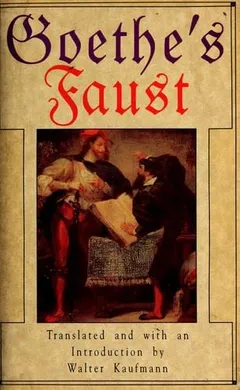
Read this play alongside Goethe’s Faust, which Byron knew and which shares Manfred’s basic situation, a man of forbidden knowledge and power confronting guilt and mortality through supernatural means, and consider what distinguishes Byron’s more compressed, more purely interior treatment from Goethe’s far larger and more elaborately plotted version of similar material.
Questions it raises
- Does the play’s refusal to specify exactly what Manfred did to Astarte strengthen its exploration of guilt, or does the vagueness function as a way of gesturing at scandal, incest specifically, that Byron could not state directly given his own recent public disgrace?
- Is Manfred’s insistence on dying entirely on his own terms, refusing both religious absolution and demonic claim, a genuine achievement of freedom, or a form of pride that the play is more ambivalent about than Manfred himself seems to be?
- What does it mean that Astarte’s phantom answers none of Manfred’s actual questions, telling him only that he will die? Is her silence a withholding of forgiveness, an inability to forgive, or something the play leaves genuinely open?
- How does the chamois hunter’s ordinary decency function within the play? Does his simple humanity offer a real alternative to Manfred’s isolated grandeur, or does the play treat him as incapable of truly understanding what Manfred suffers?
- Is the Byronic hero, isolated, guilty, self-sufficient, answering to no external authority, an admirable figure, a cautionary one, or does the play deliberately refuse to settle which?
- What work does the Alpine setting do beyond atmosphere? Does addressing the sublime, indifferent mountains directly change what kind of confession or complaint Manfred’s speeches actually are?
Highlights
The lamp must be replenish'd, but even then / It will not burn so long as I must watch.
Forgetfulness! I ask of ye not one / Of your more terrible gifts, but that. / Ye have it not.
Paraphrase of Manfred's request to the spirits he has summoned, and their reply that oblivion is the one thing not within their power to grant.
The mind which is immortal makes itself / Requital for its good or evil thoughts, / Is its own origin of ill and end, / And its own place and time.
Old man, 'tis not so difficult to die.