The Frogs
by Aristophanes · Βάτραχοι
Assigned by 3 of the 9 reading lists
With Euripides and Sophocles both dead, the god Dionysus, patron of drama, decides Athens needs a good tragedian back and goes down to Hades to fetch Euripides. Disguised as Heracles and accompanied by his slave Xanthias, he rows across the underworld lake to a chorus of croaking frogs and survives a series of beatings and identity swaps. In Hades he finds Aeschylus and Euripides fighting over the throne of tragedy and is made judge. After a contest of quotations weighed on scales, he chooses Aeschylus, the poet who can save the city.
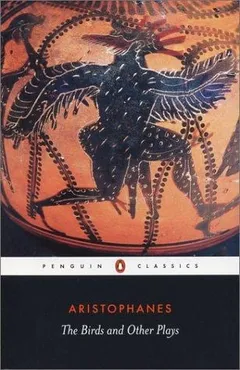
We recommendFrogs and Other Plays, translated by David Barrett, revised by Shomit DuttaPenguin Classics, 2007Keeps the jokes alive and annotates the literary parodies; also contains Wasps and Women at the Thesmophoria.
As an Amazon Associate, The Great Books earns from qualifying purchases. Bookshop.org links also support this site. How this works.
- Written
- 405 BCE
- Form
- Comedy
- Language
- Greek
- Length
- Short · 100 ppunder 120 pages
- Difficulty
- Demanding3 of 5 for a first-year reader
David Barrett, revised by Shomit Dutta translation
Buy on Amazon: The Frogs, opens in a new tabBookshop.org: The Frogs, opens in a new tab
Why it's on the list
The Frogs is the oldest surviving work of literary criticism and it is a comedy. Aristophanes stages a contest between Aeschylus and Euripides in the underworld, weighs their verses on actual scales, and has them dismantle each other's prologues line by line, and out of the slapstick comes a serious argument about what poetry is for that has never been superseded: Aeschylus claims a poet should make citizens better, Euripides that he should make them cleverer and show them life as it is. It was performed in 405 BCE, months before Athens lost the war, with the city starving and its fleet gone, and the question of whether a poet can save a state is asked in complete earnest. The Athenians gave it first prize and, uniquely, a second performance.
Key themes
- Art and beauty
- The contest is conducted on technical grounds, metre, diction, prologues, choral writing, and then decided on a political one, which is the play's argument about where the value of poetry finally lies.
- Education
- Aeschylus' position is that poets are teachers of adults as schoolmasters are of children, and that he sent audiences out wanting to fight for their city. Euripides' is that he taught them to think and to ask questions.
- Society and the state
- The parabasis drops the comedy entirely to plead for the restoration of citizenship to Athenians disenfranchised after an oligarchic coup, and the chorus tells the city it is using base coin and rejecting good.
- Death and mortality
- The underworld is treated as a comic setting with a ferryman, a landlady with a grievance and a chorus of croaking frogs, and it is also where the city's dead greatness has gone, which is the joke and the grief at once.
Which translation to read
Our pick
Frogs and Other Plays, translated by David Barrett, revised by Shomit Dutta
Penguin Classics, 2007
Keeps the jokes alive and annotates the literary parodies; also contains Wasps and Women at the Thesmophoria.
Amazon: the David Barrett, revised by Shomit Dutta translation, opens in a new tabBookshop.org: the David Barrett, revised by Shomit Dutta translation, opens in a new tab
Overview
The Frogs was produced at the Lenaea in January 405 BCE, and the date is the first thing to know. Athens had been at war for twenty-six years. The Sicilian expedition had been annihilated, the treasury was gone, Sophocles had died a few months earlier and Euripides the year before that, and within eighteen months the city would surrender, lose its walls and its fleet, and be governed by a junta. Aristophanes wrote a farce about the death of tragedy, and it won first prize, and the Athenians voted it an unprecedented second performance.
The play has an unusual shape. The first half is a knockabout journey comedy: a god and his slave go to the underworld, with jokes about luggage, donkeys, beatings and defecation. The second half is a literary contest conducted in technical detail. Most Old Comedy follows one idea to its conclusion; this one changes genre halfway.
The hero is Dionysus, god of theatre, and he is presented as a coward, a fool and a snob, which an Athenian audience at his own festival evidently enjoyed.
A practical note. The second half assumes a reasonable familiarity with Aeschylus and Euripides, since much of it consists of quotation and parody. A translation with notes is not optional here.
What happens
Dionysus, wearing a lion skin over a saffron dress in imitation of Heracles, sets off for the underworld with his slave Xanthias, who is riding a donkey and carrying the luggage. He explains that he has been reading Euripides’ Andromeda and has been seized by a longing for a poet, because there are none left; the ones alive are producing rubbish.
They call on Heracles for directions, and he runs through the available ways to die before describing the route. At the lake Charon takes Dionysus aboard and makes him row, refusing to carry the slave, and a chorus of frogs sings the syllables that give the play its name while the god complains about his blisters.
Across the water there is a long sequence of role-swapping. Dionysus, frightened by monsters, makes Xanthias take the lion skin; the disguise attracts both a welcome intended for Heracles and a furious landlady owed money for sixteen loaves; they swap back and forth; and eventually Aeacus flogs them both to determine which is the god, on the principle that a god will not feel it. Both pretend not to.
Then the chorus of initiates arrives, and the register changes. Their parabasis is the most serious in Aristophanes: a direct address to the city urging it to restore citizenship to those disenfranchised after the oligarchic coup of 411, and to stop preferring flashy new politicians to good old citizens, in an image about a city that mints fine coinage and insists on using base.
In Hades, Aeschylus has held the chair of tragedy at the table of Pluto since his death, and Euripides has just arrived and is claiming it. A contest is arranged and Dionysus is made judge.
The contest occupies the rest of the play. Euripides claims he found tragedy bloated and put it on a diet, gave it clarity, let women and slaves speak, taught the audience to reason, to question and to run their households better. Aeschylus is contemptuous: he presented heroes and made men want to be like them, whereas Euripides has taught the city to chatter, to argue with authority and to be worse than it was.
They then take each other apart on craft. Aeschylus demonstrates that Euripides’ prologues are so metrically monotonous that he can interrupt any of them with the same absurd phrase about a little bottle of oil, and does it repeatedly. Euripides mocks Aeschylus’ obscurity, his long silences and his compound words. They parody each other’s choral lyrics. Finally the verses are weighed on scales, and Aeschylus wins each time because his lines contain heavier objects, rivers, chariots, corpses.
Dionysus still cannot decide, and asks them instead for advice about the city: what to do about the exiled general Alcibiades, and how Athens can be saved. Aeschylus’ answers are the more forthright, and Dionysus chooses him, quoting a line of Euripides’ own back at him when accused of breaking his word. Aeschylus goes up to the world with instructions that his chair in Hades is to be kept for Sophocles, and not for Euripides.
How to read it
Read a well-annotated translation. The contest is built on quotation and you need the notes to hear the jokes.
Read the parabasis carefully and notice it is not funny. Aristophanes stops the comedy to give the city political advice at a moment of genuine emergency, and that section is the strongest evidence for taking the play’s central question seriously.
Watch how the criterion shifts. The contest begins as a question about poetic quality and ends as a question about which poet is more useful to a city in danger. Dionysus abandons technique to ask for policy, and the winner is chosen on that basis.
Read the Clouds alongside if you can. In both plays Aristophanes stages an argument between an older education and a newer one, and in both the older wins on stage and has plainly already lost in the world.
Do not assume Aristophanes simply agrees with Aeschylus. He parodies Euripides constantly across his career, which requires knowing him intimately, and the parodies here are affectionate enough to suggest something more complicated than contempt.
Questions it raises
- Should a poet make citizens better? Aeschylus says so plainly. Is that a demand art can meet, or one that deforms it?
- Euripides claims he taught the audience to think and question. Aeschylus says that is exactly what ruined them. Who is right about fifth-century Athens?
- The contest is decided on political usefulness rather than on the craft the play has just spent hundreds of lines examining. Is that a failure of nerve or the point?
- Aristophanes parodies Euripides brilliantly, which requires knowing him extremely well. What does the quality of the mockery tell you?
- The city is months from defeat and the play’s answer is to bring back a dead poet. Is that a joke, a wish, or a serious proposal about what holds a community together?
- Athens gave this first prize and staged it twice. What does that say about the audience?
Highlights
Brekekekex koax koax.
The chorus of frogs sing this while Dionysus rows across the lake. They refuse to stop when he asks, and they give the play its title.
The poet should be admired for skill and for good counsel, and because we make people better in their cities.
Paraphrase of Aeschylus' answer when asked what a poet should be admired for, which sets the terms of the entire contest.
I came down for a poet. Why? So that the city might be saved and keep its choruses.
Paraphrase of Dionysus' account of his own errand, delivered at the point where he has to choose between the two.
I shall choose the one my soul desires.
Paraphrase of Dionysus' answer when Euripides accuses him of breaking his oath to take whichever poet he judged better, quoting a line of Euripides' own back at him.