A Study of History
Assigned by 1 of the 9 reading lists
A twelve-volume comparative history of some twenty-one civilisations, from the Egyptian and Sumerian to the Western, published over twenty-seven years. Toynbee argues that civilisations, not nations, are the units of history, that they arise through creative responses to challenges, grow through the leadership of creative minorities, and break down when those minorities become merely dominant and the masses secede. The later volumes give the universal churches that emerge from dying civilisations the central role, and the whole is read almost entirely in Somervell's two-volume abridgement.
We recommendA Study of History, Abridgement of Volumes I-VIOxford University Press, 1987D. C. Somervell's abridgement, approved by Toynbee, is the version almost everyone reads; a second volume abridges VII-X.
As an Amazon Associate, The Great Books earns from qualifying purchases. Bookshop.org links also support this site. How this works.
- Written
- 1934-1961
- Form
- History
- Language
- English
- Length
- Epic · 1000 ppover 700 pages
- Difficulty
- Difficult4 of 5 for a first-year reader
Oxford University Press edition
Buy this edition: A Study of History, opens in a new tabBookshop.org: A Study of History, opens in a new tab
Why it's on the list
Taking civilisations rather than nations as the units of history, and comparing some twenty-one of them from the Sumerian to the Western, attempted the most ambitious synthesis of world history in the twentieth century and set a pattern for every later attempt to think about the past on a planetary scale. Explaining the rise of civilisations through creative responses to challenges, and their growth through the leadership of creative minorities, offered a theory of change that was neither racial nor environmental, and the phrase challenge and response entered the language. Locating breakdown in the moment when a creative minority becomes merely dominant and the masses secede gave a general account of how ruling classes lose their claim to rule that has been applied to empires Toynbee never studied. Giving the universal churches that emerge from dying civilisations the central role in the later volumes turned the study into a theology of history, which won it enormous readers and lost it the profession, and the argument about whether the pattern is discovery or imposition has never ended.
Key themes
- History and progress
- Taking civilisations rather than nations as the units of history, and comparing twenty-one of them, attempted the most ambitious synthesis of world history in the twentieth century.
- Society and the state
- Civilisations arise through creative responses to challenges and grow through creative minorities, a theory of change that was neither racial nor environmental.
- Power and authority
- Breakdown comes when a creative minority becomes merely dominant and the masses secede, a general account of how ruling classes lose their claim to rule.
- God and faith
- The universal churches that emerge from dying civilisations are given the central role in the later volumes, turning the study into a theology of history.
- War
- The universal state, the empire that a dying civilisation throws up to hold itself together, buys a peace that Toynbee reads as the sign of death rather than health.
Which edition to read
Our pick
A Study of History, Abridgement of Volumes I-VI
Oxford University Press, 1987
D. C. Somervell's abridgement, approved by Toynbee, is the version almost everyone reads; a second volume abridges VII-X.
Amazon: the Oxford University Press edition, opens in a new tabBookshop.org: the Oxford University Press edition, opens in a new tab
Overview
About a thousand pages in Somervell’s two abridged volumes, a twelve-volume comparative history of some twenty-one civilisations, from the Egyptian and Sumerian to the Western, published between 1934 and 1961. Toynbee argues that civilisations, not nations, are the units of history, that they arise through creative responses to challenges, grow through the leadership of creative minorities, and break down when those minorities become merely dominant and the masses secede.
The later volumes give the universal churches that emerge from dying civilisations the central role.
What happens
The unit of study. Toynbee argues that a nation’s history cannot be understood on its own, that the intelligible unit is the civilisation, and identifies some twenty-one, living and dead, as the field for comparison.
Genesis. Civilisations do not arise from race or from favourable environments but from a creative response to a challenge, of hard country, new ground, blows, pressures or penalisation, that is severe enough to stimulate and not so severe as to crush.
Growth. A growing civilisation meets each new challenge by a further response, led by a creative minority whom the majority follows by mimesis, and its progress is measured by increasing self-determination rather than command over environment.
Breakdown. Growth ends when the creative minority, resting on a past success, becomes merely dominant, holding by force what it once held by attraction, and the majority secedes into an internal proletariat at home and an external proletariat beyond the frontier.
Disintegration. A disintegrating civilisation passes through a time of troubles, throws up a universal state that gives it a false peace, and produces, from its internal proletariat, a universal church that outlives it.
The churches and the future. The later volumes argue that the universal churches may be the real goal of history and civilisations only their chrysalis, survey the contacts between civilisations in space and time, and end with an inquiry into the prospects of the Western civilisation and Toynbee’s own reasons for writing.
How to read it
Read the choice of civilisations as the unit of study as the work’s founding move, and notice how much depends on whether the twenty-one are really comparable.
Pay close attention to the theory of challenge and response, neither racial nor environmental, and test it against the cases Toynbee draws on and the ones he does not.
Notice the account of breakdown, the creative minority become merely dominant, and ask whether it describes how ruling classes lose their claim to rule or only names the moment after they have.
Consider the religious turn of the later volumes, the churches made history’s goal, and decide whether the pattern Toynbee found is a discovery or an imposition.
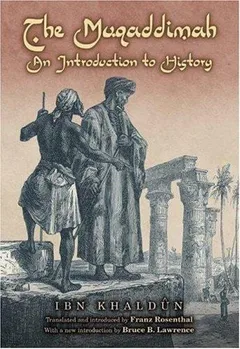
Read this work alongside Ibn Khaldun’s Muqaddimah to compare two attempts, six centuries apart, to find the laws by which societies rise and fall.
Questions it raises
- Are civilisations really the intelligible units of history, and does the list of twenty-one hold up, or does the count change depending on what one wants to prove?
- Is challenge and response a law of history or a description that fits any case after the fact?
- Does the theory of breakdown explain why creative minorities become merely dominant, or only that they do?
- What happens to the study when the churches become the goal of history: does it become theology, and is that a failing?
- Why did the profession reject a work that the public embraced, and which of the objections, to the pattern, the evidence, or the prophecy, is the strongest?
- Is the Western civilisation, on Toynbee’s own account, in its time of troubles, and what would a creative response to its present challenges look like?
Highlights
Civilisations, not nations, are the intelligible units of historical study, and Toynbee identifies some twenty-one of them, from the Egyptian and Sumerian to the Western, as the field of comparison.
Paraphrase of the work's founding methodological claim.
Civilisations arise through creative responses to challenges, neither too easy nor too severe, and grow through the leadership of creative minorities whom the masses follow by mimesis.
Paraphrase of the theory of challenge and response, the work's most famous idea.
Civilisations break down when the creative minority becomes merely dominant and the masses secede into an internal proletariat, and the universal church that the proletariat creates outlives the universal state that the minority builds.
Paraphrase of the theory of breakdown and of the churches' central role in the later volumes.