Anna Karenina
by Leo Tolstoy · Анна Каренина
Assigned by 1 of the 9 reading lists
Two stories run side by side. Anna, married to a senior official in Petersburg, falls in love with the officer Vronsky, leaves her husband and son for him, and is slowly destroyed by society's exclusion and her own jealousy, until she throws herself under a train. Meanwhile the landowner Levin courts and marries Kitty, works his estate, and struggles toward a faith he can live by. The novel opens with the line that all happy families are alike, and its two plots, which touch only a handful of times, are held together by the question of what a life is for.
We recommendAnna Karenina, translated by Richard Pevear and Larissa VolokhonskyPenguin Classics, 2002Faithful to Tolstoy's plain, sometimes awkward prose; the current standard.
As an Amazon Associate, The Great Books earns from qualifying purchases. Bookshop.org links also support this site. How this works.
- Written
- 1875-1878
- Form
- Novel
- Language
- Russian
- Length
- Epic · 840 ppover 700 pages
- Difficulty
- Demanding3 of 5 for a first-year reader
Richard Pevear and Larissa Volokhonsky translation
Buy on Amazon: Anna Karenina, opens in a new tabBookshop.org: Anna Karenina, opens in a new tab
Why it's on the list
Running Anna's story beside Levin's, two plots that touch only a handful of times, lets the novel set a love that destroys against a marriage that slowly holds, without ever telling the reader which is the true picture of life. Refusing to make Anna either a victim or a warning, following her jealousy and her clarity with the same attention, produced the fullest portrait of an adulterous woman in fiction and one that neither excuses nor condemns her. Giving Levin the farm, the mowing, the elections and the long argument with himself about God carries into the novel everything Tolstoy cared about outside it, so that the book is also his own search for a faith he could live by, finished only a year before the crisis that turned him from fiction. Opening with the line that all happy families are alike announces a novel about the ordinary arrangements of marriage, money and class, and its power comes from treating them as the whole of life rather than its background.
Key themes
- Love and desire
- Anna's passion for Vronsky and Levin's for Kitty are set side by side, one destroying and one holding, and the novel refuses to say which is the true picture.
- Family and inheritance
- Opening with the line that all happy families are alike announces a novel about marriage, children and households treated as the whole of life rather than its background.
- Women and men
- Anna is exiled from society for what Oblonsky and Vronsky do without cost, and the novel makes the difference between them impossible to ignore.
- Guilt and redemption
- The epigraph, Vengeance is mine, I will repay, hangs over Anna's end and asks whether her destruction is society's doing, her own, or God's.
- The good life
- Levin's search across the farm, the elections and the long argument with himself about God is Tolstoy's own, and the novel ends with his answer rather than Anna's.
Which translation to read
Our pick
Anna Karenina, translated by Richard Pevear and Larissa Volokhonsky
Penguin Classics, 2002
Faithful to Tolstoy's plain, sometimes awkward prose; the current standard.
Amazon: the Richard Pevear and Larissa Volokhonsky translation, opens in a new tabBookshop.org: the Richard Pevear and Larissa Volokhonsky translation, opens in a new tab
Overview
About eight hundred and forty pages, serialised between 1875 and 1878, two stories run side by side. Anna, married to a senior official in Petersburg, falls in love with the officer Vronsky, leaves her husband and son for him, and is slowly destroyed by society’s exclusion and her own jealousy, until she throws herself under a train.
Meanwhile the landowner Levin courts and marries Kitty, works his estate, and struggles toward a faith he can live by. The novel opens with the line that all happy families are alike.
What happens
The Oblonsky household. Anna comes to Moscow to reconcile her brother Stiva with his wife Dolly after his affair with the governess. At the station she meets Vronsky, and a railway worker is crushed under a train. At a ball Vronsky, expected to propose to Kitty, dances with Anna instead.
Anna and Vronsky. Back in Petersburg Anna cannot escape Vronsky’s pursuit. They become lovers; she tells Karenin, her husband, at the races after Vronsky falls from his horse; she nearly dies giving birth to Vronsky’s daughter, and Karenin forgives them both, which neither can bear.
Levin and Kitty. Refused by Kitty, Levin returns to his estate, mows with his peasants, and works out a theory of farming. Kitty, ill after Vronsky’s desertion, recovers abroad. When they meet again Levin proposes in a game of chalked initials and she accepts.
Italy and exile. Anna and Vronsky travel in Italy, then return to Petersburg, where she is cut at the opera. Karenin refuses a divorce. They settle on Vronsky’s estate, and Anna, barred from her son and from society, grows jealous of every hour Vronsky spends away.
Marriage and death. Levin and Kitty marry, nurse his dying brother Nikolai, and have a son. Anna, in Moscow waiting for a divorce that does not come, quarrels with Vronsky, takes morphine, and after a day of mounting despair throws herself under a train.
Levin’s faith. Vronsky leaves for the Serbian war. Levin, happy in his family and yet tempted by suicide, hears a peasant say that a man must live for God, for his soul, and finds that he has always known what good is, and that this knowledge is faith enough.
How to read it
Read the two plots as an argument the novel conducts without settling, Anna’s love that destroys set beside Levin’s marriage that holds, and resist the temptation to take either as the whole truth.
Pay close attention to how Anna is followed, her jealousy and her clarity given the same attention, so that the book neither excuses nor condemns her, and ask what the epigraph about vengeance means for her end.
Notice how everything Tolstoy cared about outside fiction, farming, the peasants, the zemstvo elections, the question of God, enters through Levin, and how the novel ends with his answer rather than her death.
Consider the opening line about happy families as a statement of the book’s subject, the ordinary arrangements of marriage, money and class, treated as the whole of life.
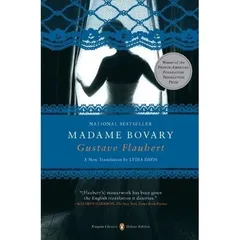
Read this novel alongside Madame Bovary to compare two adulteries told by masters who judged their heroines very differently, and to ask which book is harder on its society.
Questions it raises
- Who destroys Anna: the society that cuts her while forgiving Stiva and Vronsky, her own jealousy, or the vengeance the epigraph promises? Does the novel decide?
- Why do the two plots touch so rarely, and what would be lost if Levin’s story were removed, as early readers sometimes wished?
- Is Karenin’s forgiveness at Anna’s sickbed the novel’s moral centre or its cruellest turn, and why can neither Anna nor Vronsky live with it?
- Is Levin’s final faith earned by the novel or asserted at its end, and does it answer the despair that Anna’s death has just shown?
- What does the book think about marriage, given that Dolly’s endurance, Kitty’s happiness and Anna’s ruin all follow from it?
- How does Tolstoy’s plain, sometimes awkward prose, which the recommended translation preserves, serve a novel that sees so much, and what would be lost by smoothing it?
Highlights
All happy families are alike; each unhappy family is unhappy in its own way, and the novel opens on the Oblonsky household thrown into confusion by the husband's affair with the governess.
Close paraphrase of the famous opening, which introduces the theme of family through a marriage neither plot will fully resemble.
Anna, married to a senior official in Petersburg, falls in love with the officer Vronsky, leaves her husband and son for him, and is slowly destroyed by society's exclusion and her own jealousy, until she throws herself under a train.
Paraphrase of the novel's tragic plot, whose end is foreshadowed by the railway death Anna witnesses at her first meeting with Vronsky.
The landowner Levin courts and marries Kitty, works his estate, mows with his peasants, and struggles toward a faith he can live by, finding it at last in the knowledge of good he has always had.
Paraphrase of the novel's second plot, which carries Tolstoy's own search and gives the book its last word.