Persian Letters
by Montesquieu · Lettres persanes
Assigned by 1 of the 9 reading lists
An epistolary novel published anonymously in Amsterdam. Two Persian noblemen, Usbek and Rica, travel to Paris in 1712 and describe French customs, religion, politics and fashions to friends at home with the puzzled candour of outsiders, mocking the Pope, the king, the financier John Law and the Academy. Interleaved are letters from Usbek's harem in Isfahan, where his absence loosens the eunuchs' control and his wives rebel. The book ends with the suicide of his favourite wife Roxane, who has deceived him and dies declaring herself free.
We recommendPersian Letters, translated by Margaret MauldonOxford World's Classics, 2008A lively modern translation with notes by Andrew Kahn on the Persian and Parisian references.
As an Amazon Associate, The Great Books earns from qualifying purchases. Bookshop.org links also support this site. How this works.
- Written
- 1721
- Form
- Satire
- Language
- French
- Length
- Medium · 300 pp120 to 300 pages
- Difficulty
- Moderate2 of 5 for a first-year reader
Margaret Mauldon translation
Buy on Amazon: Persian Letters, opens in a new tabBookshop.org: Persian Letters, opens in a new tab
Why it's on the list
Montesquieu's device of two Persian travelers describing French customs with puzzled outsider candour lets him satirize the Pope, the king, the financier John Law and the Academy with a critical freedom direct commentary under his own name could never have achieved, a technique that shaped how Enlightenment writers would repeatedly use foreign observers to make domestic institutions look strange and therefore questionable. The interleaved harem letters from Isfahan, where Usbek's absence loosens the eunuchs' control and his wives rebel, extends the same defamiliarizing critique from French politics and religion to the domestic despotism Usbek himself practices without apparently recognizing the parallel, a genuinely pointed structural irony. Roxane's suicide, deceiving Usbek throughout and dying declaring herself free, gives the epistolary novel's fictional frame its most serious consequence, refusing to let the harem plot remain merely exotic backdrop to the more famous Parisian satire. Published anonymously in Amsterdam, the novel's combination of formal innovation and genuinely dangerous political content established the epistolary form as a vehicle for serious philosophical and social critique well beyond its earlier romantic associations.
Key themes
- Society and the state
- Montesquieu's device of two Persian travelers describing French customs with puzzled outsider candour lets him satirize the Pope, the king, the financier John Law and the Academy with a critical freedom direct commentary could never have achieved.
- Women and men
- The interleaved harem letters from Isfahan, where Usbek's absence loosens the eunuchs' control and his wives rebel, extends the same defamiliarizing critique to the domestic despotism Usbek practices without recognizing the parallel to Parisian tyranny.
- Power and authority
- Roxane's suicide, deceiving Usbek throughout and dying declaring herself free, gives the harem plot's critique of despotic power its most serious consequence, refusing to let it remain merely exotic backdrop to the Parisian satire.
- Liberty and rights
- Roxane's dying declaration of freedom, achieved only through death after sustained deception of her husband, poses the novel's starkest challenge to any comfortable distinction between Persian despotism and French political and religious authority.
Which translation to read
Our pick
Persian Letters, translated by Margaret Mauldon
Oxford World's Classics, 2008
A lively modern translation with notes by Andrew Kahn on the Persian and Parisian references.
Amazon: the Margaret Mauldon translation, opens in a new tabBookshop.org: the Margaret Mauldon translation, opens in a new tab
Overview
About three hundred pages, an epistolary novel by Montesquieu, published anonymously in Amsterdam in 1721. Two Persian noblemen, Usbek and Rica, travel to Paris in 1712 and describe French customs, religion, politics and fashions to friends at home with the puzzled candour of outsiders.
They mock the Pope, the king, the financier John Law and the Academy. Interleaved are letters from Usbek’s harem in Isfahan, where his absence loosens the eunuchs’ control and his wives rebel. The book ends with the suicide of his favourite wife Roxane, who has deceived him and dies declaring herself free.
What happens
Usbek and Rica arrive in Paris. Two Persian noblemen, Usbek and Rica, travel to Paris in 1712, beginning an extended correspondence with friends at home describing French society through the puzzled candour of genuine outsiders encountering unfamiliar customs.
Satirizing French institutions. Usbek and Rica mock the Pope, the king, the financier John Law and the Academy, using their foreign perspective to make French religious, political and financial institutions look strange and therefore open to question.
The harem in Isfahan. Interleaved among the Parisian letters are letters from Usbek’s harem in Isfahan, establishing a parallel plot running alongside the more famous satirical observations of French society and politics.
The eunuchs’ control loosens. Usbek’s prolonged absence loosens the eunuchs’ control over his wives, gradually eroding the domestic order he left in place and setting up the household rebellion that will eventually consume the novel’s final letters.
The wives rebel. Usbek’s wives begin to rebel against the constraints of the harem, extending the novel’s critique of despotic power from the distant, satirized French institutions to Usbek’s own immediate domestic authority.
Roxane’s suicide. The novel ends with the suicide of Usbek’s favourite wife Roxane, who has deceived him throughout their marriage and dies declaring herself free, giving the harem plot a serious and consequential conclusion.
How to read it
Read the device of two Persian travelers describing French customs with puzzled outsider candour as a technique letting Montesquieu satirize powerful institutions with a critical freedom direct commentary under his own name could never have achieved.
Pay close attention to how the interleaved harem letters extend the same defamiliarizing critique from French politics and religion to the domestic despotism Usbek himself practices without apparently recognizing the parallel to what he mocks in Paris.
Notice how Roxane’s suicide, after deceiving Usbek throughout and dying declaring herself free, gives the epistolary novel’s fictional frame its most serious consequence, refusing to let the harem plot remain merely exotic backdrop to the more famous Parisian satire.
Consider the novel’s anonymous publication in Amsterdam as evidence of how dangerous contemporaries would have found its content; the combination of formal innovation and genuinely pointed political and religious critique required this protective distance from open attribution.
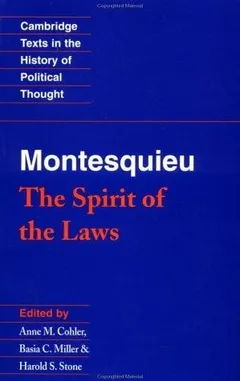
Read this novel alongside Montesquieu’s own later Spirit of the Laws to see how the satirical observations scattered across these letters anticipate the systematic comparative study of political and social institutions he would develop at far greater length in that mature masterwork.
Questions it raises
- Does the device of Persian travelers observing French customs with puzzled candour successfully defamiliarize institutions readers might otherwise take for granted, or does this technique risk exoticizing Usbek and Rica themselves as much as it critiques French society?
- How does the parallel between Usbek’s own domestic despotism over his harem and the French political and religious authority he and Rica satirize function within the novel’s larger structure? Does Usbek ever seem to recognize this parallel himself?
- What does Roxane’s suicide and her dying declaration of freedom suggest about the novel’s ultimate judgment on despotic power, whether exercised by a Persian husband or a French king? Does her death offer genuine critique or merely tragic spectacle?
- How should a reader weigh the novel’s anonymous publication in Amsterdam against its actual content? Does this protective anonymity suggest Montesquieu himself recognized just how dangerous his satirical observations about the Pope, the king and the Academy actually were?
- Given that the harem letters and the Parisian letters interleave throughout rather than appearing in separate sections, how does this structural choice shape a reader’s experience of the novel’s dual critique of French and Persian forms of authority?
- What does this novel’s use of an epistolary, multi-voiced form suggest about its approach to satire compared to more direct philosophical or political treatises? Does the fictional frame strengthen or complicate the seriousness of its critique?
Highlights
Two Persian noblemen, Usbek and Rica, travel to Paris in 1712 and describe French customs, religion, politics and fashions to friends at home with the puzzled candour of outsiders, mocking the Pope, the king, the financier John Law and the Academy.
Paraphrase of the novel's central satirical device, foreign observers defamiliarizing French institutions.
Interleaved among the Parisian letters are letters from Usbek's harem in Isfahan, where his prolonged absence loosens the eunuchs' control over his wives, and the wives themselves begin to rebel against the domestic order Usbek left in place.
Paraphrase of the novel's parallel plot, extending its critique of despotism from Paris to Usbek's own household.
The novel ends with the suicide of Usbek's favourite wife Roxane, who has deceived him throughout their marriage and dies declaring herself free, a serious and consequential conclusion refusing to treat the harem plot as merely exotic backdrop.
Paraphrase of the novel's climactic conclusion, Roxane's death giving the harem plot genuine dramatic and philosophical weight.